


Saga Travel Guide
Saga is a strong Japan travel destination for ceramics, hot springs, coastal seafood, historic towns, and quieter Kyushu travel.
Quick facts
- Best for: ceramics, hot springs, coastal seafood, historic towns
- Recommended stay: 1 to 3 days
- Best season: Spring, autumn, and key local festival seasons
- Main bases: Arita, Karatsu, Yutoku Inari Shrine, Ureshino Onsen
Why visit Saga
Saga is small, agricultural and easy to drive past between Fukuoka and Nagasaki, but it holds two things that are hard to find elsewhere. Yoshinogari is a large Yayoi-period settlement site, excavated and partly reconstructed, which gives a rare physical sense of Japan before its written history. The towns of Arita and Imari are where porcelain production in Japan began, and the kilns, shops and museums there are still the centre of the craft. Ureshino Onsen is known for unusually soft water, and Karatsu Castle stands above the sea on the northern coast.
Getting to Saga
Saga sits on the line between Hakata and Nagasaki, so it is easy to stop at on the way rather than travel to specially. Arita has its own station on the local line and is best on a weekday when the kilns are working; the big pottery fair in spring fills every room in the area, so book far ahead or avoid it. A car helps here, because the pottery towns, the onsen and the coast lie in different directions from the prefectural capital.
Top Attractions in Saga
Yoshinogari Historical Park
Yoshinogari Historical Park in Saga is the largest known moated settlement from Japan's Yayoi period, with reconstructed watchtowers, pit dwellings, and burial mounds that make the roughly 2,000-year-old community easy to picture.
- Price
- Paid. Adult admission is around yen 460; free for junior high school age and younger. Prices can change.
- Time needed
- 2 to 3 hours to cover the main enclosures and museum.
View practical details
- Best time
- Spring or autumn for comfortable walking; the park is open year-round.
- Good for
- History and archaeology fans, families, and anyone new to the Yayoi period.
What to do
- Walk through the Southern and Northern Inner Enclosures to see reconstructed watchtowers, moats, and wooden palisades.
- Step inside restored pit dwellings and raised-floor storehouses to see how Yayoi-period residents lived and stored grain.
- Visit the burial mound area with excavated jar coffins from the site's cemetery.
- Stop at the on-site exhibition hall for artifacts and background on the excavation.
Tickets and fees
Checked in July 2026: adult admission is roughly yen 460, with free entry for junior high age and younger. Opening hours are typically 9:00 to 17:00 (later in summer), with a few annual closure days. Confirm current pricing and hours before visiting.
Getting there
Take the JR Nagasaki Main Line to Yoshinogari-koen Station, then walk about 15 minutes to the park entrance. Saga Station is roughly 30 minutes away by train.
Nearby
Saga's pottery heritage is close by at Arita & Imari Pottery Towns, and coastal castle views are a further drive out at Karatsu Castle.

Arita & Imari Pottery
Arita and Imari in Saga are the birthplace of Japanese porcelain, dating to the early 1600s when the potter Ri Sanpei found kaolin clay nearby, and the two towns still make an easy pairing of kiln streets, shops, and museums.
- Price
- Free to walk the towns and streets; museums, workshops, and porcelain-park entry are paid separately and vary by venue.
- Time needed
- Half a day for one town, a full day to see both Arita and Imari.
View practical details
- Best time
- Spring or autumn, or late April to early May during the Arita Ceramic Fair (Arita Toki Ichi).
- Good for
- Craft and pottery lovers, day-trippers, and shoppers looking for tableware.
What to do
- Walk Arita's old kiln-street district and browse shops selling Arita-yaki porcelain direct from local makers.
- See the porcelain torii gate at Tozan Shrine, made almost entirely from Arita ware.
- Visit the Kyushu Ceramic Museum for a free overview of Kyushu's porcelain history.
- Head to Okawachiyama, the secluded kiln village near Imari once reserved for the Nabeshima clan's finest wares.
Tickets and fees
Checked in July 2026: strolling the town streets and shrines is free. The Kyushu Ceramic Museum has free general admission, while Arita Porcelain Park and hands-on pottery workshops charge separate fees that vary by operator, so check current prices before visiting.
Getting there
From Saga Station, the JR Sasebo Line reaches Arita Station in about 40 minutes; from Hakata Station in Fukuoka, express trains take just under 90 minutes. Imari is a short additional ride on the JR Chikuhi or Matsuura line.
Nearby
Combine this with the ancient settlement at Yoshinogari Historical Park or wind down afterward at Ureshino Onsen.
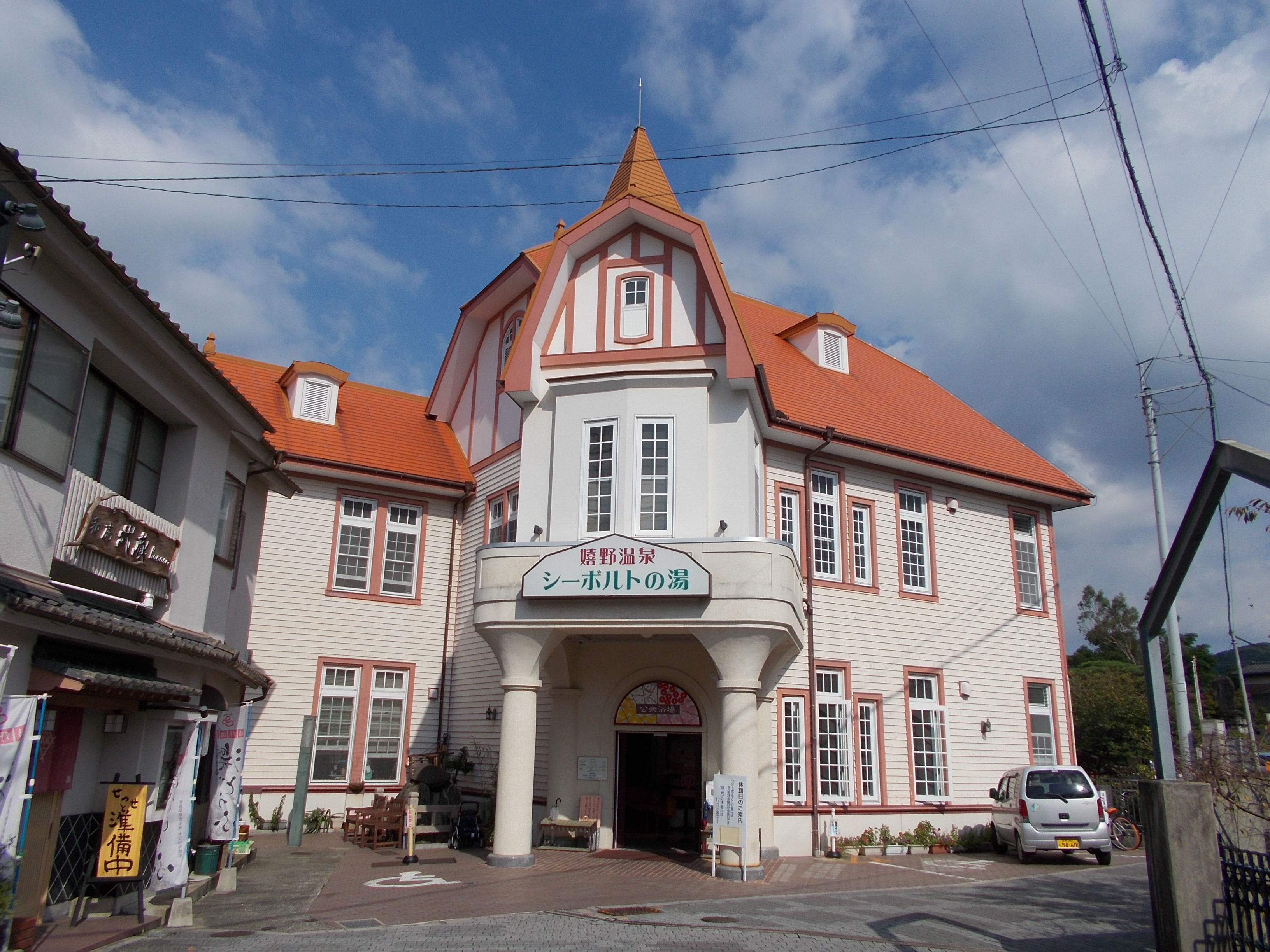
Ureshino Onsen
Ureshino Onsen is a hot spring town in southwestern Saga known for smooth, slightly viscous water often described as one of Japan's best for skin, plus a local twist of tea-infused baths tied to the area's green tea farms.
- Price
- Paid. Public bath entry and day-use bathing at ryokan typically run yen 500 to 1,100.
- Time needed
- 2 to 3 hours for a day-use soak; longer with an overnight ryokan stay.
View practical details
- Best time
- Year-round; cooler months make the hot spring especially appealing.
- Good for
- Onsen fans, couples, and travelers wanting a relaxed break from sightseeing.
What to do
- Soak at Siebold-no-yu, the town's public bathhouse, for a low-cost taste of the local water.
- Book a daytime bath (higaeri onsen) at one of the ryokan that open their baths to non-staying guests.
- Try a tea-infused bath, a local specialty that pairs Ureshino's onsen with its green tea heritage.
- Wander the onsen street for tea shops and casual places to eat.
Tickets and fees
Checked in July 2026: Siebold-no-yu public bath admission is roughly yen 500 to 600. Day-use bathing fees at individual ryokan typically run yen 600 to 1,100 and vary by property and time slot, so confirm current rates before visiting.
Getting there
Ureshino Onsen Station on the Nishi-Kyushu Shinkansen sits close to the onsen district. Alternatively, take a JR line to Takeo-Onsen Station and transfer to a bus, about 35 minutes to the Ureshino Onsen Bus Center.
Nearby
Pair a soak here with the kiln towns of Arita & Imari, both within reach by local train and bus.

Karatsu Castle
Karatsu Castle, nicknamed Maizuru Castle for its resemblance to a dancing crane, sits on a small hill above Karatsu Bay with a reconstructed keep offering sea views and the long Niji no Matsubara pine grove nearby.
- Price
- Paid. Adult admission is around yen 500, yen 250 for elementary and junior high students.
- Time needed
- 1 to 1.5 hours.
View practical details
- Best time
- Clear days for the best views over Karatsu Bay; spring for cherry blossoms in the surrounding park.
- Good for
- Castle fans, photographers, and travelers exploring Karatsu's coastline.
What to do
- Climb the reconstructed tenshu keep for views over Karatsu Bay and the town below.
- Walk the grounds of Maizuru Park surrounding the castle.
- Look out toward Niji no Matsubara, the long pine grove lining the bay.
- Time a visit for early November if the Karatsu Kunchi festival lines up with your trip.
Tickets and fees
Checked in July 2026: adult admission is around yen 500 (yen 250 for elementary and junior high students), with hours roughly 9:00 to 17:00 and last entry at 16:40. A separate small fee applies for the hillside elevator. Confirm current pricing and any closures before visiting.
Getting there
About a 25-minute walk from JR Karatsu Station, or a short local bus ride toward the castle entrance.
Nearby
The porcelain towns of Arita & Imari are a manageable train ride away, and the Yayoi-period site at Yoshinogari Historical Park makes another Saga day trip.
Latest Articles

This page may contain affiliate links. We may earn a commission at no extra cost to you.
Read next
- Fukuoka to Kumamoto: Shinkansen or Bus? Compare Fare, Time and Arrival
- Fukuoka to Nagasaki: Train or Bus? Choose by Arrival, Transfers and Luggage
- Fukuoka Grand Sumo Tournament 2026: Tickets, Seats and Access
- Nagasaki Kunchi 2026: Tickets, Dates and Where to Watch
- Where to Stay in Fukuoka: Hakata, Tenjin or Nakasu?
Where to stay
- Use Saga City, Karatsu, Ureshino as practical bases depending on your route.
- Stay near the main station for transport-heavy trips.
- Choose an onsen, coastal, or historic area for a slower overnight stay.
Sample itinerary
- Day 1: Start with the main city, food area, and easiest signature sights.
- Day 2: Visit the top nature, shrine, castle, or cultural area.
- Day 3: Add a day trip, onsen, coast, island, or rural stop if your schedule allows.
Food to try
- Saga beef
- Squid
- Tea
- Onsen tofu
Common questions
Where did Japanese porcelain begin?
Arita and Imari in Saga, where the kilns, shops and museums are still the centre of the craft.
When should you avoid Arita?
During the big pottery fair in spring, which fills every room in the area. Book far ahead or choose another time; a weekday when the kilns are working is better.
Is Saga worth stopping for?
It sits on the line between Hakata and Nagasaki, so it is easy to stop at on the way rather than travel to specially.
What is Yoshinogari?
A large Yayoi-period settlement site, excavated and partly reconstructed, which gives a rare physical sense of Japan before its written history.
Explore Nearby Japan
Continue planning your route with nearby prefectures, regional guides, and useful trip planning links.
Nearby Prefectures
Same Region Guides
Useful Planning Links
Recommended Planning Guides
Use these practical guides to plan where to stay, move between regions, and shape your itinerary before your Japan trip.
Plan Your Japan Trip
When to go, how long, where, money, and what to sort before you book.
Read planning guideJapan Transport Guide
IC cards, rail passes, the Shinkansen, and getting in from the airport.
Read transport guideHotels & Where to Stay
Compare stay areas and lodging ideas for first-time Japan visitors.
Find stay guides