


Hiroshima Travel Guide
Hiroshima is a strong Japan travel destination for peace history, island shrines, food culture, cycling routes, and Setouchi coast trips.
Quick facts
- Best for: peace history, island shrines, food culture, cycling routes
- Recommended stay: 1 to 3 days
- Best season: Spring, autumn, and key local festival seasons
- Main bases: Peace Memorial Park, Miyajima, Onomichi, Shimanami Kaido
Why visit Hiroshima
Hiroshima carries two very different days in one prefecture. Peace Memorial Park and its museum are the reason most people come, and they deserve unhurried time rather than a scheduled slot. A short ferry away, Itsukushima Shrine on Miyajima is both a National Treasure and a UNESCO World Heritage site, registered in 1996, and its torii stands in the water at high tide. East along the coast, Onomichi is a hillside port town of temples and stairways, and the starting point of the Shimanami Kaido, the cycling route that crosses a chain of islands to Shikoku.
Getting to Hiroshima
Hiroshima is on the Sanyo Shinkansen between Osaka and Fukuoka, which makes it an easy stop rather than a detour — many travellers see the Peace Memorial Park and Miyajima across a single night. Miyajima itself is reached by a short ferry from Miyajimaguchi, and the island is worth staying on late, after the day crowds leave. If you are combining it with a wider Kansai and Kyushu route, see our first-timer itinerary for how the pieces fit and Getting Around Japan for the rail details.
Top Attractions in Hiroshima
Itsukushima Shrine (Miyajima)
Itsukushima Shrine on Miyajima island is a UNESCO World Heritage site famous for its vermillion torii gate that appears to float on the sea at high tide and stands on exposed sand at low tide, so the tide chart matters as much as the weather forecast when you plan your visit.
- Price
- Paid. Shrine admission is yen 300 for adults; a combined ticket with the Treasure Hall is yen 500. Ferry to the island is separate.
- Time needed
- 1.5 to 2.5 hours for the shrine and torii; a half day or more if you add Mt Misen.
View practical details
- Best time
- Check the tide table before you go: high tide gives the classic floating torii look, low tide lets you walk out to the base of the gate on the sand.
- Good for
- First-time Hiroshima visitors, UNESCO World Heritage sites, photographers, and easy day trips from Hiroshima city.
What to do
- Walk the sea-side corridor of Itsukushima Shrine and view the torii gate from the pier area.
- Time your visit around low tide if you want to walk across the sand to the foot of the torii gate; time it around high tide for the floating effect.
- Ride the Miyajima Ropeway toward Mt Misen for forest and Seto Inland Sea views if you have extra time.
- Stroll Omotesando shopping street for grilled oysters, momiji manju, and souvenirs, and expect to see Miyajima's free-roaming deer.
Tickets and fees
Checked in July 2026: shrine admission is paid on-site and does not need advance booking for most travelers; the JR ferry and the Matsudai Kisen ferry both connect Miyajimaguchi to the island and charge a separate fare. Tide times change daily, so confirm the day's high and low tide before you commit to a specific viewing plan.
Getting there
Take the JR Sanyo Line or Hiroshima Electric Railway to Miyajimaguchi Station, then transfer to a short ferry (about 10 minutes) to Miyajima pier. The shrine is a walk of roughly 10 minutes from the pier.
Nearby
Miyajima is a common pairing with a Hiroshima city day that includes Hiroshima Peace Memorial Park, since both are reachable from central Hiroshima in under an hour.
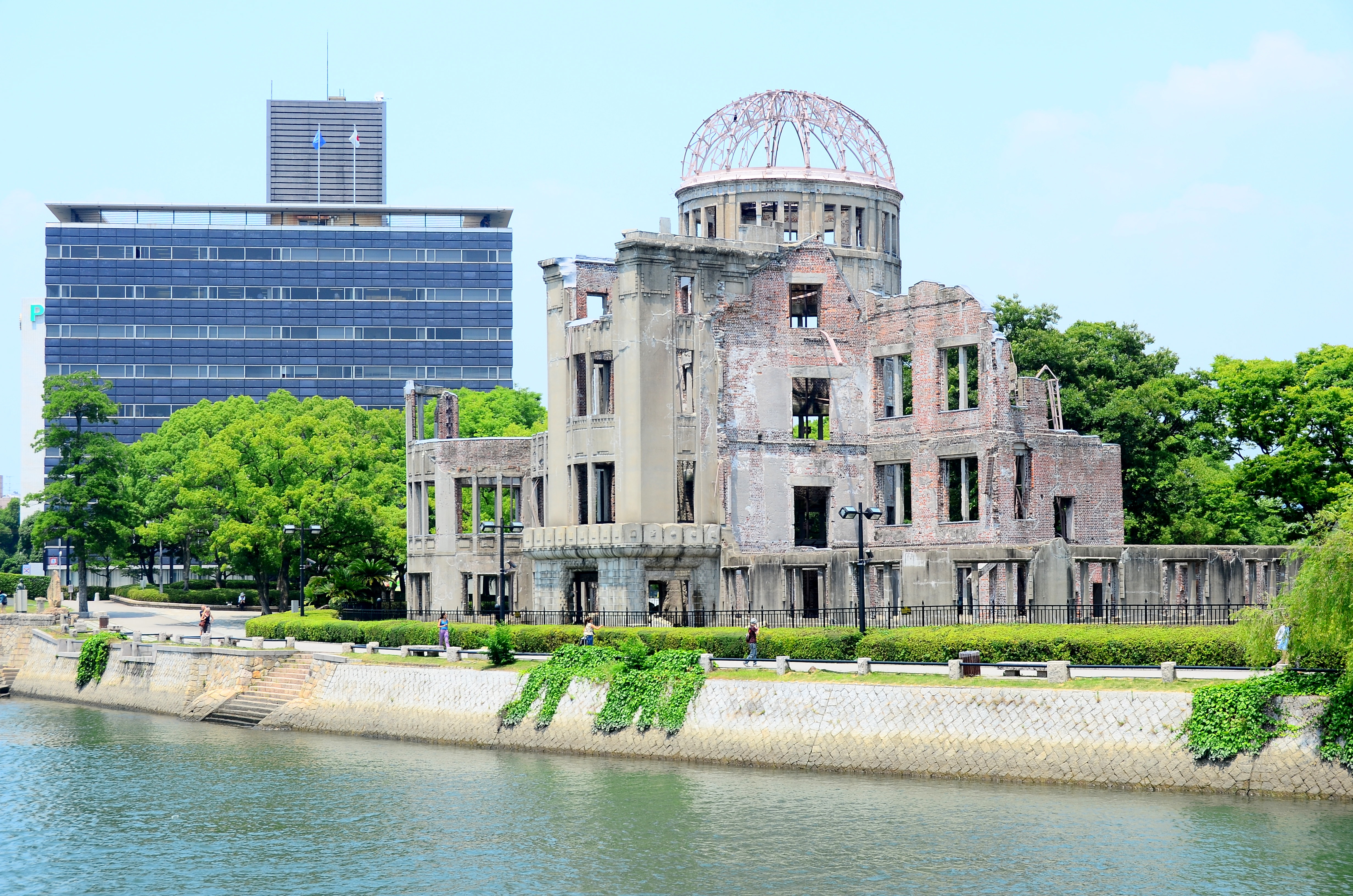
Peace Memorial Park
Hiroshima Peace Memorial Park was built around the hypocenter area of the 1945 atomic bombing and holds the Atomic Bomb Dome, the Peace Memorial Museum, and several memorials to the victims, making it one of the most important places in Japan to understand this history first-hand and with respect.
- Price
- The park itself is free. Peace Memorial Museum admission is yen 200 for adults; free for visitors under 15.
- Time needed
- 2 to 3 hours to walk the park and go through the museum; allow more time if you read every exhibit panel.
View practical details
- Best time
- Morning is quieter and cooler. Early August is the anniversary period around August 6 and draws large crowds for the Peace Memorial Ceremony.
- Good for
- History and modern history study, first-time Hiroshima visitors, and travelers who want context before or after Miyajima.
What to do
- View the Atomic Bomb Dome (Genbaku Dome) from outside; it is preserved as a ruin and is not entered.
- Visit the Peace Memorial Museum for exhibits on the bombing and its aftermath, using personal accounts and artifacts.
- See the Children's Peace Monument, covered in folded paper cranes sent from around the world in memory of Sadako Sasaki.
- Pay respects at the Cenotaph for the Victims and the Flame of Peace, which are aligned with the Dome across the park.
Tickets and fees
Checked in July 2026: museum admission is inexpensive and can usually be purchased on-site, though early-morning entry slots have required an advance online reservation in recent years. Confirm current hours and any reservation requirement on the museum's official site before you go, since hours shift seasonally and around the August ceremony period.
Getting there
From Hiroshima Station, take a Hiroshima Electric Railway (streetcar) toward Genbaku-Dome-mae, a ride of about 15 to 20 minutes. The park and museum are a short walk from that stop.
Nearby
Many visitors combine this with a day trip to Itsukushima Shrine on Miyajima, which is reachable from central Hiroshima in under an hour.

Onomichi
Onomichi is a small port town on the Seto Inland Sea known for its steep hillside lanes, a temple-hopping walking route, retro shopping streets, and its role as the Hiroshima-side starting point of the Shimanami Kaido cycling route to Ehime.
- Price
- Free to walk the town and temple lanes. Senkoji Ropeway is paid, around yen 500 one-way and yen 700 round-trip for adults.
- Time needed
- Half a day to explore the temple walk and old town; a full day or more if you start cycling the Shimanami Kaido from here.
View practical details
- Best time
- Year-round; spring for cherry blossoms along the hillside and mild weather for walking the slopes.
- Good for
- Cyclists starting the Shimanami Kaido, fans of Ozu Yasujiro's films and local literature, food travelers, and slower-paced sightseeing.
What to do
- Walk the Onomichi Temple Walk, a marked route connecting about 25 Buddhist temples across the hillside.
- Ride the Senkoji Ropeway up to Senkoji Park for a view over the town and the Seto Inland Sea, then walk back down through the Path of Literature.
- Browse the old shopping arcade (Onomichi Hondori) and try Onomichi ramen, a soy-based bowl often topped with pork back fat.
- Rent a bicycle near Onomichi Station if you plan to start riding the Shimanami Kaido toward Ehime.
Tickets and fees
Checked in July 2026: no ticket is needed to walk the town or temple route; only paid attractions like the ropeway require a ticket, purchased on-site. Bicycle rental terminals near the station sell rentals directly and accept one-way drop-off at other terminals along the Shimanami Kaido; confirm current pricing locally since rental rates can change seasonally.
Getting there
Onomichi Station is on the JR Sanyo Line, about 90 minutes from Hiroshima Station and about 70 minutes from Okayama Station by regular train.
Nearby
Onomichi is the Hiroshima-side gateway to the Shimanami Kaido cycling route, which continues across the Seto Inland Sea to Imabari in Ehime Prefecture.

Shimanami Kaido
The Shimanami Kaido is a roughly 70-kilometer expressway and cycling route that links Onomichi in Hiroshima Prefecture to Imabari in Ehime Prefecture across six islands of the Seto Inland Sea, and it is best known internationally as one of the world's most scenic long-distance cycling routes, with a dedicated bike path across every bridge.
- Price
- The dedicated cycling path itself has no toll for bicycles under a promotional exemption that has been extended in recent years. Bicycle rental runs roughly yen 2,000 per day for a standard hybrid bike, more for e-bikes.
- Time needed
- A full day for strong riders to complete Onomichi to Imabari in one direction; many travelers spread it over two days, or ride a shorter section as an out-and-back.
View practical details
- Best time
- Spring and autumn for comfortable riding temperatures; avoid midsummer midday heat and check for typhoon season disruptions.
- Good for
- Cyclists of a wide range of levels, travelers combining Hiroshima and Ehime prefectures, and anyone who wants Seto Inland Sea views from bridge level.
What to do
- Ride the full route from Onomichi (Hiroshima) to Imabari (Ehime), crossing six islands: Mukaishima, Innoshima, Ikuchijima, Omishima, Hakatajima, and Oshima.
- Cross the Kurushima-Kaikyo Bridge near Imabari, one of the longest suspension bridge systems in the world, on its separated cycling deck.
- Stop on Ikuchijima to see the Kosanji Temple complex and the Hirayama Ikuo Museum of Art.
- Use one of the public rental terminals along the route if you want a one-way ride, since bikes can be picked up in Onomichi and dropped off near Imabari.
Tickets and fees
Checked in July 2026: no toll applies to cyclists on the dedicated bike route as of this writing, but the exemption is a time-limited government measure, so confirm current status before you go. Bicycle rental is paid directly at rental terminals near Onomichi Station or at other terminals along the route; a small local ferry crossing to Mukaishima at the Onomichi end also charges a separate low fare.
Getting there
Start from JR Onomichi Station in Hiroshima Prefecture (bike rental terminals nearby) and finish near JR Imabari Station in Ehime Prefecture, or ride the route in the opposite direction. Rental terminals allow one-way drop-off along the way if you do not want to ride the return leg.
Nearby
The route begins in Onomichi, which is worth a half day of its own for its temple walk and old town before or after riding.
Latest Articles
 Where to Stay in Hiroshima: Station, Peace Park or Hondori?Choose a Hiroshima base for rail arrivals, Peace Memorial Park time or central evenings, with clear trade-offs between…
 Hiroshima Peace Memorial Museum: Official Hours & Tickets (2026)Official 2026 opening hours, ¥200 adult admission, reservation-only slots, closure dates and access for a first visit to…
This page may contain affiliate links. We may earn a commission at no extra cost to you.
Where to stay
- Use Hiroshima City, Miyajima, Onomichi as practical bases depending on your route.
- Stay near the main station for transport-heavy trips.
- Choose an onsen, coastal, or historic area for a slower overnight stay.
Sample itinerary
- Day 1: Start with the main city, food area, and easiest signature sights.
- Day 2: Visit the top nature, shrine, castle, or cultural area.
- Day 3: Add a day trip, onsen, coast, island, or rural stop if your schedule allows.
Food to try
- Okonomiyaki
- Oysters
- Anago
- Lemons
Common questions
How long should you spend at the Peace Memorial Park?
Give it unhurried time rather than a scheduled slot. The park and its museum are the reason most people come to Hiroshima, and rushing them defeats the visit.
Can you see Hiroshima and Miyajima in one trip?
Yes, and many travellers do both across a single night. Miyajima is a short ferry from Miyajimaguchi, and the island is worth staying on late, after the day crowds leave.
Is Itsukushima Shrine a World Heritage site?
Yes. It is both a National Treasure and a UNESCO World Heritage site, registered in 1996, and its torii stands in the water at high tide.
Is Hiroshima a detour from the main route?
No. It sits on the Sanyo Shinkansen between Osaka and Fukuoka, which makes it an easy stop rather than a diversion.
Explore Nearby Japan
Continue planning your route with nearby prefectures, regional guides, and useful trip planning links.
Nearby Prefectures
Same Region Guides
Useful Planning Links
Recommended Planning Guides
Use these practical guides to plan where to stay, move between regions, and shape your itinerary before your Japan trip.
Plan Your Japan Trip
When to go, how long, where, money, and what to sort before you book.
Read planning guideJapan Transport Guide
IC cards, rail passes, the Shinkansen, and getting in from the airport.
Read transport guideHotels & Where to Stay
Compare stay areas and lodging ideas for first-time Japan visitors.
Find stay guides