
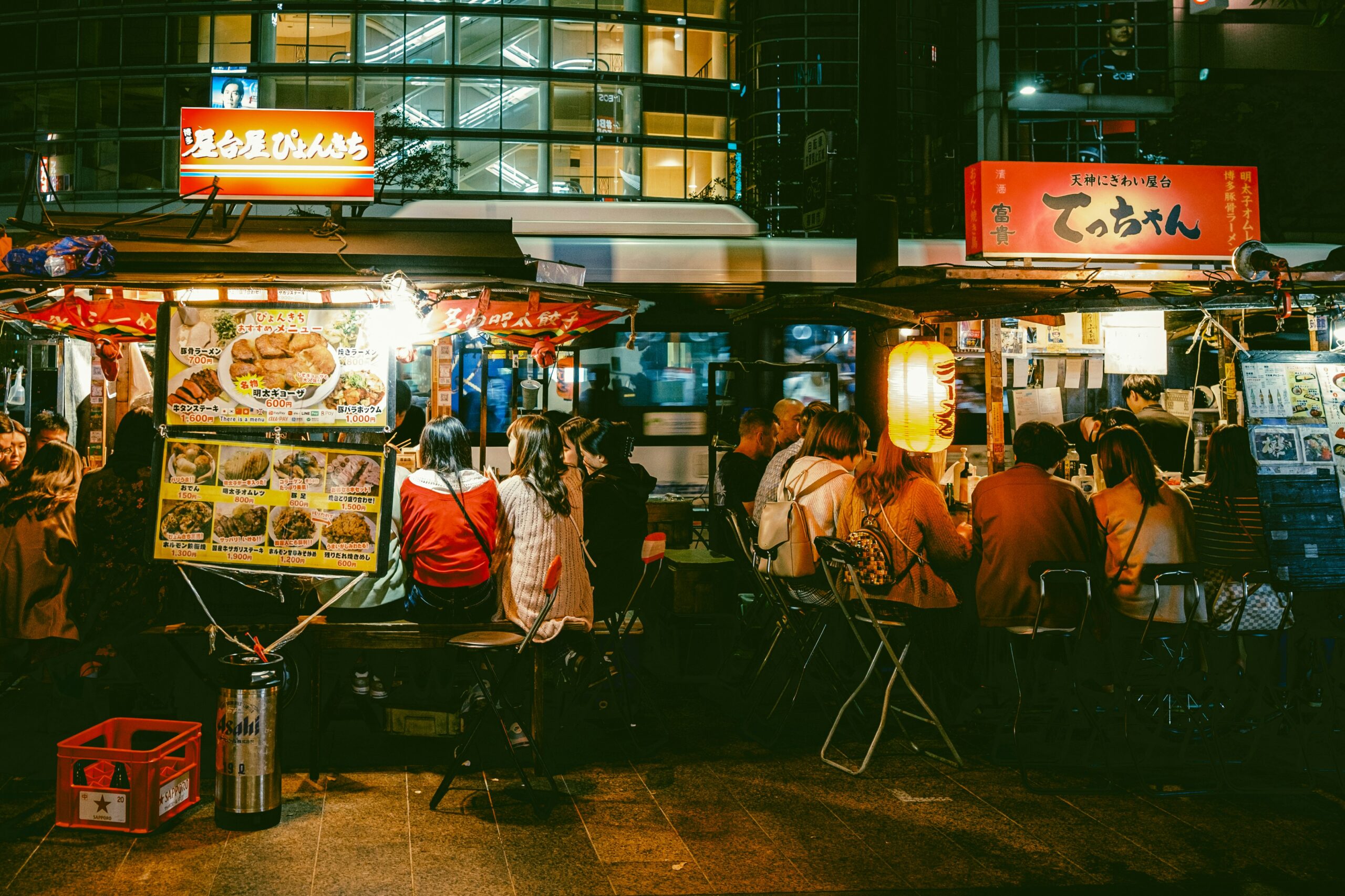

Fukuoka Travel Guide
Fukuoka is a strong Japan travel destination for food stalls, shopping, beaches, temples, festivals, and Kyushu gateway travel.
Quick facts
- Best for: food stalls, shopping, beaches, temples
- Recommended stay: 1 to 3 days
- Best season: Spring, autumn, and key local festival seasons
- Main bases: Hakata, Tenjin, Dazaifu, Itoshima
Why visit Fukuoka
Fukuoka is the gateway to Kyushu and one of the easiest large Japanese cities to get around, built around two centres — Hakata by the station and Tenjin to the west — that sit a few subway stops apart. Dazaifu Tenmangu, a short trip out of the city, enshrines Sugawara Michizane as the deity of learning, which is why students come here before exams. In the city, Ohori Park is built around a former castle moat, Fukuoka Tower looks out over Hakata Bay, and the beaches at Itoshima are close enough for an afternoon.
Getting to Fukuoka
Fukuoka Airport is unusually close to the centre — a short subway ride to Hakata Station rather than an hour-long transfer — which makes the city an efficient place to start or end a trip. By rail, the Sanyo Shinkansen connects Hakata directly with Hiroshima, Osaka and Tokyo, so Fukuoka fits naturally at one end of a west-bound route. From here the rest of Kyushu opens up by train and bus. Our Getting Around Japan reference explains how rail passes and IC cards work on this stretch.
Top Attractions in Fukuoka
Dazaifu Tenmangu Shrine
Dazaifu Tenmangu Shrine enshrines Sugawara no Michizane, the deified scholar known as the god of learning, and draws students and families year-round to pray for exam success, plus flower viewers each late winter for its roughly 6,000 plum trees.
- Price
- Free to enter the shrine grounds. The on-site Kyushu National Museum and the Dazaifu Tenmangu Museum (Homotsuden) charge separate admission, around yen 500 to yen 1,000 depending on the combination.
- Time needed
- 1 to 1.5 hours, longer if you visit the museum or during plum or autumn foliage season.
View practical details
- Best time
- Mid-February to early March for plum blossoms, or a weekday morning to avoid the busiest crowds.
- Good for
- Students, families praying for academic success, plum blossom viewing, and first-time visitors to the Fukuoka area.
What to do
- Pay respects at the main hall, home to Sugawara no Michizane, the god of learning, and pick up an ema plaque if you are praying for exam success.
- Look for Tobiume, the sacred plum tree said to have flown from Kyoto to be near Michizane, and walk the grounds during the January to March bloom.
- Cross the three arched bridges over the pond, said to represent the past, present, and future.
- Try umegae-mochi, the local grilled mochi cake, from one of the stalls along the approach street.
- Add the Kyushu National Museum next door if you want a deeper dive into regional history.
Tickets and fees
Checked in July 2026: entry to the shrine grounds is free and no advance booking is needed. Museum admission is paid separately at the entrance; check the official site for current combination ticket pricing before visiting, especially around peak plum season.
Getting there
From Fukuoka (Hakata), take the JR line or subway to Nishitetsu Fukuoka (Tenjin) Station, then the Nishitetsu Tenjin Omuta Line to Nishitetsu Futsukaichi Station, and transfer to the Nishitetsu Dazaifu Line to Dazaifu Station. The shrine is a short walk from the station along the shopping approach.
Nearby
Combine with a day in central Fukuoka, such as Ohori Park or the observation deck at Fukuoka Tower, both reachable by train back toward the city.
Ohori Park
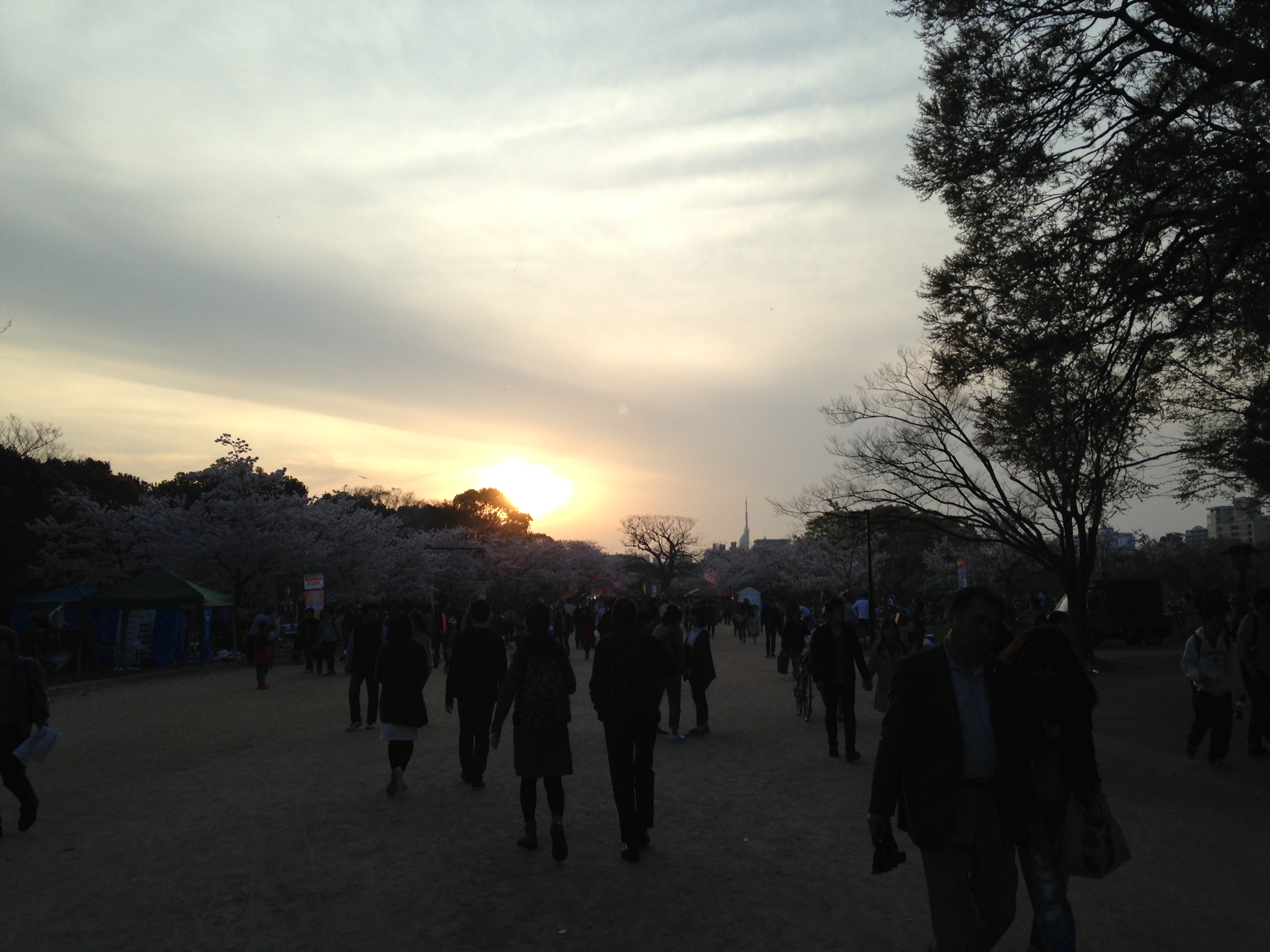
Ohori Park is a large public park built around a central pond in the heart of Fukuoka City, offering a free and easy escape for walking, jogging, and relaxing between sightseeing stops.
- Price
- Free to enter the park. The adjoining Ohori Japanese Garden and Fukuoka Art Museum charge their own separate admission.
- Time needed
- 45 minutes to 1.5 hours for a walk around the pond; longer if you add the Japanese garden or art museum.
View practical details
- Best time
- Early morning or late afternoon for a quieter walk, or sunset for views over the water.
- Good for
- Families, joggers, couples, and anyone wanting a relaxed break from central Fukuoka's streets.
What to do
- Walk or jog the roughly 2-kilometer path that circles the pond.
- Rent a rowboat or pedal boat on the water if you want to get out on the pond itself.
- Visit the Ohori Japanese Garden for a quieter, traditionally landscaped stop within the park.
- Stop at the Fukuoka Art Museum, located on the park grounds, if you have extra time.
- Watch the sunset over the water; the west side of the pond is a popular spot for it.
Tickets and fees
Checked in July 2026: the park itself is free and open year-round with no booking required. The Japanese garden and art museum have their own hours and small admission fees, so check ahead if you plan to visit either.
Getting there
Take the subway Kuko (Airport) Line to Ohori-Koen Station; the park is about a 4-minute walk from the exit. It is also reachable on foot from Fukuoka Castle ruins next door.
Nearby
The park sits right beside the Fukuoka Castle ruins, and it is an easy add-on with Fukuoka Tower for city and coastal views, or a day trip out to Dazaifu Tenmangu Shrine.

Fukuoka Tower
Fukuoka Tower is Japan's tallest seaside tower, standing over Momochi Beach with an observation deck around 123 meters up that gives sweeping views over the city, Hakata Bay, and the coastline.
- Price
- Paid. Observation deck adult admission is around yen 1,000, with reduced pricing for children and students. Confirm current pricing on the official site before your visit.
- Time needed
- 45 minutes to 1 hour.
View practical details
- Best time
- Late afternoon into evening to see the city transition from daylight to lit-up night views.
- Good for
- Couples, photographers, families, and anyone wanting an easy skyline and coastal view of Fukuoka.
What to do
- Ride up to the observation deck for 360-degree views over the city, Hakata Bay, and Momochi Beach.
- Time your visit for sunset if possible, when the tower's mirrored exterior and the city lights both come into play.
- Combine the visit with a walk along Momochi Seaside Park right below the tower.
- Check for seasonal illumination events, which change the tower's light-up design at different times of year.
Tickets and fees
Checked in July 2026: tickets can be bought at the tower or in advance through official and third-party booking sites; buying online ahead of time can help on weekends and holidays. Confirm current adult and child pricing before you go, as fees are subject to change.
Getting there
From Hakata or Tenjin, take a bus toward Fukuoka Tower / Momochi Seaside Park (roughly 20 to 30 minutes), or take the subway to Nishijin Station and then a short bus or taxi ride to the tower.
Nearby
Pair it with a stroll around Ohori Park back toward central Fukuoka, or plan a separate day trip out to the beaches of Itoshima.

Itoshima Beaches
Itoshima is a coastal peninsula less than an hour from central Fukuoka, known for white sand beaches, the Meoto Iwa "married couple rocks" at Sakurai Futamigaura, surf-friendly waters, and a growing scene of beachside cafes.
- Price
- Free to visit the beaches. Surf and paddleboard rentals, parking, and cafe visits are paid separately.
- Time needed
- Half a day to a full day, depending on whether you swim, surf, or just sightsee.
View practical details
- Best time
- Sunset for the Meoto Iwa rocks at Sakurai Futamigaura; summer months for swimming.
- Good for
- Couples, beachgoers, surfers, photographers, and anyone wanting a coastal break from the city.
What to do
- Visit Sakurai Futamigaura to see the Meoto Iwa "married couple rocks" linked by a sacred rope, especially around sunset.
- Relax or swim at Futamigaura beach, home to several beachside cafes and surf shops.
- Rent a surfboard, bodyboard, or stand-up paddleboard if conditions are good.
- Browse the area's cafes and small shops, many run by local and transplant artisans.
- Explore further along the coast if you have a car, since Itoshima has several beaches beyond Futamigaura.
Tickets and fees
Checked in July 2026: the beaches themselves are free and open access, with no tickets required. Gear rental prices and cafe menus vary by shop, so budget separately for those if you plan to surf or eat out.
Getting there
By car, it is roughly 30 to 40 minutes from central Fukuoka via the coastal or expressway routes. Without a car, take the JR Chikuhi Line from Hakata to Chikuzen-Maebaru or Kyudai-Gakkentoshi Station and transfer to a local bus toward Futamigaura, or use the direct Showa Bus West Coast Liner from Hakata Bus Terminal, which runs several times a day.
Nearby
If you are staying in the city, it pairs well as a separate day trip from spots like Fukuoka Tower or Ohori Park; plan Itoshima as its own half or full day rather than combining it in one trip.
Latest Articles
 Fukuoka to Kumamoto: Shinkansen or Bus? Compare Fare, Time and ArrivalCompare the Hakata–Kumamoto Shinkansen and Hinokuni bus by actual fare, travel time, booking rules and whether JR Kumamoto…
 Fukuoka to Nagasaki: Train or Bus? Choose by Arrival, Transfers and LuggageChoose the train for a station-to-station journey via Takeo Onsen, or the direct Kyushu-go bus when its boarding…
 Fukuoka Grand Sumo Tournament 2026: Tickets, Seats and AccessPlan the November 2026 Grand Sumo Tournament in Fukuoka: choose a date and seat type, follow the official…
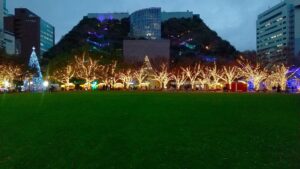 Where to Stay in Fukuoka: Hakata, Tenjin or Nakasu?Choose the best Fukuoka base for airport arrivals, JR day trips, shopping or late dining, with clear trade-offs…
 Fukuoka Airport to Hakata or Tenjin: Subway, Bus, Fare & TimeChoose the best route from Fukuoka Airport to Hakata or Tenjin with terminal-specific subway and bus options, fares,…
This page may contain affiliate links. We may earn a commission at no extra cost to you.
Read next
- Where to Stay in Yufuin or Beppu: Choose the Onsen Base That Fits Your Trip
- Kumamoto Castle: Tickets, Hours and the Best Gate for Your Day
- Where to Stay in Kumamoto: Station, Shimotori or Kamitori?
- Where to Stay in Beppu: Station or Kannawa Onsen?
- Saga Balloon Fiesta 2026: Train, Parking and Weather Plan
Where to stay
- Use Hakata, Tenjin, Nakasu as practical bases depending on your route.
- Stay near the main station for transport-heavy trips.
- Choose an onsen, coastal, or historic area for a slower overnight stay.
Sample itinerary
- Day 1: Start with the main city, food area, and easiest signature sights.
- Day 2: Visit the top nature, shrine, castle, or cultural area.
- Day 3: Add a day trip, onsen, coast, island, or rural stop if your schedule allows.
Food to try
- Tonkotsu ramen
- Motsunabe
- Mentaiko
- Yatai food
Common questions
How far is Fukuoka Airport from the city?
Unusually close: a short subway ride to Hakata Station rather than an hour-long transfer, which makes Fukuoka an efficient place to start or end a trip.
Should you stay in Hakata or Tenjin?
Either works. They are the two centres of the city and sit a few subway stops apart, so the choice is about atmosphere rather than convenience.
Can you reach Fukuoka by Shinkansen?
Yes. The Sanyo Shinkansen connects Hakata directly with Hiroshima, Osaka and Tokyo, so Fukuoka fits naturally at one end of a west-bound route.
Why do students visit Dazaifu Tenmangu?
It enshrines Sugawara Michizane as the deity of learning, so students come to pray before exams. It is a short trip out of the city.
Explore Nearby Japan
Continue planning your route with nearby prefectures, regional guides, and useful trip planning links.
Nearby Prefectures
Same Region Guides
Useful Planning Links
Recommended Planning Guides
Use these practical guides to plan where to stay, move between regions, and shape your itinerary before your Japan trip.
Plan Your Japan Trip
When to go, how long, where, money, and what to sort before you book.
Read planning guideJapan Transport Guide
IC cards, rail passes, the Shinkansen, and getting in from the airport.
Read transport guideHotels & Where to Stay
Compare stay areas and lodging ideas for first-time Japan visitors.
Find stay guides