


Kumamoto Travel Guide
Kumamoto is a strong Kyushu destination for castle history, Aso volcano scenery, gardens, onsen villages, and regional food.
Quick facts
- Best for: Castle history, Aso, onsen, Kyushu food
- Recommended stay: 2 to 3 days
- Best season: Spring, autumn, and mild winter days
- Main bases: Kumamoto City, Aso, Kurokawa Onsen
Why visit Kumamoto
Kumamoto is central Kyushu, and it pairs a great castle with the biggest volcanic landscape in Japan. Kumamoto Castle has been under a long restoration since the 2016 earthquakes; the keep is open again and there are raised walkways over the works, but which parts of the grounds you can reach changes as the repairs progress, so check before you go. Mount Aso sits in one of the world’s largest calderas, with a working town and farmland inside the rim. Suizenji Jojuen is a strolling garden that models famous landscapes in miniature, and Kurokawa Onsen is a deliberately low-key hot spring village of riverside baths.
Getting to Kumamoto
Kumamoto is on the Kyushu Shinkansen, close to Fukuoka and Kagoshima, so the city is simple to reach; the caldera and Kurokawa are buses or a car inland. Aso is an active volcano and access to the crater is controlled, with an exclusion zone that is widened or lifted as activity changes — sometimes at a few hours’ notice. Check the official crater information site, aso-volcano.jp, on the day you plan to go rather than assuming the crater is open.
Top Attractions in Kumamoto
Kumamoto Castle
Kumamoto Castle is open again after the temporary closure following the July 2026 Kumamoto earthquake, but access, services, and crowd levels can change while safety checks continue. Plan this landmark as a current recovery visit: check the official notice before travel, use the operating gate for your day, and leave time for ticketing and the castle route.
- Admission and tickets
- High-school students and older pay JPY 800; elementary and junior-high students JPY 300. During the current recovery operation, the Wakuwaku-za ticket office and two- and three-facility passes are temporarily unavailable.
View practical details
- Current status
- The official reopening notice says public access resumed from 13 August 2026 after safety checks. Conditions can change, so confirm the latest notice before departure.
- August hours
- July-August opening is 9:00-19:00; last admission is 18:00 and the main keep closes to entry at 18:30. The regular September-June schedule is shorter.
- Entry gates
- Weekdays use the South Gate. North and South gates normally operate on weekends and public holidays, but the official guide warns that work progress can still restrict North Gate access.
What to do
- Buy a web admission ticket when possible: the official reopening notice warns of heavy crowds after reopening, while some ticket offices and combination passes remain unavailable.
- For an August visit, enter by 18:00 and reach the main keep by 18:30; do not rely on the shorter regular-season hours.
- Follow the signed accessible route and restoration guidance on the day rather than planning around a fixed historic route, because safety checks can change the available areas.
- Use the free Josaien-to-Ninomaru shuttle when its current service fits your route; after the 2026 earthquake it resumed daily 9:00-17:00 but does not stop at the South Gate.
Tickets and fees
Checked in August 2026: adult admission is JPY 800 and elementary/junior-high admission is JPY 300. The official reopening notice recommends advance web tickets because heavy crowds are expected; Wakuwaku-za ticket sales and the two- and three-facility passes are temporarily suspended. Check the latest official notice before visiting.
Getting there
From JR Kumamoto Station, the Kumamoto City Tram to Kumamoto Castle City Hall takes about 20 minutes, followed by about 15 minutes on foot through Sakura-no-Baba Josaien. From Sakuramachi Bus Terminal, the Shiromegurin loop bus reaches Ninomaru Parking Lot in about 10 minutes. A free Josaien-Ninomaru shuttle resumed daily 9:00-17:00 after the July 2026 earthquake, but it does not serve the South Gate.
Nearby
After the castle, Suizenji Jojuen Garden is a quieter contrast. For the castle day itself, keep plans flexible: current gate access, nearby traffic controls, and the open visitor route can change with recovery work.

Mount Aso
Mount Aso is one of the world's largest active volcanoes and calderas, with sweeping grassland scenery and a still-active crater at Nakadake, though crater access depends on the day's volcanic activity level and can close with little notice.
- Price
- Free to view the caldera and grasslands; the Nakadake crater shuttle bus costs around yen 1,030 round trip, and the Aso Volcano Museum charges separate admission.
- Time needed
- Half a day, more if combining the crater, museum, and grassland viewpoints.
View practical details
- Best time
- Clear mornings for visibility; check the volcanic alert level before heading up, since gas and weather can close crater access at any time of year.
- Good for
- Nature lovers, hikers, photographers, and travelers with a car or joining an organized tour.
What to do
- Ride the shuttle bus or drive the toll road up toward Nakadake crater, then walk the final stretch to the rim on days when access is open.
- Visit the Aso Volcano Museum for exhibits and live camera feeds of the crater on days when direct access is restricted.
- Drive or cycle through the Kusasenri and Daikanbo grassland areas for wide caldera views.
- Check current safety status at the Mount Aso Visitor Center before heading to the crater, since the ropeway destroyed in the 2016 earthquake was never rebuilt.
Tickets and fees
Checked in July 2026: there is no fixed ticket for the mountain itself, but crater access opens and closes based on the daily volcanic alert level (Level 1 generally open, Level 2 and above typically restricted or closed) and on gas concentration readings that can change within the same day. Build a buffer day into your itinerary if seeing the crater is a priority, and check official updates the morning of your visit.
Getting there
Mount Aso is roughly 60 to 90 minutes by car from Kumamoto City via Route 57 and the Aso Milk Road. Without a car, JR trains run to Aso Station, with connecting buses toward the crater area and Kusasenri, though schedules are limited, so many visitors join a tour or rent a car for flexibility.
Nearby
Combine the visit with Kurokawa Onsen, about 30 minutes from the caldera by car, or head back toward Kumamoto Castle for a day covering both nature and history.

Suizenji Jojuen Garden
Suizenji Jojuen Garden is a traditional strolling garden in Kumamoto City built around a spring-fed pond, with a miniature grass-covered Mt Fuji and scenery meant to recall the 53 stations of the old Tokaido road.
- Price
- Paid. Adult admission is yen 400, children ages 6 to 15 yen 200; group and disability discounts available.
- Time needed
- 45 minutes to 1 hour.
View practical details
- Best time
- Early morning for calm photos, or spring and autumn for seasonal color.
- Good for
- Garden lovers, a relaxed break between other Kumamoto sights, and families.
What to do
- Walk the strolling path around the central spring-fed pond, viewing the small grass-covered mound representing Mt Fuji.
- Visit Izumi Shrine on the grounds, dedicated to the Hosokawa clan who once ruled Kumamoto.
- Look for the clear spring water that feeds the pond, part of the same aquifer system that supplies Kumamoto's drinking water.
- Stop at the on-site teahouse for matcha and a seated view over the garden, if open during your visit.
Tickets and fees
Checked in July 2026: tickets are sold at the entrance gate, with adult admission around yen 400; advance booking is generally not needed outside major holiday periods.
Getting there
From JR Kumamoto Station or central Kumamoto, take a city tram or bus toward Suizenjikoen-dori stop, then walk a few minutes to the garden entrance. It is roughly a 20 to 30 minute tram ride from Kumamotojo-mae near the castle.
Nearby
Suizenji pairs easily with Kumamoto Castle on the same day using Kumamoto City's tram network.
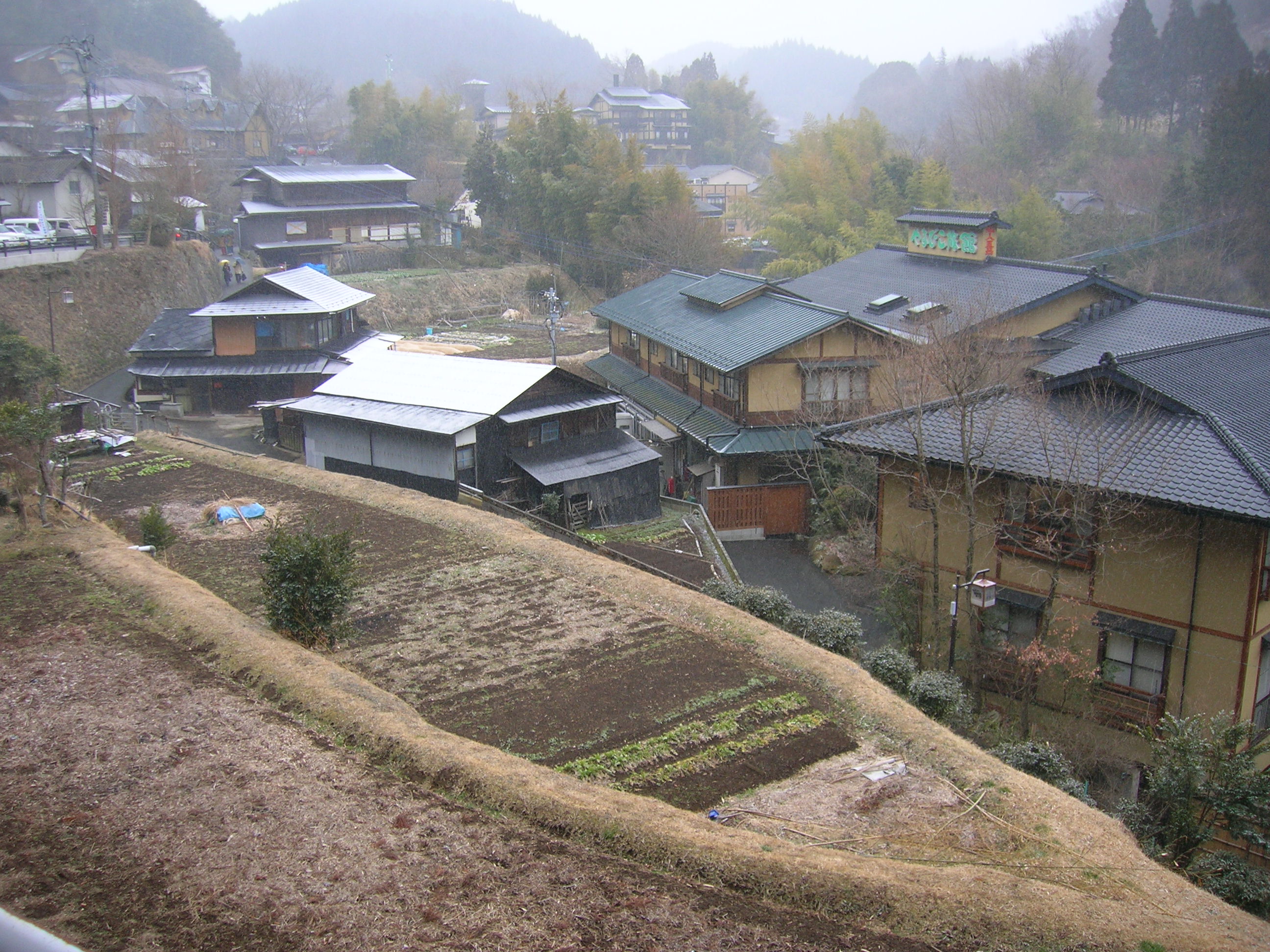
Kurokawa Onsen
Kurokawa Onsen is a small hot spring town in northern Kumamoto Prefecture known for its cluster of traditional ryokan with outdoor baths set along a wooded river valley, reached most easily by car or a limited direct bus service.
- Price
- Paid per bath, or use the onsen-hopping pass. The Nyuto Tegata pass costs around yen 1,300 for adults (yen 700 for children) and covers three baths.
- Time needed
- Half a day for a bath-hopping visit, or overnight to stay at a ryokan.
View practical details
- Best time
- Late afternoon into evening for the lantern-lit streets, or winter for snow views from the outdoor baths.
- Good for
- Couples, onsen enthusiasts, and travelers wanting a slower, traditional-feel stop away from big cities.
What to do
- Buy the Nyuto Tegata wooden pass at the information center and use it at up to three different participating outdoor baths.
- Walk the town's main street along the Tanoharu River, browsing small shops and cafes between baths.
- Soak in a rotenburo (outdoor bath) surrounded by trees, a signature feature of most Kurokawa ryokan.
- If staying overnight, ask your ryokan about day-only bath access rules, since some baths reserve certain hours for overnight guests only.
Tickets and fees
Checked in July 2026: the Nyuto Tegata pass is sold at the Kurokawa Onsen information center for around yen 1,300 and is valid for six months, letting you choose three baths at your own pace; individual bath entry without the pass is also available at each ryokan.
Getting there
By car, Kurokawa Onsen is about 30 minutes from the Aso caldera area and around 2 hours from Kumamoto City via Route 57 and Route 212. Without a car, a limited number of direct buses run from Kumamoto City and from Hakata Station in Fukuoka (roughly 2.5 to 3 hours), and advance reservations are recommended since seats are limited.
Nearby
Many visitors combine Kurokawa Onsen with a stop at Mount Aso on the way in or out, since the caldera is only about 30 minutes away by car.
Latest Articles
 Fukuoka to Kumamoto: Shinkansen or Bus? Compare Fare, Time and ArrivalCompare the Hakata–Kumamoto Shinkansen and Hinokuni bus by actual fare, travel time, booking rules and whether JR Kumamoto…
 Kumamoto Castle: Tickets, Hours and the Best Gate for Your DayChoose your Kumamoto Castle gate and arrival plan before buying a ticket: weekday access is not the same…
 Where to Stay in Kumamoto: Station, Shimotori or Kamitori?Choose Kumamoto Station for an easy rail arrival and flexible onward travel, Shimotori for a livelier downtown evening,…
This page may contain affiliate links. We may earn a commission at no extra cost to you.
Read next
Where to stay
| Area | Notes |
|---|---|
| Kumamoto City | best for the castle, food, and city transport. |
| Aso | best for volcanic landscapes and nature. |
| Kurokawa Onsen | best for a quiet ryokan stay. |
Sample itinerary
- Day 1: Kumamoto Castle, Suizenji Garden, and city dining.
- Day 2: Mount Aso views and countryside stops.
- Day 3: Kurokawa Onsen or another Kyushu side trip.
Food to try
- Kumamoto ramen
- Basashi horse sashimi where appropriate
- Akaushi beef and local sweets
Common questions
Can you enter Kumamoto Castle?
The keep is open again after the 2016 earthquakes and there are raised walkways over the works, but which parts of the grounds you can reach changes as the repairs progress, so check before you go.
Can you visit the crater of Mount Aso?
Access is controlled and changes at short notice depending on volcanic activity. Check the official crater information site on the day you plan to go rather than assuming it is open.
How do you reach the Aso caldera?
By bus or car inland from Kumamoto city, which is itself on the Kyushu Shinkansen close to Fukuoka and Kagoshima.
What is Kurokawa Onsen like?
A deliberately low-key hot spring village of riverside baths, rather than a resort strip.
Explore Nearby Japan
Continue planning your route with nearby prefectures, regional guides, and useful trip planning links.
Nearby Prefectures
Same Region Guides
Useful Planning Links
Recommended Planning Guides
Use these practical guides to plan where to stay, move between regions, and shape your itinerary before your Japan trip.
Plan Your Japan Trip
When to go, how long, where, money, and what to sort before you book.
Read planning guideJapan Transport Guide
IC cards, rail passes, the Shinkansen, and getting in from the airport.
Read transport guideHotels & Where to Stay
Compare stay areas and lodging ideas for first-time Japan visitors.
Find stay guides