

_in_Beppu.jpg)
Oita Travel Guide
Oita is a strong Japan travel destination for onsen towns, steam cuisine, scenic plateaus, historic villages, and Kyushu relaxation.
Quick facts
- Best for: onsen towns, steam cuisine, scenic plateaus, historic villages
- Recommended stay: 1 to 3 days
- Best season: Spring, autumn, and key local festival seasons
- Main bases: Beppu, Yufuin, Usa Jingu, Kuju Highlands
Why visit Oita
Oita is Japan’s hot spring prefecture by volume, and its two famous towns take opposite approaches. Beppu is a working steam-and-industry onsen city where vents smoke between houses and the “hells” are coloured pools to look at rather than bathe in. Yufuin is the softer alternative under Mount Yufu, a walkable village of galleries, cafes and quieter inns. Usa Jingu in the north is the head shrine of the tens of thousands of Hachiman shrines across the country. The dramatic Takachiho Gorge lies just over the southern border in Miyazaki and is usually visited from this side.
Getting to Oita
Beppu and Oita city are reached by limited express around the coast from Hakata, or by air into Oita. Beppu and Yufuin are close together, which makes it easy to see both and to stay in whichever suits you — they are barely half an hour apart. Inland Kyushu is mountainous and the cross-island routes are slow, so if you are combining Oita with Aso or Takachiho, allow far more time than the map suggests and consider a car.
Top Attractions in Oita
Beppu Onsen
Beppu Onsen is Japan's biggest hot spring resort town, producing more thermal water per day than any other hot spring area in the country, and its signature Jigoku Meguri (hell circuit) lets visitors walk between steaming, boiling-hot ponds in vivid colors rather than bathe in them.
- Price
- Paid. A shared Jigoku Meguri admission ticket covering all seven hells runs roughly yen 2,000 to 2,200 for adults; individual hells can also be entered separately for a lower fee each.
- Time needed
- Half a day for the main hells, or a full day if you also soak in a public bathhouse.
View practical details
- Best time
- Daytime for the hell circuit; evening for a relaxing onsen soak afterward.
- Good for
- First-time Kyushu visitors, hot spring fans, photographers, and anyone curious about unusual volcanic scenery.
What to do
- Walk the Jigoku Meguri hell circuit, especially the cobalt-blue Umi Jigoku and the deep red Chinoike Jigoku.
- Try a steamed-in-hot-spring-vapor snack (jigoku mushi) sold near several of the hells.
- Soak in one of Beppu's many public bathhouses, such as Takegawara Onsen, for the classic hot spring experience.
- If time allows, ride the ropeway up Mt Tsurumi for a wider view over the town and Beppu Bay.
Tickets and fees
Checked in July 2026: a combined ticket for the seven hells is cheaper than paying at each site individually and is valid for two days from purchase, with one entry per hell. Prices and included sites can change, so confirm current rates before visiting.
Getting there
Take a JR train to Beppu Station. The hells are spread across two clusters (Kannawa and Shibaseki), reachable by local bus from the station in about 20 to 25 minutes; a bus day pass is convenient if you plan to see most of them.
Nearby
Consider pairing Beppu with Yufuin, a quieter hot spring town about 50 minutes away by bus, or Usa Jingu Shrine further north.

Yufuin
Yufuin is a walkable hot spring town at the foot of twin-peaked Mt Yufu, known for a relaxed pace, boutique cafes and small art museums along Yunotsubo Street, and scenic Lake Kinrin at the end of the main shopping street.
- Price
- Free to walk around town; individual cafes, museums, and onsen baths charge separately, typically a few hundred to around yen 1,000 to 1,500 each.
- Time needed
- Half a day for a relaxed walk along Yunotsubo Street to Lake Kinrin; a full day if combined with an onsen stay.
View practical details
- Best time
- Late morning to afternoon for shops and cafes; early morning around Lake Kinrin for mist and fewer crowds.
- Good for
- Couples, hot spring fans, cafe hoppers, and travelers wanting a quieter contrast to Beppu.
What to do
- Stroll Yunotsubo Street, lined with cafes, craft shops, and small museums, for about 1.2 km.
- Walk to Lake Kinrin at the end of the street, where morning mist and a small lakeside shrine are the main draw.
- Soak in one of Yufuin's onsen ryokan or a day-use bath if you want the classic hot spring experience.
- On a clear day, look for twin-peaked Mt Yufu framing the town; a full hike to the summit takes about 90 minutes each way with no facilities on the trail.
Tickets and fees
Checked in July 2026: Yufuin itself has no entry fee, but individual attractions, day-use baths, and museums each set their own hours and admission, so check specific venues if you have a tight schedule.
Getting there
From Beppu Station, take bus 36 to Yufuin (around 50 to 55 minutes) or the JR Kyudai Line via Oita Station (around 1 hour 15 minutes with a transfer). From Fukuoka, the Yufu limited express train runs directly to Yufuin Station in about 2 hours.
Nearby
Yufuin is often combined with Beppu Onsen, roughly 50 minutes away by bus, for a two-town hot spring itinerary.
Usa Jingu Shrine
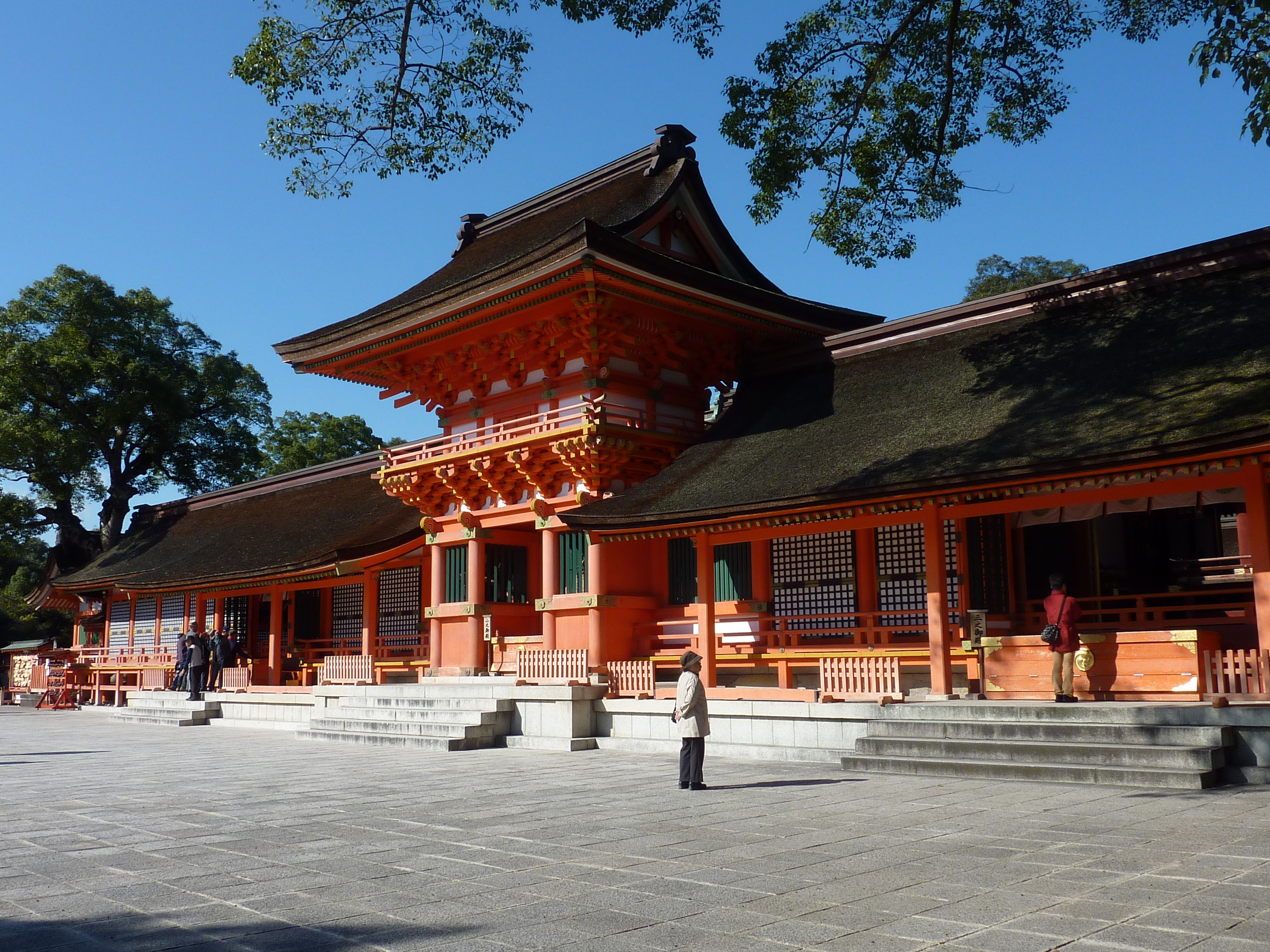
Usa Jingu is the head shrine of all Hachiman shrines in Japan, founded in the early 8th century and long ranked second in prestige only to Ise Shrine, with a striking vermillion Nanchu Romon gate and forested shrine grounds in Usa, Oita.
- Price
- Free to enter the shrine grounds; the inner shrine area and treasure hall may have a small separate fee.
- Time needed
- 1 to 1.5 hours to see the main halls and walk the forested grounds.
View practical details
- Best time
- Morning on a weekday for a quiet visit; the grounds are shaded and pleasant even in summer.
- Good for
- History and shrine architecture fans, and travelers interested in Japan's Hachiman shrine tradition.
What to do
- Pass through the vermillion Nanchu Romon gate on the approach to the main shrine buildings.
- Visit the honden (main hall), a nationally designated important cultural property showing a distinctive shrine architecture style.
- Walk the wooded shrine grounds, which stay cool and quiet even away from the main buildings.
- Look for the shrine's connection to the wider network of over 40,000 Hachiman shrines across Japan that trace their origin here.
Tickets and fees
Checked in July 2026: general shrine grounds are free to enter; treasure hall or inner-precinct access, where offered, may carry a modest separate admission. Confirm current hours before visiting since they can vary by season.
Getting there
From JR Usa Station on the Nippo Main Line, take the Daiko Hokubu bus toward Yokkaichi or Nakatsu to the Usa Hachiman bus stop in front of the shrine. A limited number of direct buses also run between Oita Airport and Usa Jingu.
Nearby
Usa Jingu is a longer trip from the coast, but can be combined with Beppu Onsen for travelers routing through northern Oita by car or train.

Takachiho Gorge (nearby)
Takachiho Gorge is a narrow volcanic ravine in northern Miyazaki where the Gokase River cuts between columnar basalt cliffs and the Manai Falls drops straight into the water, and it is the signature nature stop for this part of Kyushu whether you approach from Miyazaki or from neighboring Oita.
- Price
- Free to walk the gorge footpath. Rental boats are paid, roughly yen 4,100 per boat for 30 minutes on weekdays and yen 5,100 on weekends and peak periods, with overtime billed per 10 minutes.
- Time needed
- 1 to 2 hours for the walking path and viewpoints; add waiting time in peak season if you want a boat.
View practical details
- Best time
- Early morning on weekdays for calmer water and shorter boat lines; avoid the gorge floor entirely after heavy rain.
- Good for
- Nature lovers, photographers, and travelers combining Miyazaki with a Kyushu road trip through Oita.
What to do
- Walk the paved footpath along the gorge rim for views down to Manai Falls and the basalt cliff walls.
- If conditions allow, rent a rowboat to go out on the river directly beneath the falls for the classic photo.
- Check boat operation status before you commit time to this stop, since the boats are suspended whenever the river rises from rain or upstream dam releases.
- Walk over to Takachiho Shrine in the town center, a short drive or taxi ride from the gorge, especially if you plan to see an evening Kagura dance performance.
Tickets and fees
Checked in July 2026: gorge access itself is free. Boat rentals are reservable online from two weeks up to two days in advance through the official Takachiho Town Tourism Association site, and same-day boat availability is not guaranteed. Boats close for the day without notice when the river level rises, so treat a boat ride as a bonus rather than something to plan your schedule around, particularly during Kyushu's rainy season and typhoon season.
Getting there
Takachiho has no train station; most visitors arrive by rental car or highway bus. From Miyazaki city it is roughly a 2 to 2.5 hour drive north. From the Oita side, Takachiho is a common stop when combining Miyazaki with Aso or Beppu, at around 1.5 to 2 hours by car from central Oita. Local shuttle buses connect Takachiho bus center to the gorge in about 10 minutes on foot from the center, or a short taxi ride if you have luggage.
Nearby
If you are working through Miyazaki's coastline as well, pair this trip with Aoshima Shrine and its surrounding rock formations, or Udo Shrine further south, though note these are a long drive from Takachiho and better treated as a separate day.
Latest Articles
 Where to Stay in Yufuin or Beppu: Choose the Onsen Base That Fits Your TripChoose Yufuin for a slower onsen-town stay or Beppu for station access and a broader city base; the…
 Where to Stay in Beppu: Station or Kannawa Onsen?Choose Beppu Station for an easy arrival and flexible city base, or Kannawa Onsen when steam-town stays and…
This page may contain affiliate links. We may earn a commission at no extra cost to you.
Where to stay
- Use Beppu, Yufuin, Oita City as practical bases depending on your route.
- Stay near the main station for transport-heavy trips.
- Choose an onsen, coastal, or historic area for a slower overnight stay.
Sample itinerary
- Day 1: Start with the main city, food area, and easiest signature sights.
- Day 2: Visit the top nature, shrine, castle, or cultural area.
- Day 3: Add a day trip, onsen, coast, island, or rural stop if your schedule allows.
Food to try
- Toriten
- Jigoku-mushi
- Seki aji and Seki saba
- Barley shochu
Common questions
How do Beppu and Yufuin differ?
Beppu is a working steam-and-industry onsen city where vents smoke between houses; Yufuin is the softer alternative under Mount Yufu, a walkable village of galleries and quieter inns.
Can you bathe in the Beppu hells?
No. The hells are coloured pools to look at rather than baths.
Can you visit both Beppu and Yufuin?
Easily. They are barely half an hour apart, so you can see both and stay in whichever suits you.
Is Takachiho Gorge in Oita?
No. It lies just over the southern border in Miyazaki, though it is usually visited from the Oita side.
Explore Nearby Japan
Continue planning your route with nearby prefectures, regional guides, and useful trip planning links.
Nearby Prefectures
Same Region Guides
Useful Planning Links
Recommended Planning Guides
Use these practical guides to plan where to stay, move between regions, and shape your itinerary before your Japan trip.
Plan Your Japan Trip
When to go, how long, where, money, and what to sort before you book.
Read planning guideJapan Transport Guide
IC cards, rail passes, the Shinkansen, and getting in from the airport.
Read transport guideHotels & Where to Stay
Compare stay areas and lodging ideas for first-time Japan visitors.
Find stay guides