

Yamaguchi Travel Guide
Yamaguchi is a strong Japan travel destination for historic towns, bridges, coastal views, caves, samurai districts, and western Honshu routes.
Quick facts
- Best for: historic towns, bridges, coastal views, caves
- Recommended stay: 1 to 3 days
- Best season: Spring, autumn, and key local festival seasons
- Main bases: Kintaikyo Bridge, Akiyoshidai, Hagi, Motonosumi Shrine
Why visit Yamaguchi
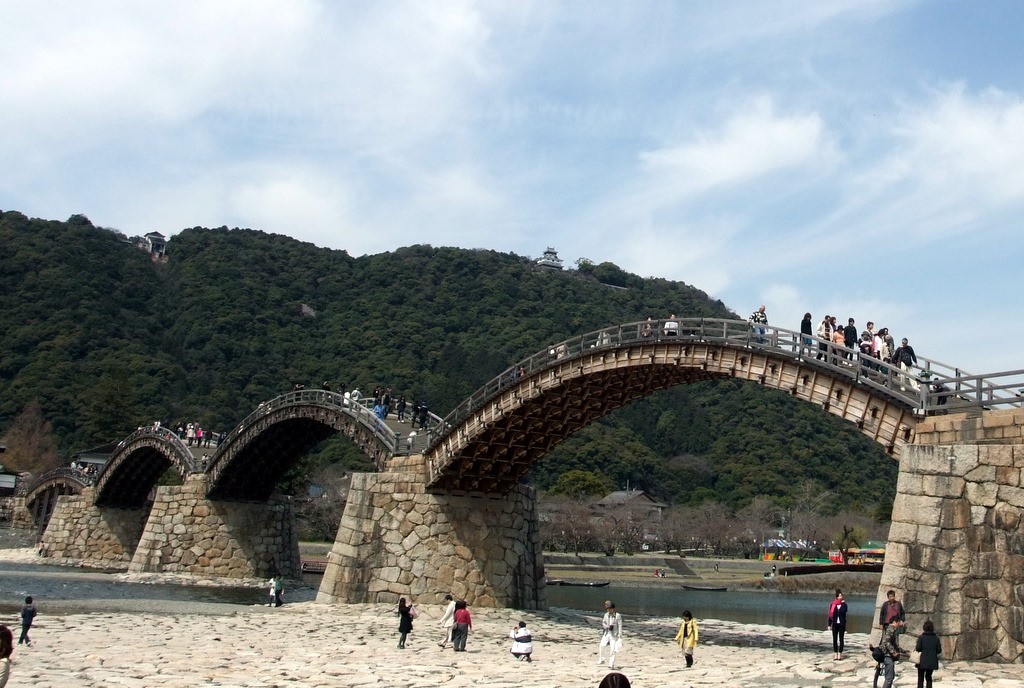
Yamaguchi occupies the western tip of Honshu and is more often driven through than visited, which keeps its sights calm. The Kintai Bridge at Iwakuni is a series of wooden arches spanning a wide river bed, rebuilt over centuries using the same joinery. Inland, Akiyoshido is a vast limestone cave designated a Special Natural Monument, sitting beneath the grassland plateau of Akiyoshidai. Ruriko-ji keeps a five-storey pagoda in a quiet park in Yamaguchi city, and on the northern coast Motonosumi Shrine runs a line of red torii down a headland to the sea.
Getting to Yamaguchi
The Sanyo Shinkansen crosses the prefecture on its way to Kyushu, with Shin-Yamaguchi the useful stop, and Iwakuni sits near the Hiroshima end. That makes Yamaguchi easy to add to a westbound route as a stop rather than a destination. The catch is that the cave and the northern coast are well away from the Shinkansen line and thinly served by buses, so a rental car is what turns Yamaguchi from one sight into three.
Top Attractions in Yamaguchi
Kintai Bridge
Kintai Bridge is a five-arched wooden bridge over the Nishiki River in Iwakuni, built without a single nail in its original 17th-century design, and it remains one of the most photographed historic bridges in Japan.
- Price
- Paid. Round-trip bridge crossing is yen 310 for adults, yen 150 for children under 12. A combo ticket with the ropeway and Iwakuni Castle is around yen 970 for adults.
- Time needed
- 1.5 to 3 hours if combining the bridge with Kikko Park and Iwakuni Castle.
View practical details
- Best time
- Spring for cherry blossoms along the riverbank, or autumn for foliage.
- Good for
- History fans, photographers, families, and anyone visiting Hiroshima who wants a easy day trip.
What to do
- Walk the arched wooden bridge itself and take in the joinery, built with no nails in the original design.
- Cross into Kikko Park on the far bank for gardens, samurai-era sites, and a small zoo.
- Ride the ropeway up to Iwakuni Castle for river and city views.
- Watch for cherry blossom season, when the riverbanks around the bridge get busy with local visitors too.
Tickets and fees
Checked in July 2026: buy the bridge crossing ticket at the tollbooth near the bridge; outside staffed hours an unmanned toll box takes exact change. The combo ticket covering the bridge, ropeway, and castle admission is usually the better value if you plan to do all three.
Getting there
From JR Iwakuni Station, take a bus bound for Kintai-kyo (about 20 minutes) to the Kintaikyo bus stop. By car, the bridge has nearby paid parking on the Kikko Park side.
Nearby
Pair the visit with Ruriko-ji Temple in Yamaguchi City for a broader look at the prefecture's historic sites.

Akiyoshido Cave
Akiyoshido is Japan's largest limestone cave, running about 11 kilometers beneath the Akiyoshidai plateau, with a lit 1-kilometer walking course past dramatic rimstone pools and cave formations.
- Admission (as of August 2026)
- Individual adult/high-school tickets are 1900 yen in the summer rate period (July 1-August 31), 1600 yen in normal periods and 1350 yen December-February. Junior high and elementary tickets are 1300/850 yen in normal and summer periods, then 1050/700 yen in winter.
- Time needed
- Allow about 60 minutes for the cave course; budget roughly 90 minutes if you walk back to your entry point.
View practical details
- Hours and entrances
- In 2026, standard reception is 9:00-16:30; July 1-September 30 extends the main entrance to 17:30. The Kurotani and Akiyoshidai elevator entrances stop admitting visitors at 16:30, even in the extended period.
- Good to know
- The cave stays around 17 C year-round; use the elevator exit if you also plan to visit the Akiyoshidai karst plateau.
What to do
- Walk the roughly 1 km lit sightseeing course past the Hyakumai-zara rimstone pools and other formations.
- Allow around 60 minutes for the cave itself, or about 90 minutes if returning to your original entrance on foot.
- Use the main entrance for the latest seasonal reception time; the Kurotani and elevator entrances have a 16:30 last-admission cut-off.
- Bring a light layer even in summer, then use the elevator exit to add the Akiyoshidai karst plateau to the same visit.
Tickets and fees
Checked in August 2026: individual admission has seasonal pricing. Adult/high-school tickets are 1900 yen from July 1 to August 31, 1600 yen in normal periods and 1350 yen from December through February. Junior high and elementary tickets are 1300/850 yen in normal and summer periods, then 1050/700 yen in winter. Check the official calendar for the relevant Golden Week and Obon dates.
Getting there
From JR Shin-Yamaguchi Station, take the bus for about 40 minutes to Akiyoshido. Drivers can reach the cave about five minutes from Akiyoshidai IC via the Ogori-Hagi Road; use the main entrance when you need the later summer reception time, and check the official parking map before arrival.
Nearby
Use the cave elevator exit to continue to the Akiyoshidai plateau and its karst viewpoints, or plan a separate onward stop at Ruriko-ji Temple in Yamaguchi City if you have a car.

Ruriko-ji Temple
Ruriko-ji Temple in Yamaguchi City is home to a five-story pagoda ranked among Japan's finest, a National Treasure completed in 1442 and often mentioned alongside the pagodas of Horyu-ji and Daigo-ji.
- Price
- Free to view the pagoda and grounds from Kozan Park.
- Time needed
- 30 to 60 minutes.
View practical details
- Best time
- Spring for cherry blossoms around the pagoda, or evening when the pagoda is lit up.
- Good for
- History and architecture fans, photographers, and anyone visiting Yamaguchi City.
What to do
- View the five-story pagoda, a National Treasure completed in 1442 and one of Japan's most highly regarded historic pagodas.
- Walk the surrounding Kozan Park grounds, which include ponds and seasonal flowers.
- Check whether restoration or scaffolding work is underway, since the pagoda has had periodic maintenance projects.
- Visit in the evening if the pagoda is illuminated, a popular local photo spot.
Tickets and fees
Checked in July 2026: entry to the park and pagoda exterior is free. Confirm ahead of your visit if restoration work is in progress, as scaffolding can affect the view.
Getting there
From JR Yamaguchi Station, the temple is about a 20-minute bus ride or a longer walk into Kozan Park. By car, there is nearby parking at the park.
Nearby
Combine with Kintai Bridge in Iwakuni or Akiyoshido Cave if you're touring Yamaguchi Prefecture by car.
.jpg)
Motonosumi Shrine
Motonosumi Shrine in Nagato is known for its 123 red torii gates lined up along a cliffside path above the Sea of Japan, one of the most striking coastal views in Yamaguchi Prefecture.
- Price
- Free to visit; a small paid parking lot is available beside the shrine.
- Time needed
- 45 minutes to 1.5 hours.
View practical details
- Best time
- Clear days for the best contrast between the red torii and the sea; sunset can also be striking.
- Good for
- Photographers, road-trippers, and anyone exploring the Nagato coastline.
What to do
- Walk the more than 100-meter path through the 123 torii gates along the cliff edge.
- Look for the unusually high offering box mounted at the top of the shrine's torii gate, a well-known detail here.
- Take in the Sea of Japan views along the coastal path beyond the gates.
- Plan for a rental car or taxi, since there is no train or bus service directly to the shrine.
Tickets and fees
Checked in July 2026: there is no admission fee, but confirm current parking rates locally since small changes do happen at coastal lots like this one.
Getting there
There is no train or regular bus service to the shrine. The nearest station is Nagato-Furuichi, from which a taxi takes about 20 minutes. A rental car is the most practical option, roughly 60 minutes from Hagi or 90 minutes from Shin-Yamaguchi Station or Shimonoseki.
Nearby
If you have a car, the coastal drive can be combined with other Nagato-area sights, or paired with Akiyoshido Cave further inland as part of a wider Yamaguchi loop.
This page may contain affiliate links. We may earn a commission at no extra cost to you.
Where to stay
- Use Yamaguchi City, Hagi, Shimonoseki as practical bases depending on your route.
- Stay near the main station for transport-heavy trips.
- Choose an onsen, coastal, or historic area for a slower overnight stay.
Sample itinerary
- Day 1: Start with the main city, food area, and easiest signature sights.
- Day 2: Visit the top nature, shrine, castle, or cultural area.
- Day 3: Add a day trip, onsen, coast, island, or rural stop if your schedule allows.
Food to try
- Fugu
- Kawara soba
- Hagi squid
- Dassai sake
Common questions
Do you need a car in Yamaguchi?
It is what turns Yamaguchi from one sight into three. The cave and the northern coast are well away from the Shinkansen line and thinly served by buses.
Where does the Shinkansen stop in Yamaguchi?
Shin-Yamaguchi is the useful stop, and Iwakuni sits near the Hiroshima end, so the prefecture is easy to add to a westbound route.
What is Akiyoshido?
A vast limestone cave designated a Special Natural Monument, beneath the grassland plateau of Akiyoshidai.
What is the Kintai Bridge?
A series of wooden arches spanning a wide river bed at Iwakuni, rebuilt over centuries using the same joinery.
Explore Nearby Japan
Continue planning your route with nearby prefectures, regional guides, and useful trip planning links.
Nearby Prefectures
Same Region Guides
Useful Planning Links
Recommended Planning Guides
Use these practical guides to plan where to stay, move between regions, and shape your itinerary before your Japan trip.
Plan Your Japan Trip
When to go, how long, where, money, and what to sort before you book.
Read planning guideJapan Transport Guide
IC cards, rail passes, the Shinkansen, and getting in from the airport.
Read transport guideHotels & Where to Stay
Compare stay areas and lodging ideas for first-time Japan visitors.
Find stay guides