


Tottori Travel Guide
Tottori is a quiet Sea of Japan destination known for sand dunes, rugged coastlines, rural scenery, manga culture, hot springs, and seafood.
Quick facts
- Best for: sand dunes, coast, seafood, quiet rural travel
- Recommended stay: 1 to 2 days
- Best season: Spring, autumn, and clear coastal days
- Main bases: Tottori City, Kurayoshi, Yonago
Why visit Tottori
Tottori is one of the least visited corners of Japan, which is most of its appeal. The Tottori Sand Dunes run along the Sea of Japan coast and are unlike anything else in the country — an expanse of wind-shaped sand ending at the water. Just east, the Uradome Coast breaks into clear inlets and rock formations best seen from the water or the clifftop path. Inland, Nageiredo on Mount Mitoku is a small hall wedged into a cliff face, reached only by a steep scramble. In the far west at Sakaiminato, Mizuki Shigeru Road lines its street with bronze yokai from the manga of Mizuki Shigeru, who grew up in the town.
Getting to Tottori
There is no Shinkansen into Tottori, and that is the main reason it stays quiet. Limited express trains run in from Okayama and from Kyoto and Osaka along the Sea of Japan side, and there are flights from Tokyo. Once here, the sights are spread along the coast rather than clustered, so a rental car makes a two-day visit far more workable than relying on local trains and buses. Tottori pairs naturally with neighbouring Shimane if you are building a San’in route rather than a single stop.
Top Attractions in Tottori
Tottori Sand Dunes
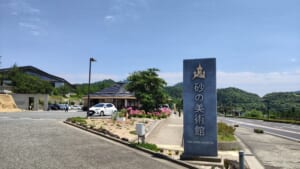
The Tottori Sand Dunes are Japan's largest coastal dune system, a stretch of wind-shaped sand hills running along the San'in coast that feels closer to a desert than typical Japan scenery. They are easy to reach, free to walk, and pair naturally with camel rides, sandboarding, and the nearby Sand Museum.
- Price
- The dunes are free to enter and open 24 hours. Camel rides, sandboarding, and paragliding are paid extras; the adjacent Sand Museum charges separate admission.
- Time needed
- 1 to 1.5 hours to walk the main dune area; add 1 hour or more if visiting the Sand Museum.
View practical details
- Best time
- Early morning or late afternoon for cooler temperatures and softer light; midday sun and sand can be intense in summer.
- Good for
- Photographers, families, first-time San'in visitors, and anyone wanting a landscape that looks nothing like the rest of Japan.
What to do
- Walk up to the Uma-no-Se ridge for a view over the dunes to the Sea of Japan.
- Try camel riding or sandboarding on the main dune slopes.
- Visit the Sand Museum next door to see large-scale sand sculptures, which change theme periodically.
- Walk down to the shoreline where the dunes meet the sea for photos and a break from the sand.
Tickets and fees
Checked in July 2026: entry to the dunes themselves is free with no set hours, but the Visitor Center and Sand Museum keep their own opening times and admission fees, and the Sand Museum's sculpture theme changes periodically. Confirm current Sand Museum hours and pricing before visiting.
Getting there
About 20 minutes by bus from Tottori Station Bus Terminal, or roughly 15 minutes by car from Tottori Interchange. Tottori Sand Dunes Conan Airport is about 20 minutes away by car.
Nearby
Combine with a half-day trip to Uradome Coast for a boat cruise along the same San'in coastline, or plan a longer day out to Mount Mitoku & Nageiredo further inland.

Uradome Coast
Uradome Coast is a run of cliffs, sea caves, and clear turquoise water on Tottori's San'in coastline, often called the Matsushima of the west. The main draw is a short sightseeing boat cruise that gets you up close to rock formations you can't see from the shore, with swimming and kayaking possible in summer.
- Price
- Paid. The island-hopping sightseeing cruise runs around yen 1,800 for adults and yen 900 for children; kayaking and other activities are booked separately.
- Time needed
- About 1 hour for the boat cruise; half a day if you add swimming or kayaking.
View practical details
- Best time
- March to November, when boats operate; midday tends to show off the clearest water color.
- Good for
- Boat cruises, swimming, kayaking, and travelers who want a quieter coastal spot outside central Tottori City.
What to do
- Take the roughly 40-minute island-hopping pleasure boat cruise past cliffs, sea caves, and unusual rock formations.
- Look for a glass-bottom boat option to see the seabed and fish beneath the boat.
- Swim at Uradome Beach in summer, when the water is calm and clear.
- Rent a kayak to explore coves and caves that the larger boats can't reach.
Tickets and fees
Checked in July 2026: boats generally operate March through November, roughly 9:30 to 15:30 with hourly departures, and service pauses over winter. Departure times and fares can shift with weather, tides, and season, so confirm the current schedule before heading out.
Getting there
From Tottori Station Bus Terminal, take the bus bound for Iwai Onsen / Kabushima, about 40 minutes, and get off near the boat pier. By car it is roughly 30 to 40 minutes from central Tottori City.
Nearby
It's an easy pairing with Tottori Sand Dunes along the same coast, and a longer day trip can include Mount Mitoku & Nageiredo inland.

Mount Mitoku
Mount Mitoku is home to Sanbutsu-ji Temple and its famous Nageiredo hall, a wooden structure wedged into a cliff face that is often called Japan's most dangerous national treasure to visit. Reaching it means an actual climb using tree roots and chains, so this is a physically demanding stop rather than a casual sightseeing walk.
- Price
- Paid. There is a temple worship fee at Sanbutsu-ji plus a separate fee to climb toward Nageiredo. Amounts can change, so confirm current pricing on site.
- Time needed
- About 1.5 to 2 hours round trip for the climb, plus time at the temple complex at the base.
View practical details
- Best time
- Dry, clear days. The trail is closed or discouraged after heavy rain and in snow, when the rock and roots become dangerously slippery.
- Good for
- Fit, experienced hikers and pilgrimage or history enthusiasts. Not suitable for young children, anyone with mobility issues, or unsuitable footwear.
What to do
- Pay respects at Sanbutsu-ji Temple's main hall complex at the base of the mountain before starting the climb.
- Pass the mandatory footwear and clothing check; sneakers are generally rejected and straw waraji sandals can be bought on site if needed.
- Climb Kazura-zaka, where you pull yourself up a steep slope using exposed tree roots.
- Use the fixed chains at Kusari-zaka to haul up the rock face, then view Nageiredo from the platform near the top; visitors do not enter the hall itself.
Tickets and fees
Checked in July 2026: climbers must register at the base and pass a footwear and clothing check before setting out, and climbing solo is generally not allowed, so go with at least one companion. Confirm current opening hours, fees, and any weather-related trail closures with Sanbutsu-ji directly before visiting, since conditions change quickly after rain or snow.
Getting there
By car, Sanbutsu-ji is about 15 to 20 minutes from Misasa Onsen or roughly 1 hour from Tottori City. Public transport options are limited, so a rental car or taxi is the practical way to get there.
Nearby
Many visitors base themselves in nearby Misasa Onsen and combine this with a scenic drive to Tottori Sand Dunes, or extend a longer Tottori itinerary west to Mizuki Shigeru Road.

Mizuki Shigeru Road
Mizuki Shigeru Road is an 800-metre, barrier-free walk from Sakaiminato Station to the Mizuki Shigeru Museum, with 178 bronze yokai statues along the way. It is free to explore, with food and souvenir stops plus a paid museum at the far end; return after sunset for the official projection and lighting programme.
- Price
- The road is free. The Mizuki Shigeru Museum charges adults ¥1,000; junior and high school students ¥500; elementary students ¥300; preschool children free (checked in August 2026).
- Time needed
- Allow 45–60 minutes to walk the road and browse; add 30–60 minutes for the museum, its official stated viewing time.
View practical details
- Best time
- Daytime for shops and photos; after sunset for the official projections and statue lighting, which run every night until 10:00 pm.
- Good for
- Families, manga and yokai fans, and travellers who want an easy, barrier-free walk with a museum option.
What to do
- Start at JR Sakaiminato Station and follow the 800-metre road toward the museum, looking for the 178 bronze yokai statues.
- Buy the official ¥600 Yokai Guidebook at the tourist information centre or participating road shops if you want to complete the 35-stamp rally.
- Visit the Mizuki Shigeru Museum at the far end for the artist’s work and changing special exhibitions; budget 30–60 minutes inside.
- Come back after sunset for the road-wide projected shadows and lighting, available every night until 10:00 pm.
Tickets and fees
Checked in August 2026: the street is free at any time. The Mizuki Shigeru Museum is open daily 9:30 am–5:00 pm (last entry 4:30 pm); adult admission is ¥1,000. Check the museum site before visiting because holiday-season extended hours can apply.
Getting there
From JR Sakaiminato Station, follow the road directly to the museum; the museum is about a 10-minute walk from the station. From Yonago Kitaro Airport, the reservation-based Minatool shared bus or a taxi takes about 20 minutes to the museum. Drivers should use city or nearby paid parking because the museum has no dedicated car park.
Nearby
Finish at the Mizuki Shigeru Museum, then return along the road for shops you skipped; keep Mount Mitoku & Nageiredo or Tottori Sand Dunes for a separate day because of Tottori Prefecture’s cross-prefecture travel distance.
Latest Articles
This page may contain affiliate links. We may earn a commission at no extra cost to you.
Where to stay
| Area | Notes |
|---|---|
| Tottori City | best for the sand dunes, coast, and easy transport. |
| Kurayoshi | useful for historic streets and central Tottori stops. |
| Yonago or Kaike Onsen | good for western Tottori and hot spring stays. |
Sample itinerary
- Day 1: Tottori Sand Dunes, coast viewpoints, and seafood in Tottori City.
- Day 2: Kurayoshi, Misasa Onsen, or western Tottori sights.
- Day 3: Add a relaxed onsen, manga town, or coastal drive if time allows.
Food to try
- Matsuba crab
- Sakaiminato seafood bowls
- Tottori beef
- Pear sweets
Common questions
How do you get to Tottori without a Shinkansen?
By limited express train from Okayama, or from Kyoto and Osaka along the Sea of Japan side. There are also flights from Tokyo. The lack of a Shinkansen is the main reason the prefecture stays quiet.
Do you need a car in Tottori?
It makes a real difference. The sights are spread along the coast rather than clustered, so a car makes a two-day visit far more workable than relying on local trains and buses.
Is the climb to Nageiredo difficult?
Yes. Reaching the hall means an actual climb using tree roots and chains, so it is a physically demanding stop rather than a casual sightseeing walk.
What can you pair with Tottori?
Shimane next door. The two sit along the same San'in coast, which makes a combined route more rewarding than treating either as a single stop.
Explore Nearby Japan
Continue planning your route with nearby prefectures, regional guides, and useful trip planning links.
Recommended Planning Guides
Use these practical guides to plan where to stay, move between regions, and shape your itinerary before your Japan trip.
Plan Your Japan Trip
When to go, how long, where, money, and what to sort before you book.
Read planning guideJapan Transport Guide
IC cards, rail passes, the Shinkansen, and getting in from the airport.
Read transport guideHotels & Where to Stay
Compare stay areas and lodging ideas for first-time Japan visitors.
Find stay guides