


Shimane Travel Guide
Shimane is a strong Japan travel destination for mythology, shrines, gardens, castle towns, islands, and quiet western Japan travel.
Quick facts
- Best for: mythology, shrines, gardens, castle towns
- Recommended stay: 1 to 3 days
- Best season: Spring, autumn, and key local festival seasons
- Main bases: Izumo Taisha, Matsue Castle, Adachi Museum, Iwami Ginzan
Why visit Shimane
Shimane is one of the least visited prefectures on Honshu and one of the oldest in the country’s mythology. Izumo Taisha is dedicated to Okuninushi and is among the most important shrines in Japan, known for its enormous straw ropes and for a worship style that differs from the usual. Matsue Castle keeps one of the few original keeps left, above a moat you can circle by boat. The Adachi Museum of Art pairs a collection of modern Japanese painting with gardens designed to be looked at through the windows rather than walked in, and the Oki Islands lie offshore with sea cliffs and a history as a place of exile.
Getting to Shimane
Shimane has no Shinkansen. You reach it by limited express from Okayama, by a long run along the Sea of Japan coast, or by flying to Izumo. That isolation is the reason it stays quiet, and it also means a car makes the difference between seeing one sight and seeing several. The Oki Islands need a ferry and their own nights. Shimane pairs naturally with Tottori next door if you are building a San’in route.
Top Attractions in Shimane
Izumo Taisha
Izumo Taisha is one of Japan's oldest and most important Shinto shrines, best known for its massive shimenawa sacred rope and its association with matchmaking and good fortune in relationships.
- Price
- Free to enter the shrine grounds. The adjoining Shimane Museum of Ancient Izumo charges around yen 300 to 620 depending on ticket type.
- Time needed
- 2 to 3 hours for the shrine grounds; add 1 to 1.5 hours if you also visit the Shimane Museum of Ancient Izumo.
View practical details
- Best time
- Early morning right after opening, before the 10am to 3pm crowd peak.
- Good for
- First-time Shimane visitors, couples, history and shrine architecture fans.
What to do
- See the huge shimenawa straw rope hanging over the Kaguraden hall, one of the largest in Japan.
- Walk the long pine-lined approach path down to the main worship hall, which is unusual since most shrine approaches go uphill.
- Learn the Izumo-style prayer method, two bows, four claps, one bow, which differs from the usual two-two-one pattern at most shrines.
- Visit the Shimane Museum of Ancient Izumo next door for excavated bronze artifacts and shrine history.
Tickets and fees
Checked in July 2026: shrine grounds are free and no reservation is needed. If you plan to visit the Shimane Museum of Ancient Izumo, tickets are sold at the museum entrance; hours and fees can change, so it is worth checking the museum's own page before you go.
Getting there
From JR Izumo City Station, take the Ichibata Bus (Taisha Line) about 25 to 35 minutes to Izumo Taisha area, or ride the Ichibata Electric Railway from Dentetsu-Izumo City Station to Izumo Taisha-mae Station, about a 5-minute walk from the shrine's second torii gate. Izumo is roughly a one-hour train ride west of Matsue.
Nearby
If you are basing yourself in the Matsue area, it is easy to pair a day at Matsue Castle with a separate day trip out to Izumo, since the two areas are about an hour apart by train.
Matsue Castle
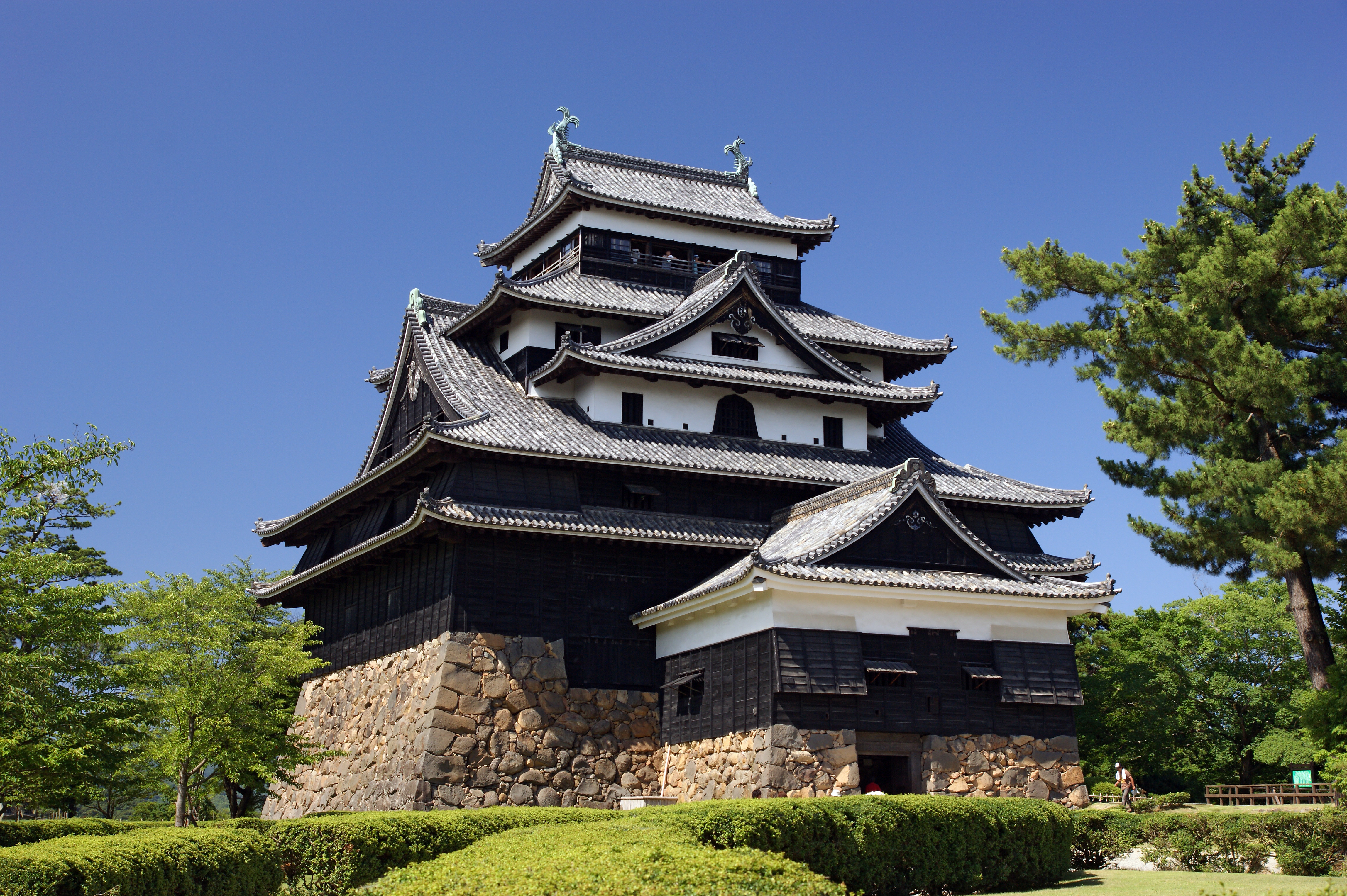
Matsue Castle is one of only twelve original castle keeps still standing in Japan, completed in 1611 and designated a National Treasure in 2015, with a black-and-white silhouette that anchors Matsue's lakeside castle town.
- Price
- Paid. Adult admission is around yen 680 to 800; elementary and junior high students pay less. Prices can change, so check current rates before visiting.
- Time needed
- 1 to 1.5 hours for the keep and castle grounds.
View practical details
- Best time
- Spring for cherry blossoms around the moat, or early opening hours to avoid tour groups.
- Good for
- History fans, photographers, and travelers who want to see a genuinely original castle keep rather than a concrete reconstruction.
What to do
- Climb the original wooden keep, one of only twelve surviving original castle keeps in Japan.
- Look out from the top floor over Matsue city, Lake Shinji, and the surrounding castle town.
- Walk or take a boat along the moat that circles the castle grounds.
- Explore Shiomi Nawate, the old samurai residence street just outside the castle grounds.
Tickets and fees
Checked in July 2026: tickets are sold at the castle entrance and no advance booking is required for individual visitors. Hours run roughly 8:30am to 6pm April through September and 8:30am to 5pm October through March, with last entry 30 minutes before closing; confirm current hours before your trip since they can shift seasonally.
Getting there
From JR Matsue Station, take the Gurutto Matsue Lake Line bus about 10 minutes to the Matsue Castle (Otemae) stop, then walk a short distance to the entrance. The castle is also a walkable or short bus ride from central Matsue accommodation.
Nearby
Matsue pairs naturally with a day trip to Izumo Taisha about an hour away by train, and with Adachi Museum of Art which is also reachable from the Matsue-Yasugi area.
Adachi Museum of Art
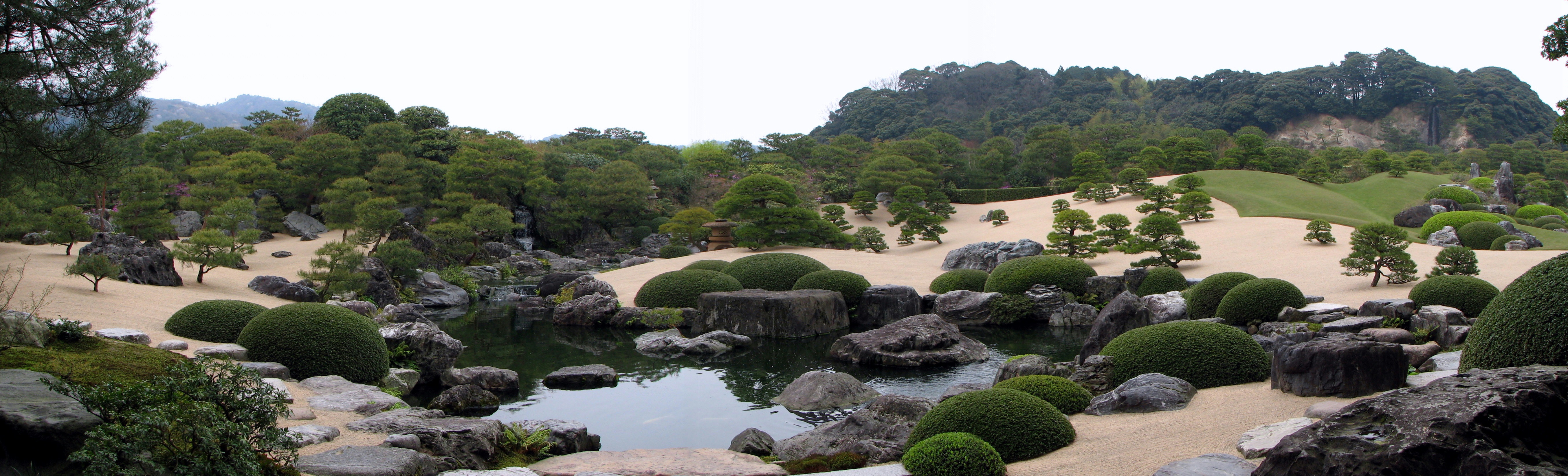
Adachi Museum of Art in Yasugi pairs Japanese gardens viewed from purpose-built windows with modern Japanese painting and Rosanjin ceramics. Plan about two hours: the entrance ticket covers the gardens, Main Building, Annex and Rosanjin Hall, but the Annex has several scheduled 2026 display-change closures.
- Price
- Adult admission is ¥2,500 (tax included); passport holders receive a ¥100 international-guest discount. Admission covers the gardens, Main Building, Annex and Rosanjin Hall.
- Time needed
- Allow at least two hours for the gardens and galleries; the museum recommends this minimum to see both without rushing.
View practical details
- Best time
- Open every day. Hours are 9:00-17:30 from April to September and 9:00-17:00 from October to March; confirm the Annex closure dates if contemporary painting is a priority.
- Good for
- Travelers who want a quiet art-and-garden stop in eastern Shimane and can work around the limited, non-reservable shuttle capacity.
What to do
- Start with the garden-viewing corridors, then leave enough time for the Main Building, Annex and Rosanjin Hall covered by the same admission.
- Use the official 2026 Annex closure schedule when contemporary Japanese painting matters: Jun 2-5, Jun 22-25, Oct 20-23 and Nov 16-17; the gardens, Main Building and Rosanjin Hall remain accessible.
- See modern Japanese paintings including works by Yokoyama Taikan, but keep cameras for the gardens: photography, video and sketching are prohibited in exhibition areas.
- If you want commentary, ask at the front desk for the Japanese/English audio device (¥600); numbers are limited and cannot be reserved.
Tickets and fees
Checked in August 2026: adult admission is ¥2,500 including the Japanese gardens, Main Building, Annex and Rosanjin Hall; show a passport for the current ¥100 international-guest discount. The museum is open daily, 9:00-17:30 (April-September) or 9:00-17:00 (October-March).
Getting there
From JR Yasugi Station, use the free direct 20-minute museum shuttle. The current timetable runs from March 14, 2026 to March 2027; seats are first-come, first-served and cannot be reserved, and large suitcases can be refused when the 25-seat bus is full. By car, allow about 10 minutes from Yasugi IC; on-site parking is free.
Nearby
Combine your visit with Matsue Castle, which sits on the same rail line and makes for a natural same-day pairing with the museum.
_(2).jpg)
Oki Islands
The Oki Islands are a remote UNESCO Global Geopark off the coast of Shimane, made up of Dogo Island and the three Dozen Islands, reachable only by ferry or a short flight, and rewarding travelers with dramatic sea cliffs, caldera views, and a slower pace than mainland Japan.
- Price
- Free to explore outdoors; ferry fares and any guided activities are the main costs, and prices vary by route and season.
- Time needed
- At least 1 to 2 full days, since ferry crossings and inter-island travel take time; 3 days lets you cover both Dogo and the Dozen islands.
View practical details
- Best time
- Late spring through early autumn for calmer seas and full ferry schedules; the fast ferry does not run in winter.
- Good for
- Travelers who want an off-the-beaten-path island trip, hikers, and anyone interested in geology, caldera scenery, and small fishing communities.
What to do
- Take in the Dozen Caldera views from Mt. Akahage on Chiburijima, one of the islands' signature panoramas.
- Explore the sea cliffs and rock formations at Kuniga Coast on Nishinoshima.
- Move between Nakanoshima, Nishinoshima, and Chiburijima using the inter-island ferries Isokaze or Ferry Dozen.
- Rent a car once on the islands, since public transport is limited and driving is the most practical way to reach scattered viewpoints.
Tickets and fees
Checked in July 2026: ferry tickets can be bought at the port or online in advance, and schedules change by season, with the fast ferry service typically suspended in winter. Confirm the current timetable before you travel, since this is a remote island group with fewer daily departures than mainland routes.
Getting there
Ferries depart from Shichirui Port on the Shimane mainland or Sakaiminato Port in neighboring Tottori Prefecture; crossings take roughly 2.5 to 4 hours depending on the ferry and destination island. There are also short JAL flights to Oki Airport on Dogo Island from Izumo Airport or Osaka Itami Airport.
Nearby
Shichirui Port, one of the mainland gateways to the islands, is within reach of Matsue, so many visitors base themselves near Matsue Castle before or after their island crossing.
Latest Articles
This page may contain affiliate links. We may earn a commission at no extra cost to you.
Where to stay
- Use Matsue, Izumo, Yunotsu Onsen as practical bases depending on your route.
- Stay near the main station for transport-heavy trips.
- Choose an onsen, coastal, or historic area for a slower overnight stay.
Sample itinerary
- Day 1: Start with the main city, food area, and easiest signature sights.
- Day 2: Visit the top nature, shrine, castle, or cultural area.
- Day 3: Add a day trip, onsen, coast, island, or rural stop if your schedule allows.
Food to try
- Izumo soba
- Shijimi clams from Lake Shinji
- Wagashi
- Izumo sake
Common questions
How do you reach Shimane?
There is no Shinkansen. You come by limited express from Okayama, along the Sea of Japan coast, or by flying to Izumo.
Do you need a car in Shimane?
It makes the difference between seeing one sight and seeing several, since the isolation that keeps it quiet also thins out transport.
What is Izumo Taisha known for?
It is dedicated to Okuninushi and is among the most important shrines in Japan, known for its enormous straw ropes and a worship style that differs from the usual.
What is unusual about the Adachi Museum gardens?
They are designed to be looked at through the windows rather than walked in, paired with a collection of modern Japanese painting.
Explore Nearby Japan
Continue planning your route with nearby prefectures, regional guides, and useful trip planning links.
Recommended Planning Guides
Use these practical guides to plan where to stay, move between regions, and shape your itinerary before your Japan trip.
Plan Your Japan Trip
When to go, how long, where, money, and what to sort before you book.
Read planning guideJapan Transport Guide
IC cards, rail passes, the Shinkansen, and getting in from the airport.
Read transport guideHotels & Where to Stay
Compare stay areas and lodging ideas for first-time Japan visitors.
Find stay guides