


Akita Travel Guide
Akita is a slow-travel region for hot springs, samurai districts, lake scenery, winter festivals, rural food, and quiet northern Japan landscapes.
Quick facts
- Best for: onsen, samurai streets, lakes, rural Japan
- Recommended stay: 2 to 3 days
- Best season: Spring, autumn, and snowy winter
- Main bases: Akita City, Kakunodate, Tazawako
Why visit Akita
Akita rewards travellers who want winter, hot springs and folk tradition rather than city sights. Lake Tazawa is a deep, round caldera lake that holds an unusual blue, and the mountain hot springs of Nyuto Onsen sit in the forest above it, several of them old wooden bathhouses rather than hotels. Kakunodate preserves a street of samurai residences under weeping cherry trees. On the coast, the Oga Peninsula is the home of the Namahage, the masked visiting deities who go house to house on New Year’s Eve; the tradition was inscribed on the UNESCO Intangible Cultural Heritage list in 2018.
Getting to Akita
Akita is reached by the Akita Shinkansen, which branches west off the main Tohoku line and runs slowly through the mountains for the last stretch — a scenic ride rather than a fast one. Kakunodate is on that line, which makes it the easiest stop; Tazawako and Nyuto need a further bus, and the onsen road can be snowbound in winter. Akita is at its most distinctive in the cold months, so plan around snow rather than trying to avoid it.
Top Attractions in Akita
Lake Tazawa
Lake Tazawa is Japan's deepest lake, a near-perfectly circular crater lake in Akita Prefecture known for its intense sapphire-blue water and the golden Tatsuko statue on its shore.
- Price
- Free to walk the lakeshore and visit the Tatsuko statue. Sightseeing boat cruises and rentals such as pedal boats or cycles are paid extras.
- Time needed
- 1 to 3 hours, longer if you cycle or drive the full 20 km shoreline.
View practical details
- Best time
- Spring for lakeside cherry blossoms, or clear calm days when the water color is most vivid.
- Good for
- Nature lovers, scenic drives and cycling, photographers, and travelers pairing a stop with Nyuto Onsen.
What to do
- Walk or drive to the golden Tatsuko statue, the lake's best-known landmark, on the western shore.
- Take a sightseeing boat cruise across the lake in the warmer months for close-up views of the surrounding mountains.
- Rent a bicycle or pedal boat to explore the shoreline at your own pace between spring and fall.
- Stop at Shirahama, the lake's white-sand beach, or the vermillion torii gate at the northern shore.
Tickets and fees
Checked in July 2026: lakeshore access and the Tatsuko statue are free. Sightseeing boat cruises, pedal boats, and cycle rentals are paid and mainly run from spring through fall, with reduced or no service in winter, so confirm current schedules locally before planning a cruise.
Getting there
Lake Tazawa is reached via JR Tazawako Station on the Akita Shinkansen. From the station, local buses run to the lakeshore (Tazawako Kohan) in around 15 to 20 minutes; taxis and rental cars are also common, especially if you plan to circle the lake.
Nearby
Easy pairings include Nyuto Onsen's hot spring village in the mountains above the lake, and the Kakunodate samurai district, a short train ride away.

Nyuto Onsen
Nyuto Onsen is a cluster of remote hot spring inns deep in the mountains above Lake Tazawa, led by the centuries-old Tsurunoyu Onsen, and is one of the most atmospheric traditional onsen villages in Tohoku.
- Price
- Paid. Day-bathing at individual inns is typically a few hundred to around 1,000 yen; a Yumeguri shuttle pass for day visitors is about 1,000 yen.
- Time needed
- Half a day for a single onsen visit, or overnight to properly experience the valley.
View practical details
- Best time
- Winter for snow-covered outdoor baths, or autumn for foliage; the valley is cold and remote year-round.
- Good for
- Onsen enthusiasts, couples, travelers seeking a traditional ryokan stay away from big cities.
What to do
- Soak in Tsurunoyu Onsen's milky-blue outdoor bath, the oldest and most famous of the valley's inns.
- Use the Yumeguri shuttle bus to visit two or three of the seven onsen inns in a single day.
- Stay overnight in a thatched-roof ryokan for the full Edo-period atmosphere, especially in snow season.
- Combine a soak with a walk through the surrounding beech forest before or after bathing.
Tickets and fees
Checked in July 2026: most inns charge a per-visit day-bathing fee rather than requiring advance tickets, and some restrict day-trip bathing hours (for example Tsurunoyu has historically allowed day visitors only in a midday window). Shuttle passes for getting between inns are sold locally. Confirm current hours and any closures directly with each ryokan before visiting, as they can change seasonally.
Getting there
From Tokyo, take the Akita Shinkansen to JR Tazawako Station (about 3 hours). From the station, the Ugo Kotsu bus toward Nyuto Onsen takes roughly 50 minutes; some inns then require an additional walk from the nearest bus stop. A rental car from Tazawako Station is a common alternative given the valley's remote location.
Nearby
Nyuto Onsen sits just above Lake Tazawa, making it easy to combine a lake stop with your trip up into the mountains.
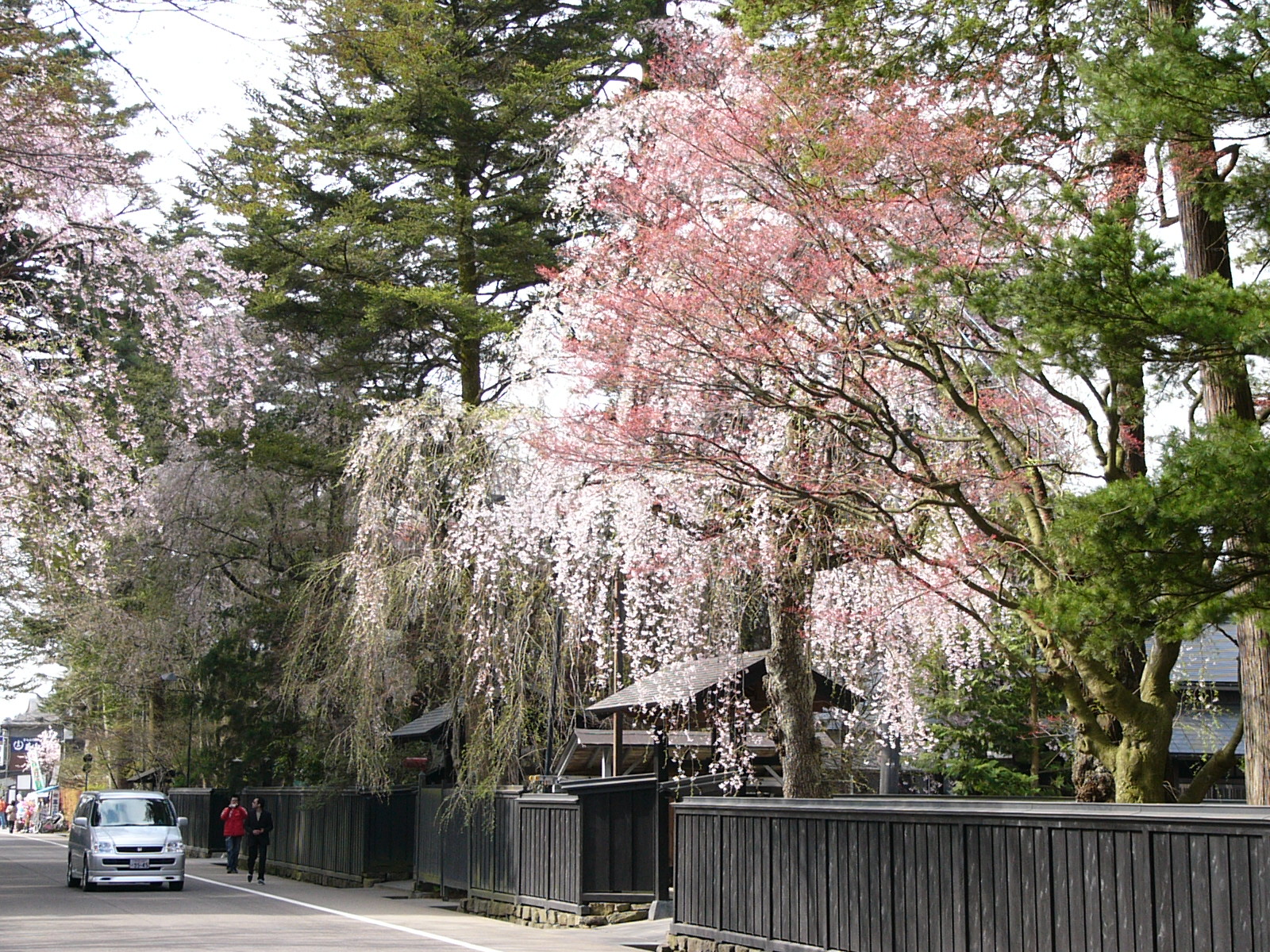
Kakunodate Samurai District
Kakunodate's Bukeyashiki district preserves a row of samurai residences and towering weeping cherry trees from the Edo period, earning it the nickname 'Little Kyoto of Tohoku'.
- Price
- Free to walk the street. Individual samurai houses charge separate admission, generally in the 300 to 500 yen range.
- Time needed
- 1.5 to 2.5 hours to walk the street and enter a couple of houses.
View practical details
- Best time
- Late April for weeping cherry blossoms, or autumn for foliage along the samurai street.
- Good for
- History and architecture fans, families, and travelers combining it with Lake Tazawa or Nyuto Onsen.
What to do
- Walk the tree-lined Bukeyashiki street past black wooden fences and gates of former samurai homes.
- Go inside one or two of the preserved houses, such as those still holding family artifacts and armor.
- See the district's famous weeping cherry trees, especially striking in late April.
- Browse local craft shops selling Kabazaiku cherry-bark woodwork, a Kakunodate specialty.
Tickets and fees
Checked in July 2026: most individual samurai houses are open daily but with shorter winter hours (roughly December through March), and some close on specific weekdays in the off-season. Admission is paid per house rather than as a single district-wide ticket. Confirm current hours for the houses you want to enter before visiting.
Getting there
Kakunodate is reached via JR Tazawako Station, then a short ride on the Akita Shinkansen or local Akita Nairiku Line to Kakunodate Station. The Bukeyashiki district is about a 10 to 15 minute walk from the station.
Nearby
Kakunodate pairs well with Lake Tazawa and the mountain onsen village of Nyuto Onsen, both reachable via Tazawako Station.

Oga Peninsula
The Oga Peninsula on Akita's Sea of Japan coast is home to the Namahage Museum, where more than 150 regional masks and the traditions behind Oga's famous New Year's visitors make a focused culture stop.
- Price
- Adult admission is 660 yen; elementary, junior-high and high-school students pay 330 yen. A combined ticket with the adjacent Oga Shinzan Folklore Museum is 1,100 yen for adults and 600 yen for students.
- Time needed
- Allow about 60 to 90 minutes for the museum, or longer if you add the adjacent folklore museum and Shinzan Shrine.
View practical details
- Best time
- The museum is open year-round, so it works in any season; pair it with coastal sightseeing in daylight. The separate Namahage Sedo Festival is held in February.
- Good for
- Families, culture and folklore fans, and travelers using a car or a pre-booked shared taxi to explore the Oga Peninsula.
What to do
- See more than 150 Namahage masks collected from Oga districts and compare their distinct shapes and expressions.
- Watch the large-screen film that explains the New Year's Eve house-visiting tradition before exploring the displays.
- Try on a Namahage costume at the museum's makeover corner for a photo.
- Add the adjacent Oga Shinzan Folklore Museum and the nearby Shinzan Shrine for a fuller cultural stop.
Tickets and fees
Checked in July 2026: the Namahage Museum is open every day from 8:30 a.m. to 5:00 p.m. Admission is 660 yen for adults and 330 yen for elementary, junior-high and high-school students. The combined ticket with the adjacent Oga Shinzan Folklore Museum is 1,100 yen for adults and 600 yen for students. Check the official site before visiting for any temporary changes.
Getting there
There is no regular public bus to the museum area. From JR Oga Station, use a rental car or reserve the Namahage Shuttle shared taxi by 9 p.m. the day before (5 p.m. by phone); it serves the Shinzan stop for the Namahage Museum, Folklore Museum and Shinzan Shrine. The shared-taxi route runs on selected 2026 dates, so check its operating calendar before making a car-free plan.
Nearby
Pair the museum with the adjacent Oga Shinzan Folklore Museum and Shinzan Shrine, then allow a full day if you continue around the peninsula to Oga Aquarium GAO or Cape Nyudo. For an inland contrast, add the Kakunodate samurai district on a multi-day Akita itinerary.
This page may contain affiliate links. We may earn a commission at no extra cost to you.
Where to stay
| Area | Notes |
|---|---|
| Akita City | convenient for transport and food. |
| Kakunodate | best for historic streets and cherry blossoms. |
| Nyuto Onsen or Tazawako | best for ryokan and nature stays. |
Sample itinerary
- Day 1: Akita City and local food.
- Day 2: Kakunodate Samurai District and Lake Tazawa.
- Day 3: Nyuto Onsen or Oga Peninsula.
Food to try
- Kiritanpo hot pot
- Inaniwa udon
- Akita sake and local rice dishes
Common questions
What is the Namahage?
Masked visiting deities who go house to house on New Year's Eve on the Oga Peninsula. The tradition was inscribed on the UNESCO Intangible Cultural Heritage list in 2018.
Is Akita hard to reach?
The Akita Shinkansen branches west off the main Tohoku line and runs slowly through the mountains for the last stretch, so it is a scenic ride rather than a fast one.
Which part of Akita is easiest without a car?
Kakunodate, which sits on the Shinkansen line. Tazawako and Nyuto need a further bus, and that road can be snowbound in winter.
When is Akita at its best?
In the cold months. The prefecture is at its most distinctive in winter, so plan around snow rather than trying to avoid it.
Explore Nearby Japan
Continue planning your route with nearby prefectures, regional guides, and useful trip planning links.
Recommended Planning Guides
Use these practical guides to plan where to stay, move between regions, and shape your itinerary before your Japan trip.
Plan Your Japan Trip
When to go, how long, where, money, and what to sort before you book.
Read planning guideJapan Transport Guide
IC cards, rail passes, the Shinkansen, and getting in from the airport.
Read transport guideHotels & Where to Stay
Compare stay areas and lodging ideas for first-time Japan visitors.
Find stay guides