


Shizuoka Travel Guide
Shizuoka combines Mt Fuji views, tea fields, coastal scenery, seafood, onsen towns, and easy access between Tokyo and Nagoya.
Quick facts
- Best for: Mt Fuji views, tea, coastline, seafood
- Recommended stay: 1 to 3 days
- Best season: Clear winter days, spring, and autumn
- Main bases: Shizuoka City, Mishima, Atami, Izu
Why visit Shizuoka
Shizuoka has the southern face of Mount Fuji, a long Pacific coastline and the country’s main tea-growing country in between. The Shizuoka side of Fuji is where the Fujinomiya trail climbs and where the mountain is seen from below rather than across a lake. Miho no Matsubara is a pine-covered sandbar with Fuji across the bay, a designated place of scenic beauty and a component asset of the Fujisan World Heritage listing. The Izu Peninsula is the warm, hot-spring-rich coast that Tokyo escapes to, and Kunozan Toshogu was the original burial place of Tokugawa Ieyasu before Nikko.
Getting to Shizuoka
The Tokaido Shinkansen runs the length of the prefecture, so Shizuoka is one of the easiest places in Japan to reach and one of the most often passed straight through. Izu is served by its own line down the east coast from Atami and works as an overnight from Tokyo. If your reason for coming is Fuji, remember the mountain is often in cloud — mornings are clearer than afternoons, and winter is clearer than summer.
Top Attractions in Shizuoka

Mount Fuji (Shizuoka Side)
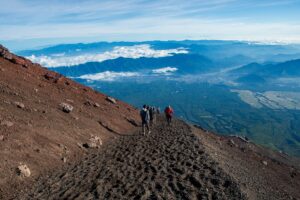
The Shizuoka side of Mount Fuji gives you the mountain from its steepest, most dramatic angle, with the Fujinomiya Trail offering the shortest summit climb and Shin-Fuji Shinkansen station putting a full postcard view right outside the ticket gate.
- Price
- Free to view. Climbing the Fujinomiya Trail is free; shuttle buses to the 5th Station cost yen 2,330 to yen 2,740 one way depending on departure point.
- Time needed
- 30 minutes for a viewpoint stop; a full day if riding up to the 5th Station; 1 to 2 days for a summit climb.
View practical details
- Best time
- Clear winter mornings for the best long-distance views; the official climbing season on the Fujinomiya Trail runs roughly July 10 to September 10.
- Good for
- Hikers, photographers, and travelers who want Fuji views without detouring through Yamanashi.
What to do
- Step outside Shin-Fuji Station for one of the most convenient close-up Fuji views in Japan, framed right over the station plaza on clear days.
- Ride the seasonal shuttle bus up to the Fujinomiya 5th Station (about 2,400m) for the highest road-accessible viewpoint on this side of the mountain.
- During the July to September climbing season, attempt the Fujinomiya Trail, the shortest of the four main summit routes.
- Outside climbing season, enjoy the 5th Station area on its own for alpine views without attempting the summit.
Tickets and fees
Checked in July 2026: there is no fee to view Mount Fuji or to walk the Fujinomiya Trail itself. During the climbing season, private cars are barred from the upper road and shuttle buses to the 5th Station run instead, priced from roughly yen 2,330 to yen 2,740 one way; confirm current fares and the exact season dates before you go, as they can shift year to year.
Getting there
Shin-Fuji Station on the Tokaido Shinkansen is the main gateway; direct seasonal buses run from Shin-Fuji and Fujinomiya stations to the Fujinomiya 5th Station in about 90 to 120 minutes during climbing season. Outside that window, the 5th Station road is reachable by car or local bus with a change partway up.
Nearby
Combine with Miho no Matsubara for the classic pines-and-Fuji photo, or head south to the Izu Peninsula for a coastal change of pace.

Izu Peninsula
Izu Peninsula rewards a zone-based plan rather than a rushed day trip: use rail for the eastern coast, reserve a separate day for western sea cliffs, and leave time for inland onsen and geology sites.
- Price
- The Izu Peninsula UNESCO Global Geopark is free to explore, while transport and individual attractions charge separately. GEORIA, the geopark museum, has free admission.
- Time needed
- Choose one zone per day. An eastern-coast rail day can focus on Jogasaki Coast; western Dogashima needs its own bus or driving plan; allow 2 to 3 days to combine coast, onsen, and inland sites.
View practical details
- Planning tip
- Use the official geopark map to match a site to Eastern, Western, Southern, Northern, or Central Izu before booking transport; do not assume coastal highlights are close together.
- Good for
- Travelers who want volcanic landscapes, onsen, coastal walks, and a slower regional trip from the Tokyo area.
What to do
- Start at GEORIA in Shuzenji to understand the peninsula's volcanic story; official visitor information lists 9:00-17:00 hours, final entry 30 minutes before closing, free admission, and a Wednesday closure pattern.
- Walk the northern Jogasaki Coast around Kadowakizaki: the official geopark course identifies the suspension bridge as 48 metres long and 23 metres high, and the lighthouse area as part of an approximately 9-kilometre hiking course.
- Give western Dogashima its own day: the official geopark guide describes its open sea cave and specifies bus access from Rendaiji, Shimoda, or Shuzenji rather than treating it as a quick add-on to the eastern coast.
- Use the Izukyu line for an eastern or southern rail itinerary, then check the operator's current timetable or pass information before committing to a same-day connection.
Tickets and fees
Checked in August 2026: the geopark itself has no entrance fee. GEORIA is free and normally opens 9:00-17:00, with final entry 30 minutes before closing; it normally closes Wednesdays (or the following weekday when Wednesday is a holiday) and over year-end/New Year. Individual attractions, transport, and onsen set their own prices, so confirm the relevant operator before visiting.
Getting there
Plan by zone, not by a single peninsula-wide travel time. For an eastern or southern rail day, Izukyu serves the Ito-Izukyu-Shimoda corridor and puts Izu-Kogen/Jogasaki and Shimoda on the same rail axis. For western Dogashima, the official geopark guide lists buses from Rendaiji (about 40 minutes), Shimoda (about 1 hour), or Shuzenji (about 90 minutes), followed by a short walk from the Dogashima stop. Check current rail and bus timetables before departure.
Nearby
If you are staying in Shizuoka, pair a coastal Izu day with Mount Fuji's Shizuoka side for inland mountain views, or visit Kunozan Toshogu Shrine further along the coast toward Shizuoka City.

Miho no Matsubara
Miho no Matsubara is a pine-lined beach near Shimizu, Shizuoka, famous for one of the most photographed Mount Fuji views in Japan and for its role as a registered part of the Mount Fuji UNESCO World Heritage site.
- Price
- Free to visit.
- Time needed
- 1 to 1.5 hours.
View practical details
- Best time
- Clear winter mornings for the sharpest Fuji views over the pines; any season for a walk along the coast.
- Good for
- Photographers, first-time visitors chasing the classic Fuji shot, and anyone wanting a quiet coastal walk.
What to do
- Walk the roughly 7km pine grove of about 30,000 black pine trees along Suruga Bay.
- Photograph Mount Fuji framed by the pines and the bay, a view registered in 2013 as a constituent part of the Fujisan UNESCO World Heritage listing.
- Find the Hagoromo no Matsu, the pine tied to the local legend of a celestial maiden who left her feathered robe on its branches.
- Stop at the nearby Miho Matsubara visitor facilities for background on the site's history and the World Heritage designation.
Tickets and fees
Checked in July 2026: entry to the pine grove and beach is free and unticketed. Nearby parking and any facility fees are small and can change, so check current signage or the official site if you plan to drive.
Getting there
From JR Shizuoka Station or JR Shimizu Station, take a local bus toward Miho; the ride is roughly 30 to 40 minutes. Driving from central Shizuoka City takes about 30 minutes.
Nearby
Combine with Kunozan Toshogu Shrine for a Tokugawa Ieyasu history stop, or continue on to Mount Fuji's Shizuoka side for a closer mountain view.

Kunozan Toshogu Shrine
Kunozan Toshogu is the original mausoleum shrine of Tokugawa Ieyasu, built on a coastal hill near Shizuoka City and reached either by a scenic ropeway from Nihondaira or a long stone staircase, with ornate National Treasure buildings and sweeping views of Suruga Bay.
- Price
- Paid. Shrine admission is around yen 700 for adults; a combined shrine and museum ticket is around yen 1,200. The Nihondaira Ropeway round trip is priced separately, around yen 1,250 for adults.
- Time needed
- 1.5 to 2 hours including the ropeway ride.
View practical details
- Best time
- Clear days for the best Suruga Bay views from Nihondaira and the ropeway.
- Good for
- History fans, first-time visitors interested in the Tokugawa shogunate, and anyone combining a Nihondaira viewpoint stop.
What to do
- Ride the Nihondaira Ropeway across the valley to the shrine, a short scenic 5-minute crossing over tea fields and coastline.
- Visit the ornately decorated shrine buildings, designated a National Treasure, built as Tokugawa Ieyasu's original mausoleum.
- Climb to Ieyasu's tomb at the top of the shrine grounds.
- Stop at the small museum for artifacts connected to Ieyasu and the Tokugawa shogunate before heading back down.
Tickets and fees
Checked in July 2026: shrine admission runs around yen 700 for adults, with a combined shrine-plus-museum ticket around yen 1,200; the Nihondaira Ropeway round trip is roughly yen 1,250 for adults, charged separately from shrine admission. Prices and hours vary by season, so check the official site before visiting.
Getting there
From JR Shizuoka Station, take a local bus to Nihondaira (about 40 minutes), then ride the Nihondaira Ropeway to the shrine (about 5 minutes). Alternatively, buses run toward Kunozan-shita at the base of the hill, from where a stone stairway of over 1,000 steps leads up to the shrine.
Nearby
Combine with Miho no Matsubara for the classic pine-and-Fuji view, both a short drive from central Shizuoka City.
Latest Articles
This page may contain affiliate links. We may earn a commission at no extra cost to you.
Read next
Where to stay
| Area | Notes |
|---|---|
| Shizuoka City | convenient for food, tea, and Miho no Matsubara. |
| Atami or Izu | best for onsen, coastline, and weekend breaks. |
| Mishima or Fuji area | useful for Fuji-side transport and views. |
Sample itinerary
- Day 1: Shizuoka City, tea, and Miho no Matsubara.
- Day 2: Izu Peninsula coast or Atami onsen.
- Day 3: Fuji-view spots, local seafood, and relaxed transport back.
Food to try
- Green tea and tea sweets
- Seafood, sakura shrimp, and tuna
- Wasabi, unagi, and coastal izakaya dishes
Common questions
Where can you see Mount Fuji in Shizuoka?
Miho no Matsubara gives the classic view across the bay, and it is a component asset of the Fujisan World Heritage listing.
When is Fuji most likely to be visible?
Mornings are clearer than afternoons, and winter is clearer than summer. The mountain is often in cloud.
Is Izu a good overnight from Tokyo?
Yes. It is served by its own line down the east coast from Atami and is the warm, hot-spring-rich coast Tokyo escapes to.
Why do so many people pass straight through Shizuoka?
The Tokaido Shinkansen runs the length of the prefecture, making it one of the easiest places in Japan to reach and one of the most often skipped.
Explore Nearby Japan
Continue planning your route with nearby prefectures, regional guides, and useful trip planning links.
Nearby Prefectures
Same Region Guides
Useful Planning Links
Recommended Planning Guides
Use these practical guides to plan where to stay, move between regions, and shape your itinerary before your Japan trip.
Plan Your Japan Trip
When to go, how long, where, money, and what to sort before you book.
Read planning guideJapan Transport Guide
IC cards, rail passes, the Shinkansen, and getting in from the airport.
Read transport guideHotels & Where to Stay
Compare stay areas and lodging ideas for first-time Japan visitors.
Find stay guides