


Aichi Travel Guide
Aichi is anchored by Nagoya, with castle history, shrines, Toyota and manufacturing museums, food culture, and easy access between Tokyo, Kyoto, and Osaka.
Quick facts
- Best for: Nagoya, food, museums, castle history
- Recommended stay: 1 to 2 days
- Best season: Spring and autumn
- Main bases: Nagoya Station, Sakae, Inuyama
Why visit Aichi
Aichi is Japan’s manufacturing heartland, and Nagoya is a large, practical city that most travellers pass through rather than stop in — which undersells it. Nagoya Castle is the landmark, with its golden roof ornaments and a reconstructed palace of painted screens. Atsuta Shrine is one of the most important shrines in the country, associated with the sacred sword Kusanagi, and it sits in deep woodland inside the city. Inuyama Castle north of Nagoya keeps a small original keep above the river, and the Toyota Commemorative Museum traces the company from looms to cars in its original brick mill.
Getting to Aichi
Nagoya is on the Tokaido Shinkansen roughly midway between Tokyo and Osaka, which makes Aichi the easiest place in Japan to break a journey. Chubu Centrair airport gives it a second entry point. The city’s subway covers the sights, and Inuyama is a half hour out on a private line. Aichi also works as the gateway to Gifu — the limited express to Takayama starts here — so it earns a night more often as a hinge than as a destination.
Top Attractions in Aichi

Nagoya Castle
Nagoya Castle is central Aichi's signature landmark, a rebuilt Edo-period keep topped by golden shachihoko ornaments and paired with the meticulously restored Hommaru Palace, making it an easy half-day stop for anyone visiting Nagoya.
- Price
- Paid. Adult admission is yen 500, which also covers the Hommaru Palace and Nishinomaru Okura Museum. Prices are scheduled to change from October 2026, so check the official site if visiting after that date.
- Time needed
- 1.5 to 2.5 hours to see the castle grounds and Hommaru Palace; add more if the castle keep interior is open.
View practical details
- Best time
- Weekday mornings for smaller crowds; late March to early April for cherry blossoms in the surrounding park.
- Good for
- History fans, first-time Nagoya visitors, families, and anyone interested in Japanese castle architecture.
What to do
- Walk through the reconstructed Hommaru Palace, rebuilt with traditional materials and finished in 2018, for the most detailed interior on site.
- View the castle keep from the grounds and take a photo with a full-scale golden shachihoko replica.
- Explore the stone walls, moat, and turrets that survive from the original Edo-period construction.
- Walk the castle park in spring for cherry blossoms or check the calendar for seasonal festivals in summer, autumn, and New Year.
Tickets and fees
Checked in July 2026: adult admission is yen 500 at the gate, with no advance booking required for general entry. The castle is closed on Mondays (or the following day if Monday is a holiday). Note that the official website has flagged a fee change starting October 1, 2026, so confirm current pricing before a visit after that date.
Getting there
About a 5 to 12 minute walk from Shiyakusho Station on the Nagoya Municipal Subway Meijo Line, reached from Nagoya Station via a transfer at Sakae Station. It is roughly a 25-minute walk from Nagoya Station if you prefer to walk.
Nearby
For a full Owari-area castle theme, pair this with Inuyama Castle, one of Japan's original surviving castle keeps north of the city, or visit Atsuta Shrine, Nagoya's most important Shinto shrine.
Atsuta Shrine
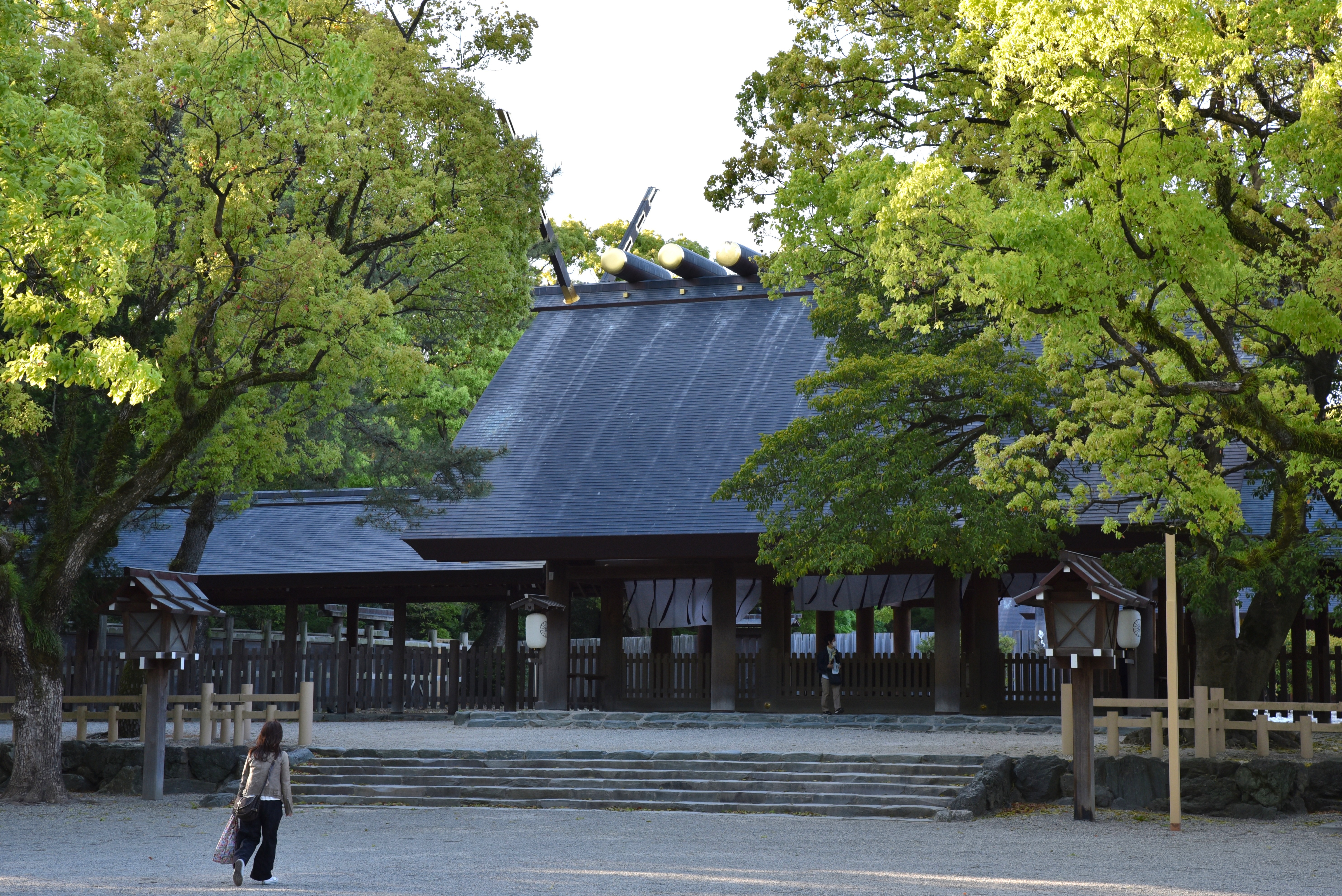
Atsuta Jingu is one of Nagoya’s major Shinto shrines, with a worship tradition centered on Kusanagi-no-Tsurugi, one of Japan’s three imperial regalia. Arrive through the rail-friendly Jingumae side, then decide whether to add the separate Kusanagi Hall visit for its sword-focused collection.
- Time needed
- Allow 60 to 90 minutes for the main approach and worship. Add time for a ticketed Kusanagi Hall visit or for a slower walk through the precinct.
View practical details
- Formal prayer
- Same-day applications are accepted at the shrine office from 8:30 to 16:00; standard offerings start at ¥6,000. Check the official page before visiting for ceremony-day changes.
- Best arrival
- Jingumae Station is the most direct rail arrival: the official visitor guide places it about three minutes on foot from the shrine.
- Good for
- Travelers interested in Shinto practice, Japanese sword history, and a calm historical stop that fits a Nagoya city day.
What to do
- Use Jingumae Station for the shortest walk, then take the main approach into the precinct rather than treating the shrine as a quick photo stop.
- Pay respects at the main shrine and use the official introduction to understand why Kusanagi-no-Tsurugi gives Atsuta Jingu its central place in Japanese tradition.
- Add the Kusanagi Hall when you want a museum visit: it displays swords, related paintings, and historical documents, plus hands-on weight exhibits for two long swords.
- If you are seeking a formal prayer rather than ordinary worship, apply on the day at the shrine office between 8:30 and 16:00 and confirm the current ceremony schedule first.
Tickets and fees
Checked in August 2026: Kusanagi Hall is open 9:00–16:30, with final entry at 16:00. A single Kusanagi Hall ticket is ¥500 for adults or ¥200 for elementary and junior-high students; the combined Treasure Hall ticket is ¥800/¥300, though its price can change during special exhibitions. Formal prayer applications are accepted 8:30–16:00, with offerings from ¥6,000; check the official site before visiting.
Getting there
Use Meitetsu Jingumae Station for the shortest walk (about 3 minutes). The official visitor guide also lists JR Atsuta Station (about 8 minutes on foot) and Jingu-Nishi Station on the Meijo subway line (about 7 minutes). The shrine has free visitor parking, with the entrance on Otsu-dori east of the shrine entrance; verify restrictions around major events.
Nearby
Combine this with Nagoya Castle for a full day of Nagoya's biggest historical sites, or head north to Inuyama Castle for an original Edo-period keep.

Inuyama Castle
Inuyama Castle sits on a bluff above the Kiso River and is one of only twelve Japanese castles whose original keep has survived since the feudal era, making it one of the most authentic castle visits within easy reach of Nagoya.
- Price
- Paid. Adult admission is yen 550, with reduced rates for children and students.
- Time needed
- 1 to 2 hours for the castle keep plus a walk through the surrounding castle town.
View practical details
- Best time
- Weekday mornings to avoid crowds on the narrow original staircases inside the keep.
- Good for
- Castle architecture fans, history travelers, and anyone wanting an authentic (not reconstructed) Japanese castle keep.
What to do
- Climb the original wooden staircases inside the keep, one of Japan's oldest surviving castle donjons, first built in 1537.
- Step out onto the narrow top-floor balcony for views over the Kiso River and the surrounding plain.
- Note that this is one of only five Japanese castle keeps designated a National Treasure, alongside Himeji, Matsumoto, Hikone, and Matsue.
- Walk Honmachi Street in the old castle town below for traditional shops, snacks, and machiya buildings.
Tickets and fees
Checked in July 2026: adult admission is yen 550 at the gate. The keep has steep, narrow original stairs, so wear practical shoes and expect single-file movement at busy times.
Getting there
About a 15-minute walk from Inuyama-Yuen Station on the Meitetsu Inuyama Line, or a similar walk from Inuyama Station. The Meitetsu Inuyama Line runs directly from Meitetsu Nagoya Station in about 25 to 30 minutes with no transfer.
Nearby
Pair this with Nagoya Castle for a rebuilt-versus-original castle comparison, or visit Atsuta Shrine back in central Nagoya.

Toyota Commemorative Museum
The Toyota Commemorative Museum of Industry and Technology traces the Toyota Group's roots from textile looms to automobiles inside a converted red-brick factory, making it one of the most substantial industrial museums in Japan for anyone interested in manufacturing or car history.
- Price
- Paid. Adult admission is yen 1,000, yen 300 for senior and junior high school students, and yen 200 for elementary school students.
- Time needed
- 2 to 3 hours to see both the textile machinery hall and the automobile hall properly.
View practical details
- Best time
- Weekday afternoons for a quieter visit; avoid Mondays, when the museum is closed.
- Good for
- Car enthusiasts, engineering and manufacturing fans, families, and anyone curious how Toyota grew out of a textile loom business.
What to do
- Watch the working demonstrations of historic textile looms, including machines built by Sakichi Toyoda, the group's founder.
- Walk through the automobile hall covering the development of Toyota's early vehicles up to modern production techniques.
- See live demonstrations of stamping, welding, and casting processes used in car manufacturing.
- Check the museum's exhibit calendar for temporary technology and industry exhibitions.
Tickets and fees
Checked in July 2026: adult admission is yen 1,000 at the gate, with hours from 9:30 to 17:00 (last entry 16:30). The museum is closed on Mondays and some additional holidays, so check the official calendar before visiting.
Getting there
About a 3-minute walk from Sako Station on the Meitetsu Nagoya Main Line, one stop from Meitetsu Nagoya Station. Kamejima Station on the Higashiyama subway line is also within walking distance.
Nearby
Combine this with a return trip into central Nagoya to see Nagoya Castle or Atsuta Shrine on the same day.
Latest Articles
 Nagoya to Takayama: Train or Bus? Compare Price, Time and ArrivalCompare the Limited Express Hida and the direct Nagoya–Takayama highway bus by fare, journey time, reservation rules and…
 Ghibli Park Tickets: Premium or Standard Pass?Choose the Ghibli Park pass that matches the areas, designated buildings, timed Grand Warehouse entry and Nagoya arrival…
 Where to Stay in Nagoya: Station, Sakae or Fushimi?Choose a Nagoya base for Shinkansen and airport connections, central evenings or a quieter city-centre stay, with clear…
This page may contain affiliate links. We may earn a commission at no extra cost to you.
Read next
Where to stay
| Area | Notes |
|---|---|
| Nagoya Station | best for transport and shinkansen access. |
| Sakae | best for shopping, restaurants, and nightlife. |
| Inuyama | good for castle atmosphere and a quieter side trip. |
Sample itinerary
- Day 1: Nagoya Castle, Sakae, Osu, and local food.
- Day 2: Atsuta Shrine, Toyota museums, or Inuyama Castle.
- Day 3: Use Aichi as a transport stop between central Japan routes.
Food to try
- Hitsumabushi eel rice
- Miso katsu and miso nikomi udon
- Tebasaki chicken wings
Common questions
Is Nagoya worth stopping in?
It is on the Tokaido Shinkansen roughly midway between Tokyo and Osaka, which makes Aichi the easiest place in Japan to break a journey.
What is Atsuta Shrine?
One of the most important shrines in the country, associated with the sacred sword Kusanagi, set in deep woodland inside the city.
Can you reach Takayama from Nagoya?
Yes. The limited express to Takayama starts here, which is why Aichi often earns a night as a hinge rather than a destination.
Is Nagoya easy to get around?
Yes. The subway covers the sights, and Inuyama is about half an hour out on a private line.
Explore Nearby Japan
Continue planning your route with nearby prefectures, regional guides, and useful trip planning links.
Nearby Prefectures
Same Region Guides
Useful Planning Links
Recommended Planning Guides
Use these practical guides to plan where to stay, move between regions, and shape your itinerary before your Japan trip.
Plan Your Japan Trip
When to go, how long, where, money, and what to sort before you book.
Read planning guideJapan Transport Guide
IC cards, rail passes, the Shinkansen, and getting in from the airport.
Read transport guideHotels & Where to Stay
Compare stay areas and lodging ideas for first-time Japan visitors.
Find stay guides