


Ishikawa Travel Guide
Ishikawa is centered on Kanazawa, with one of Japan’s finest gardens, historic teahouse streets, seafood markets, museums, and access to the Noto Peninsula.
Quick facts
- Best for: Kanazawa, gardens, seafood, culture
- Recommended stay: 2 to 3 days
- Best season: Spring, autumn, and winter seafood season
- Main bases: Kanazawa and Noto Peninsula towns
Why visit Ishikawa
Ishikawa is the cultural heart of the Hokuriku coast, and Kanazawa concentrates most of it. Kenrokuen is a designated Special Place of Scenic Beauty and one of Japan’s Three Great Gardens, laid out over generations by the lords who ruled here. A short walk away, the Higashi Chaya district keeps its wooden teahouse facades intact, and the 21st Century Museum of Contemporary Art answers it with a circular glass building you can walk around for free. North of the city the Noto Peninsula runs out into the sea through fishing villages and terraced fields.
Getting to Ishikawa
Kanazawa is a direct Shinkansen ride from Tokyo and close to Kyoto and Osaka by limited express, which makes Ishikawa an easy addition to a standard route rather than a detour. The city itself is compact enough to walk and cover by loop bus. The Noto Peninsula is a different proposition — it is long, rural and sparsely served by public transport, and it was badly affected by the 2024 earthquake, so check locally which roads, inns and sights are open before planning around it.
Top Attractions in Ishikawa
Kenrokuen Garden
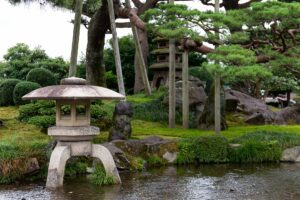
Kenrokuen is one of Japan's three great landscape gardens and the centerpiece of a Kanazawa visit, with a different look in each season thanks to its ponds, teahouses, and the famous Kotoji-toro stone lantern.
- Price
- Paid. Adult admission is around yen 320; children pay a reduced rate and visitors 65 and over often enter free with ID. A combo ticket covering Kenrokuen plus a nearby facility such as Kanazawa Castle Park is also available.
- Time needed
- 1 to 1.5 hours for a walking loop; longer if you stop at the teahouses for matcha.
View practical details
- Best time
- Early morning for fewer crowds and soft light, winter for the rope-tied yukitsuri pine trees, spring for cherry blossoms.
- Good for
- First-time Kanazawa visitors, garden and photography fans, and anyone pairing it with Kanazawa Castle Park next door.
What to do
- Walk the full loop past Kasumigaike Pond and the Kotoji-toro two-legged lantern, the garden's most photographed spot.
- Stop at Kikkoro-jaya or another on-site teahouse for matcha and a seasonal wagashi sweet overlooking the pond.
- Check the season: plum and cherry blossoms in spring, irises in early summer, maple foliage in autumn, and yukitsuri pine-rope displays in winter.
- Combine the visit with adjoining Kanazawa Castle Park, which shares an entrance area and can be reached in a few minutes on foot.
Tickets and fees
Checked in July 2026: same-day tickets are sold at the garden gates and are normally sufficient outside peak cherry-blossom and autumn-foliage weekends. Paid hours run roughly 7:00 to 18:00 in the warmer months and 8:00 to 17:00 in winter, but a free early-morning entry window operates before those hours at select gates. Confirm current hours and any seasonal fee changes before your visit.
Getting there
About a 20 to 25 minute bus ride from JR Kanazawa Station using the Kanazawa Loop Bus or Kenrokuen Shuttle to the Kenrokuen-shita or Hirosaka bus stop, then a short walk to the garden gates. Taxis from the station take about 10 minutes.
Nearby
Combine with the 21st Century Museum of Contemporary Art, a short walk away, or the Higashi Chaya District a short taxi ride across town.
.jpg)
Higashi Chaya District
Higashi Chaya is Kanazawa's largest and best-preserved geisha district, a compact grid of Edo-period wooden teahouses now lined with gold-leaf shops, sweet stalls, and a couple of teahouses you can actually walk inside.
- Price
- Free to walk the streets. Entering a teahouse museum costs roughly yen 500 (Shima Teahouse) to yen 750 (Kaikaro Teahouse, includes tea service).
- Time needed
- 1 to 1.5 hours for the streets and a shop or two; add 30 to 45 minutes if you go inside a teahouse.
View practical details
- Best time
- Late afternoon to early evening, when lantern light suits the wooden facades; go early morning instead if you want the street mostly to yourself.
- Good for
- First-time Kanazawa visitors, architecture and history fans, gold-leaf souvenir shopping, and photography.
What to do
- Walk the main lattice-fronted street of kimuko-goshi wooden facades, the signature look of a chaya district.
- Go inside Shima Teahouse or Kaikaro Teahouse to see original performance rooms, geisha instruments, and (at Kaikaro) a tea service.
- Browse gold-leaf specialty shops, since Kanazawa produces most of Japan's gold leaf; look for gold-leaf ice cream and cosmetics as well as leaf art.
- Step into a side lane or two off the main street, where quieter cafes and craft shops are less crowded than the main strip.
Tickets and fees
Checked in July 2026: no ticket is needed to walk the district itself. Shima Teahouse and Kaikaro Teahouse sell entry on site with no advance booking required for regular visits; Kaikaro is closed on Wednesdays. Special geiko performance events run on a limited schedule, so check current dates if that is the goal of your visit.
Getting there
About a 15 to 20 minute bus ride from JR Kanazawa Station on the Kanazawa Loop Bus to the Hashiba-cho stop, then a short walk across the Asano River bridge into the district. A taxi from the station takes about 10 minutes.
Nearby
Pair it with Kenrokuen Garden across town, or plan a separate day for the Noto Peninsula if you have a car.

21st Century Museum of Contemporary Art
This circular, glass-walled museum is Kanazawa's most photographed modern building, home to Leandro Erlich's famous Swimming Pool installation and a free public zone that alone is worth a stop between temples and gardens.
- Price
- Free public zone, including a view of the Swimming Pool from above. Paid exhibition zone (which includes the underwater Swimming Pool view) is around yen 450 for adults; special exhibitions cost extra.
- Time needed
- 1 to 1.5 hours for the free zone and permanent collection; add time if a special exhibition is running.
View practical details
- Best time
- Weekday mornings for shorter waits at the Swimming Pool underground viewing; Friday and Saturday evenings when exhibition hours extend later.
- Good for
- Families, contemporary art fans, photographers, and anyone pairing a museum stop with nearby Kenrokuen Garden.
What to do
- See the Swimming Pool by Leandro Erlich from above for free, or pay to go below and look up through the water at people standing on the surface.
- Walk the free public zone's permanent installations, courtyards, and the circular glass corridor the building is known for.
- Check what special exhibition is on, since the paid exhibition zone content rotates and is separate from the Swimming Pool.
- Note that reservations for the underground Swimming Pool viewing are typically taken same-day and slots can fill up, so go early if this is a priority.
Tickets and fees
Checked in July 2026: exhibition zone tickets and Swimming Pool underground reservations are generally available same-day at the museum, but the underground viewing has limited timed slots (around 5 minutes each) that can sell out on busy days. The museum is closed on Mondays (or the following day if Monday is a holiday). Confirm current hours and reservation rules before visiting.
Getting there
About a 5 to 10 minute walk from the Kenrokuen-shita or Hirosaka bus stop on the Kanazawa Loop Bus from JR Kanazawa Station, right next to Kenrokuen Garden.
Nearby
It sits a short walk from Kenrokuen Garden, making the two an easy same-morning pairing before heading to the Higashi Chaya District in the afternoon.
.jpg)
Noto Peninsula
The Noto Peninsula is Ishikawa's rural, coastal side: rice terraces that meet the sea, small fishing towns, and a laid-back pace that contrasts with central Kanazawa, best explored slowly by car.
- Price
- Free to visit the peninsula itself; individual sights, museums, and activities charge their own admission.
- Time needed
- A full day trip from Kanazawa covers the highlights near the base of the peninsula; 2 to 3 days lets you loop further north at a relaxed pace.
View practical details
- Best time
- Spring through autumn for easier road travel and rice-terrace views; check current conditions before a winter visit.
- Good for
- Drivers comfortable with rural roads, nature and coastal scenery fans, and travelers interested in Noto's post-earthquake recovery and craft towns.
What to do
- Drive the coastline to see the Shiroyone Senmaida rice terraces, which step down toward the sea and are especially striking near sunset.
- Visit Wajima for lacquerware craft shops and the relocated morning market, which continues to operate daily.
- Explore smaller fishing villages and craft towns along the way rather than rushing straight to one endpoint.
- Rent a car if possible, since the peninsula's coastal highlights are spread out and public transport coverage is limited outside the main towns.
Tickets and fees
Checked in July 2026: no ticket is needed for the peninsula itself. Ishikawa Prefecture is still recovering from the January 2024 Noto earthquake, and while most major roads and tourist sites have reopened, some secondary roads and facilities in the northern Sotoura area remain restricted or under repair. Check current road status and facility openings close to your travel date before finalizing a Noto itinerary, especially if you plan to go beyond the main Wajima and Anamizu area.
Getting there
A rental car from Kanazawa is the most practical way to see the peninsula, since the full coastal loop runs roughly 250 km and many coastal highlights are not reachable by train or bus. The JR Nanao Line and Noto Railway serve the base of the peninsula for travelers without a car, with local buses covering some onward routes.
Nearby
Base yourself in Kanazawa and combine a Noto day trip with in-city stops like Higashi Chaya District or Kenrokuen Garden on the days you stay in the city.
Latest Articles
 Kenrokuen Garden: Tickets, Hours and the Best Gate for Your DayPlan a Kenrokuen Garden visit with current official hours and admission, then choose an arrival point that works…
 Where to Stay in Kanazawa: Station, Korinbo or Higashi Chaya?Choose a Kanazawa base for rail arrivals, castle-area sightseeing or a historic-district stay, with clear trade-offs between the…
This page may contain affiliate links. We may earn a commission at no extra cost to you.
Read next
Where to stay
| Area | Notes |
|---|---|
| Kanazawa Station | convenient for transport and luggage-friendly trips. |
| Korinbo or Katamachi | best for food, shopping, and nightlife. |
| Higashi Chaya area | good for atmosphere and a quieter cultural stay. |
Sample itinerary
- Day 1: Kenrokuen Garden, Kanazawa Castle, and Higashi Chaya.
- Day 2: Omicho Market, samurai district, museums, and local dining.
- Day 3: Noto Peninsula or a slower Kanazawa craft and tea day.
Food to try
- Kanazawa sushi and seafood bowls
- Kaga cuisine
- Gold leaf sweets and local sake
Common questions
Is Kanazawa easy to get around?
Yes. The city is compact enough to walk and cover by loop bus, and it is a direct Shinkansen ride from Tokyo.
Should you visit the Noto Peninsula?
Check locally first. It is long, rural and sparsely served by public transport, and it was badly affected by the 2024 earthquake, so confirm which roads, inns and sights are open.
What makes Kenrokuen notable?
It is a designated Special Place of Scenic Beauty and one of Japan's Three Great Gardens, laid out over generations by the lords who ruled here.
Can you combine Ishikawa with Kyoto?
Yes. Kanazawa is close to Kyoto and Osaka by limited express, which makes Ishikawa an easy addition rather than a detour.
Explore Nearby Japan
Continue planning your route with nearby prefectures, regional guides, and useful trip planning links.
Nearby Prefectures
Same Region Guides
Useful Planning Links
Recommended Planning Guides
Use these practical guides to plan where to stay, move between regions, and shape your itinerary before your Japan trip.
Plan Your Japan Trip
When to go, how long, where, money, and what to sort before you book.
Read planning guideJapan Transport Guide
IC cards, rail passes, the Shinkansen, and getting in from the airport.
Read transport guideHotels & Where to Stay
Compare stay areas and lodging ideas for first-time Japan visitors.
Find stay guides