


Nagano Travel Guide
Nagano is a mountain-focused destination for temples, alpine scenery, snow resorts, onsen towns, and the famous snow monkeys.
Quick facts
- Best for: Alps, snow, temples, onsen, nature
- Recommended stay: 2 to 4 days
- Best season: Winter for snow, spring to autumn for hiking
- Main bases: Nagano City, Matsumoto, Hakuba
Why visit Nagano
Nagano is Japan’s mountain prefecture, and almost everything here follows from altitude. Kamikochi is a high valley in the Northern Alps closed to private cars, where a flat riverside path gives serious mountain scenery without a climb — our Kamikochi day trip guide covers the buses and the walk. Jigokudani Monkey Park is where wild macaques sit in a hot spring pool through the winter. Hakuba hosted Olympic events and remains the best-known ski area for foreign visitors, and in the city Zenko-ji is a major pilgrimage temple that predates the split into Buddhist schools.
Getting to Nagano
Nagano city is under two hours from Tokyo on the Hokuriku Shinkansen, and Matsumoto is the other gateway, reached by limited express from Shinjuku. From those two, buses run to the mountains — which is the part to plan: Kamikochi is seasonal and closed in winter, and the monkey park involves a walk through snow on a forest path. Nagano is a genuinely four-season destination, but summer and winter here are almost different places, so decide which trip you are taking.
Top Attractions in Nagano
Zenko-ji Temple
Zenko-ji is a 1,400-year-old temple in central Nagano City that has drawn pilgrims for centuries, and it remains the spiritual anchor of the city with a working monastery, a famous pitch-dark underground passage, and a lively approach street lined with old shops.
- Price
- Free to enter the temple grounds. The inner sanctuary (Naijin), Okaidan pitch-dark passage, and history museum combo ticket is a paid add-on, roughly yen 600 for adults.
- Time needed
- 1 to 1.5 hours, longer if you walk the full Nakamise approach street and browse shops.
View practical details
- Best time
- Early morning for the monks' Oomairi service and a quieter temple, or midday for shopping along the approach.
- Good for
- First-time Nagano visitors, temple and history fans, and anyone wanting the Okaidan pitch-dark walk experience.
What to do
- Walk the Okaidan, a completely dark underground passage beneath the main altar said to lead you toward enlightenment if you find the 'key to paradise' by touch alone.
- Join or watch the Oomairi, the monks' morning procession and blessing that starts around sunrise and varies by season.
- See the Ruriden lower hall and the Zenkoji History Museum if you buy the inner sanctuary combo ticket.
- Stroll Chuo-dori, the temple's approach street, for old-fashioned shops, oyaki dumplings, and Nagano soba.
Tickets and fees
Checked in July 2026: the temple grounds are free, and the Hondo (main hall) is open from sunrise until around 4:00 to 4:30pm depending on the month. Inner sanctuary and Okaidan tickets are sold on-site at the temple; no advance booking is needed for a normal visit.
Getting there
About a 25-minute walk or a short bus ride from JR Nagano Station. Local buses run directly to the Zenkoji-mae or Daimon stop; taxis take around 10 minutes.
Nearby
If you are basing yourself in Nagano City, the mountain scenery at Kamikochi and the bathing macaques at Jigokudani Snow Monkey Park both make good day trips from the same base.

Kamikochi
Kamikochi is a highland valley in the Northern Japan Alps known for the Azusa River, the Hodaka mountain range, and easy riverside walking trails, and it has been closed to private cars since 1975, so every visitor arrives by shuttle bus or taxi.
- Price
- Free to enter the valley. You pay for the shuttle bus or taxi in and the parking at the gateway village, plus any lodge or trail fees.
- Time needed
- Half a day for the classic Kappabashi to Taisho Pond walk, a full day if you continue to Myojin Pond.
View practical details
- Best time
- Late April to mid-November only, since the valley is closed to visitors in winter. Late spring and autumn foliage (October) are especially scenic.
- Good for
- Hikers, nature and mountain photographers, and anyone wanting an easy, well-marked alpine walk without technical climbing.
What to do
- Cross Kappabashi Bridge for the classic view of the Hodaka mountains over the Azusa River.
- Walk the flat, well-marked trail to Taisho Pond and Tashiro Pond for reflections of the peaks.
- Continue further along the river to Myojin Pond for a quieter, forested stretch with fewer crowds.
- Look for Japanese macaques and, with luck, Japanese serow along the riverside trails.
Tickets and fees
Checked in July 2026: Kamikochi has no entrance fee, but private cars are banned year-round, so you park at a gateway town such as Sawando or Hirayu and ride a shuttle bus in. One-way shuttle fares are roughly yen 1,600 to 2,000 depending on the route, and the valley is typically open mid or late April through mid-November; it closes completely over winter.
Getting there
From the Matsumoto/Tokyo side, take a train or bus to Shin-Shimashima or Matsumoto, then a bus to Sawando, and transfer to the Kamikochi shuttle bus. From the Takayama/Gifu side, connect via Hirayu Onsen. Check the season's operating dates before you go, since the road closes outside the open season.
Nearby
Combine this trip with the temple town atmosphere of Zenko-ji Temple in Nagano City, or extend into the mountains with a stop in Hakuba for more alpine scenery.

Hakuba Ski Resort
Hakuba is a cluster of ski areas in the Northern Alps that hosted alpine events at the 1998 Nagano Winter Olympics, and while it is best known as a winter powder destination, several of its gondolas keep running in summer for hiking, alpine flowers, and mountain views.
- Price
- Winter lift passes and summer gondola tickets are sold separately by resort; a Happo One summer round-trip gondola ticket runs roughly yen 3,000 to 3,400 for adults.
- Time needed
- A full day for skiing or a summer hike; a long weekend if you want to try multiple resorts in the Hakuba Valley.
View practical details
- Best time
- Mid-December to March for skiing and snowboarding; July to September for hiking, alpine plants, and clear mountain views.
- Good for
- Skiers and snowboarders of all levels in winter, and hikers or families wanting easy gondola-accessed mountain scenery in summer.
What to do
- Ski or ride at Happo-One, Hakuba's largest and most famous resort, with terrain for beginners through advanced.
- In summer, ride the Adam Gondola and connecting lifts at Happo-One up to Happo Pond for alpine views of the Hodaka range.
- Explore other resorts in the valley such as Goryu, Hakuba47, and Tsugaike Kogen, each with a different character and trail mix.
- Soak in an onsen afterward; the Hakuba area has several hot spring baths geared toward skiers and hikers.
Tickets and fees
Checked in July 2026: winter lift passes and summer gondola tickets are bought separately at each resort or online in advance; prices and operating dates vary by resort and by season, so check the specific resort's site (Happo-One, Goryu, Hakuba47, Tsugaike) before your trip. Summer gondola operation is typically limited to roughly July through September and depends on the resort.
Getting there
From Nagano Station, take the Alpico bus to Hakuba (about 70 minutes) or a direct train/bus combination from Tokyo. In winter, direct ski buses run from Tokyo and Nagano; a rental car gives the most flexibility for reaching multiple resorts.
Nearby
Pair a Hakuba trip with the wild bathing macaques at Jigokudani Snow Monkey Park or the alpine valley of Kamikochi if you have extra days in the Nagano mountains.
Snow Monkey Park
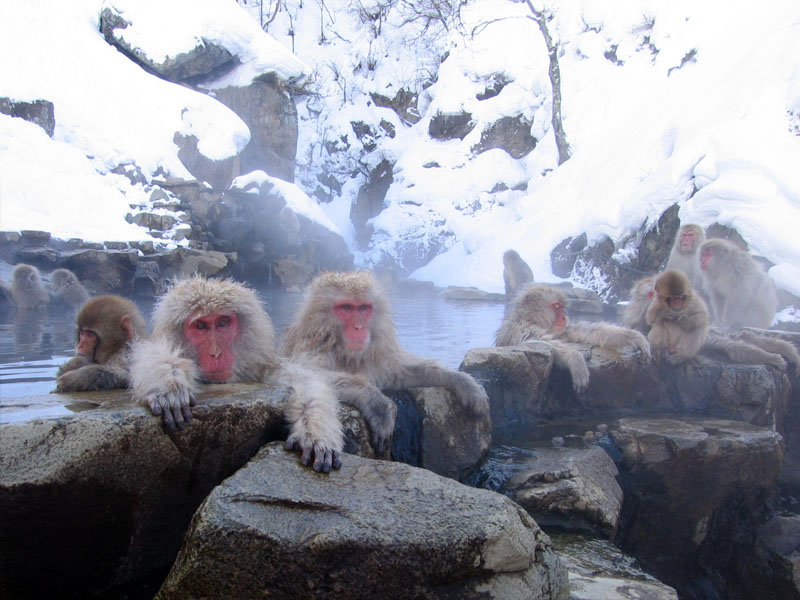
Jigokudani Snow Monkey Park is famous for wild Japanese macaques that soak in a natural hot spring pool, a sight that draws visitors year-round but is most iconic in winter with snow on the ground, and reaching the monkeys requires a walk through forest on a dedicated trail.
- Price
- Paid. Admission is around yen 800 for adults and yen 400 for children, purchased on-site; no advance reservation is used for regular entry.
- Time needed
- 2 to 3 hours including the walk in and out and time watching the monkeys.
View practical details
- Best time
- Winter (December to March) for snowy scenery and the classic hot-spring photo, though the monkeys are present and visible year-round.
- Good for
- Wildlife photographers, families, and anyone wanting one of Japan's most distinctive animal encounters.
What to do
- Walk the roughly 30-minute forest trail from the park entrance to reach the hot spring viewing area; wear sturdy shoes, as it can be icy in winter.
- Watch the macaques soak in the outdoor hot spring pool, an unusual and camera-friendly behavior unique to this park.
- Visit early in the day or on a weekday for smaller crowds around the pool.
- Combine with a stop at nearby Shibu Onsen or Yudanaka Onsen for a traditional hot spring town experience.
Tickets and fees
Checked in July 2026: tickets are sold only at the park entrance, not in advance, and accept major cards and e-money. Opening hours run roughly 8:30am to 5pm from April to October and 9am to 4pm from November to March. Travelers relying on trains and buses may find the Snow Monkey 1-Day or 2-Day Pass convenient, since it bundles Nagaden train and local bus travel with park admission.
Getting there
Take the Nagaden (Nagano Dentetsu) line from Nagano Station to Yudanaka Station, then a local bus to the Kanbayashi Onsen stop, followed by the roughly 30-minute walk to the park entrance. Sightseeing taxis and organized tours from Nagano are also common, especially in winter.
Nearby
This trip pairs well with a visit to Zenko-ji Temple if you are based in Nagano City, since both are reachable on a single day trip loop.
Latest Articles
 Matsumoto Castle: Tickets, Hours and the Best Arrival PlanPlan Matsumoto Castle around its timed-entry ticket, steep keep stairs and a realistic arrival from Matsumoto Station: walk…
 Kamikochi Day Trip from Matsumoto: Buses, the Taisho Pond Walk and Return TimingPlan a car-free Kamikochi day trip from Matsumoto with current bus fares, reservations, a Taisho Pond-to-Kappa Bridge walk…
This page may contain affiliate links. We may earn a commission at no extra cost to you.
Where to stay
| Area | Notes |
|---|---|
| Nagano City | easiest base for Zenko-ji and the snow monkey route. |
| Matsumoto | good for castle history, day trips, and mountain access. |
| Hakuba | best for skiing, hiking, and alpine scenery. |
Sample itinerary
- Day 1: Zenko-ji Temple and Nagano City.
- Day 2: Snow Monkey Park or Matsumoto Castle.
- Day 3: Kamikochi, Hakuba, or an onsen area depending on the season.
Food to try
- Shinshu soba
- Oyaki dumplings
- Apples, local sake, and mountain vegetables
Common questions
Is Kamikochi open all year?
No. It is seasonal and closed in winter. The valley is also closed to private cars, so buses from Matsumoto are how you get in.
How do you reach the snow monkeys?
The park involves a walk through snow on a forest path, so come prepared rather than treating it as a roadside stop.
What are the two gateways to Nagano?
Nagano city, under two hours from Tokyo on the Hokuriku Shinkansen, and Matsumoto, reached by limited express from Shinjuku.
Is Nagano a summer or winter destination?
Both, but they are almost different places. Decide which trip you are taking before you plan.
Explore Nearby Japan
Continue planning your route with nearby prefectures, regional guides, and useful trip planning links.
Nearby Prefectures
Same Region Guides
Useful Planning Links
Recommended Planning Guides
Use these practical guides to plan where to stay, move between regions, and shape your itinerary before your Japan trip.
Plan Your Japan Trip
When to go, how long, where, money, and what to sort before you book.
Read planning guideJapan Transport Guide
IC cards, rail passes, the Shinkansen, and getting in from the airport.
Read transport guideHotels & Where to Stay
Compare stay areas and lodging ideas for first-time Japan visitors.
Find stay guides