
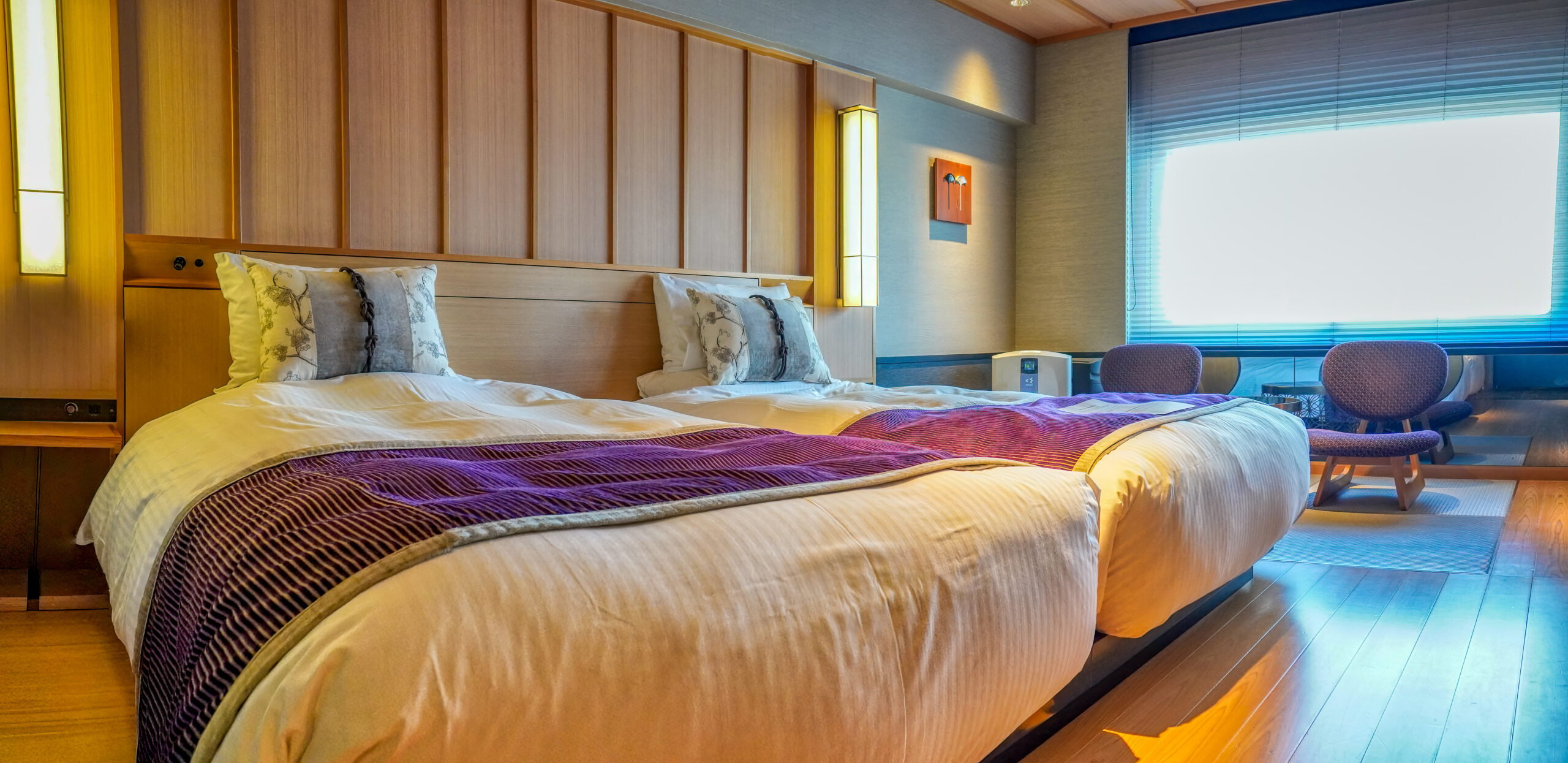
Quick answer: For a first Japan itinerary, choose Tokyo for a simple arrival and Shinkansen connections, Kyoto for temple mornings and historic evenings, and Osaka for food, nightlife and western-Japan day trips. Pick the one base that solves your first airport move, next major train and evening plans; then use the city guides to choose the neighbourhood and hotel.
For most first Japan trips, use Tokyo, Kyoto and Osaka as your three decision points—not a long hotel shortlist. Choose the base that removes the most friction from your arrival, your next intercity train and the evenings you want to have. Then compare a small number of properties within that area.
- The quick choice for a first Japan itinerary
- The first rule: stay near the transport you will actually use
- How many nights should you give each city?
- Tokyo: choose access before atmosphere
- Kyoto: match the base to your mornings
- Osaka: Namba or Umeda solves most first trips
- Hotel, ryokan, or apartment?
- First-time Japan hotel questions
- A simple booking checklist
The quick choice for a first Japan itinerary
| If your priority is… | Start with… | Why |
|---|---|---|
| Simple arrival, Shinkansen connections or a short Tokyo stay | Tokyo Station, Ueno or Shinagawa | Choose the station that matches your airport route and next train rather than the busiest sightseeing district. |
| Historic Kyoto mornings and central evenings | Kyoto Station, Shijo-Kawaramachi or Gion/Higashiyama | Kyoto Station reduces transfer friction; central and eastern areas trade some transport ease for atmosphere and evenings. |
| Food, nightlife and straightforward Kansai day trips | Namba or Umeda/Osaka Station | Namba suits southern Osaka evenings; Umeda is usually easier for JR connections and Kyoto day trips. |
Tokyo
Choose it for: your airport arrival, a short first stay, or a Shinkansen departure. Tokyo Station and Shinagawa reduce transfer friction; Ueno works well for northern Tokyo and onward travel.
Kyoto
Choose it for: early temple mornings and historic neighborhoods. Kyoto Station is the practical base; central and eastern districts trade some transfer ease for atmosphere.
Osaka
Choose it for: food, evenings, and western Japan day trips. Namba is better for the south; Umeda is usually easier for JR and Kyoto connections.
Pick the city that matters most to your route first, then use its area guide to choose a hotel, ryokan, or apartment.
The first rule: stay near the transport you will actually use
A room five minutes from the right station is usually more useful than a slightly cheaper room that requires a bus and a long walk every morning. Check the airport route, the station used by your next intercity train, and your two most important sightseeing areas. You do not need to be next to every attraction; you need an easy daily starting point.
- Airport arrival: Avoid a first-night transfer that depends on several local connections.
- Shinkansen day: Staying near Tokyo, Shinagawa, Kyoto, Shin-Osaka, or another relevant station can simplify luggage movement.
- Late evenings: Confirm that the walk from the station is comfortable and that food remains available nearby.
- Room details: Check floor area, bed arrangement, luggage space, and whether the property has an elevator.
How many nights should you give each city?
5–7 nights
For 5 nights, use 3 in Tokyo and 2 in Kyoto, with Osaka as a day trip if it matters to you. For 6–7 nights, use 3 in Tokyo, 2–3 in Kyoto, and 1 in Osaka. It is fine to use Kyoto or Osaka as one Kansai base rather than changing hotels for a single night.
8–10 nights
Give Tokyo 3–4 nights, Kyoto 3, and Osaka 2. Use the extra time for one day trip rather than adding a new hotel every night.
11–14 nights
Keep the three-city pattern, then add one region where you can stay at least two nights—such as Hiroshima and Miyajima west of Osaka, or a slower Hakone or Nikko break from Tokyo.
Tokyo: choose access before atmosphere
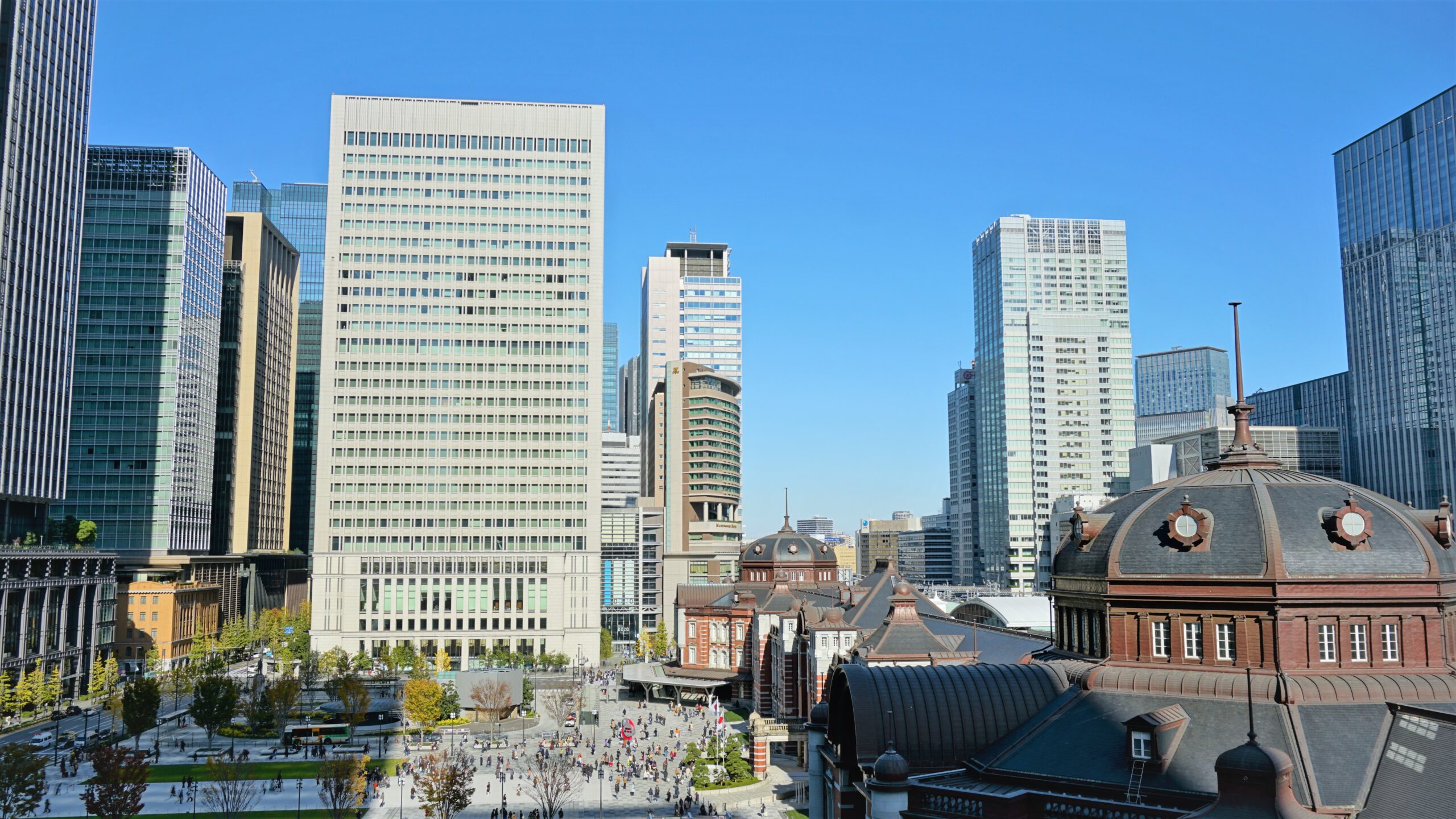
Tokyo Station and Marunouchi
Best for a short stay, Shinkansen travel, and straightforward access to central districts. The area can cost more and becomes quiet in some blocks at night, but it is difficult to beat for an early intercity departure.
Ueno and Asakusa
Good for traditional sights, a more relaxed evening atmosphere, and access toward northern Tokyo. Ueno is the stronger transport base; Asakusa is the stronger atmosphere choice. Check the exact rail line because the area’s stations are not interchangeable.
Shinjuku
Useful for western Tokyo, nightlife, and day trips, but the station is large and the wrong exit can add time. First-time visitors should favor a hotel with a simple, well-documented walking route instead of choosing by the word “Shinjuku” alone.
Kyoto: match the base to your mornings
Kyoto’s official accommodation guide draws a useful distinction between transport convenience and atmosphere. Kyoto Station has large hotels, business hotels, lockers, and direct JR access. Shijo-Kawaramachi and Shijo-Karasuma work well for dining, shopping, and central evenings. Gion and Higashiyama offer a stronger historic setting but can involve more buses, walking, and higher prices.
- Kyoto Station: Best for short stays, day trips, and early departures.
- Shijo-Kawaramachi: Best for restaurants, shopping, and a lively central base.
- Gion or Higashiyama: Best when atmosphere is worth more than maximum transport efficiency.
- Arashiyama: Better as a deliberate quiet stay than as a universal sightseeing base.
Osaka: Namba or Umeda solves most first trips
Namba is the easier choice for Dotonbori, evening food, and the energy many first-time visitors expect from Osaka. Umeda works better for JR connections, Kyoto day trips, and a more transport-centered stay. Shin-Osaka is convenient for the Shinkansen, but most leisure travelers will prefer to spend their evenings elsewhere unless they have a very early departure.
Hotel, ryokan, or apartment?
Business or city hotel
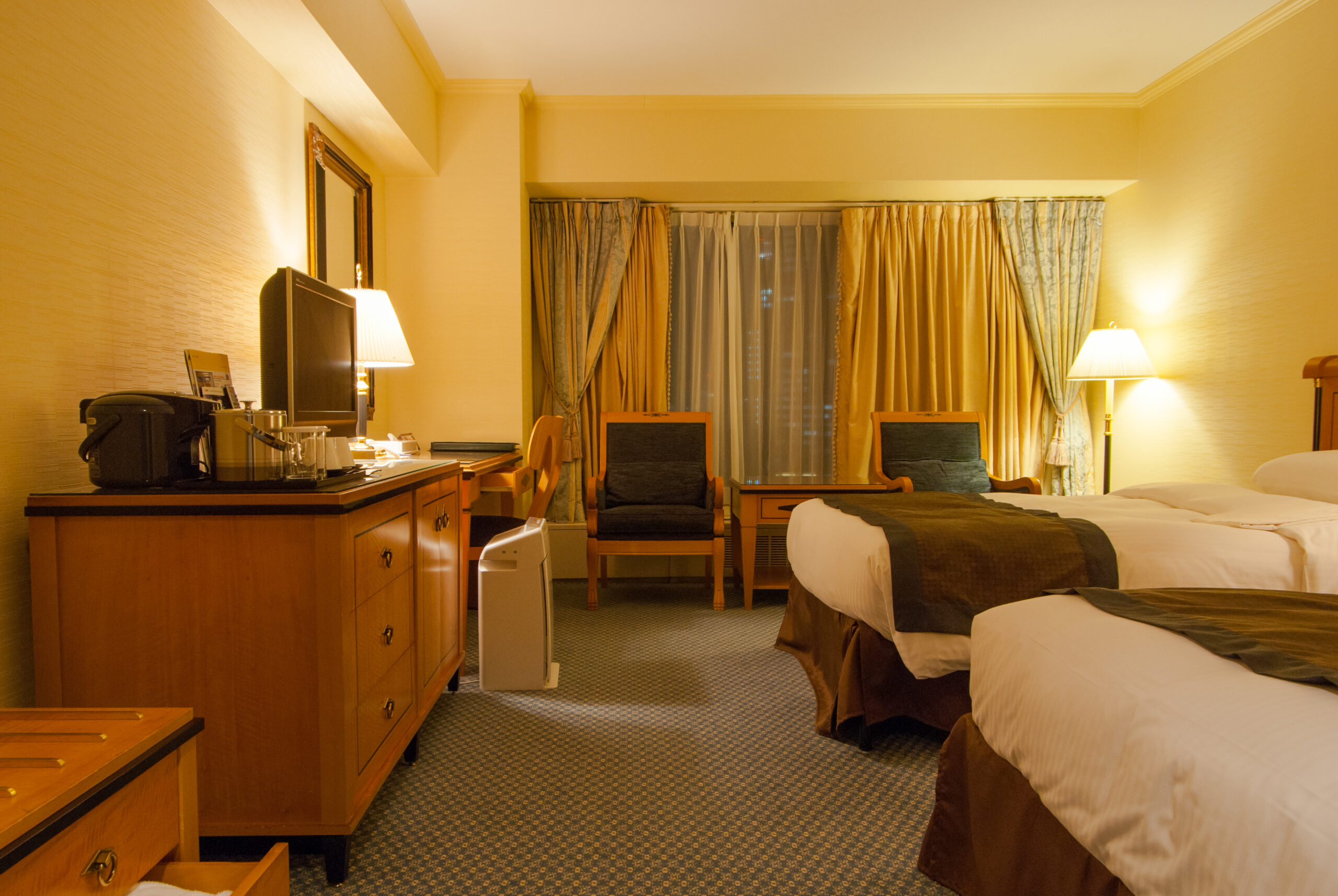
The most predictable option for a multi-city first trip. Expect efficient check-in and convenient locations, but read the room dimensions carefully because compact rooms are common.
Ryokan
Choose a ryokan for the stay itself: tatami, futon bedding, baths, hospitality, and often dinner and breakfast. JNTO notes that ryokan pricing is commonly per person and meals are often included. Confirm meal times, dietary requests, bathing arrangements, and the final check-in time before booking.
A first trip usually works best with one ryokan night in a place such as Hakone in Kanagawa, an onsen town, or a quieter part of Kyoto rather than changing every hotel into a traditional stay.
Apartment or private lodging
Extra space and laundry can help families and longer stays. Check legal registration, stairs, key collection, luggage storage, noise rules, and whether support is available if check-in fails. GO TOKYO advises travelers to verify the registration or permit details of private lodging.
First-time Japan hotel questions
Should I stay in Tokyo or Kyoto first?
Start in the city that matches your flight and next major train move. If you arrive at a Tokyo airport and plan to continue west, Tokyo first is usually simpler. If an open-jaw flight makes Kyoto or Osaka the easier arrival or departure, reverse the route instead of backtracking.
Is Osaka worth staying overnight?
Yes when you want late food, nightlife, or early western-Japan trains. If your time is short and your plans are mostly in Kyoto, one Kansai base can be easier than checking out and in again just to be closer to Osaka for one evening.
Should I book every hotel before arriving?
For a first multi-city trip, reserve the first night, the final night, and any dates controlled by a festival, timed attraction, or early train. For the rest, a cancellable booking gives you a place to sleep while keeping the route adjustable.
A simple booking checklist
- Map the walk from the correct station exit.
- Check the room size and bed configuration, not only the photographs.
- Confirm cancellation and payment timing.
- Look for luggage storage before check-in and after checkout.
- Read the late-arrival and final check-in rules.
- Check whether breakfast or ryokan meals are included.
- Review local accommodation taxes or charges shown at booking.
Before locking the hotel nights, confirm any fixed-date activities that control where you need to be. If a major attraction or tour is central to the trip, compare availability through Klook only after you have decided the route and dates.
Sources checked: GO TOKYO accommodations, Kyoto Travel accommodation areas, OSAKA-INFO Minami area, and JNTO Japanese Ryokan Guide. Checked 2026-08-17; check the official site before visiting or booking.