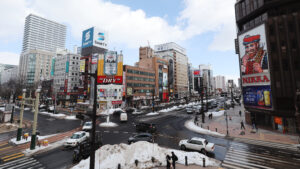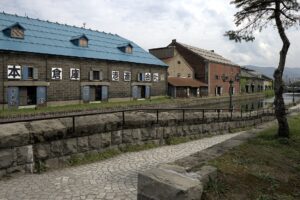
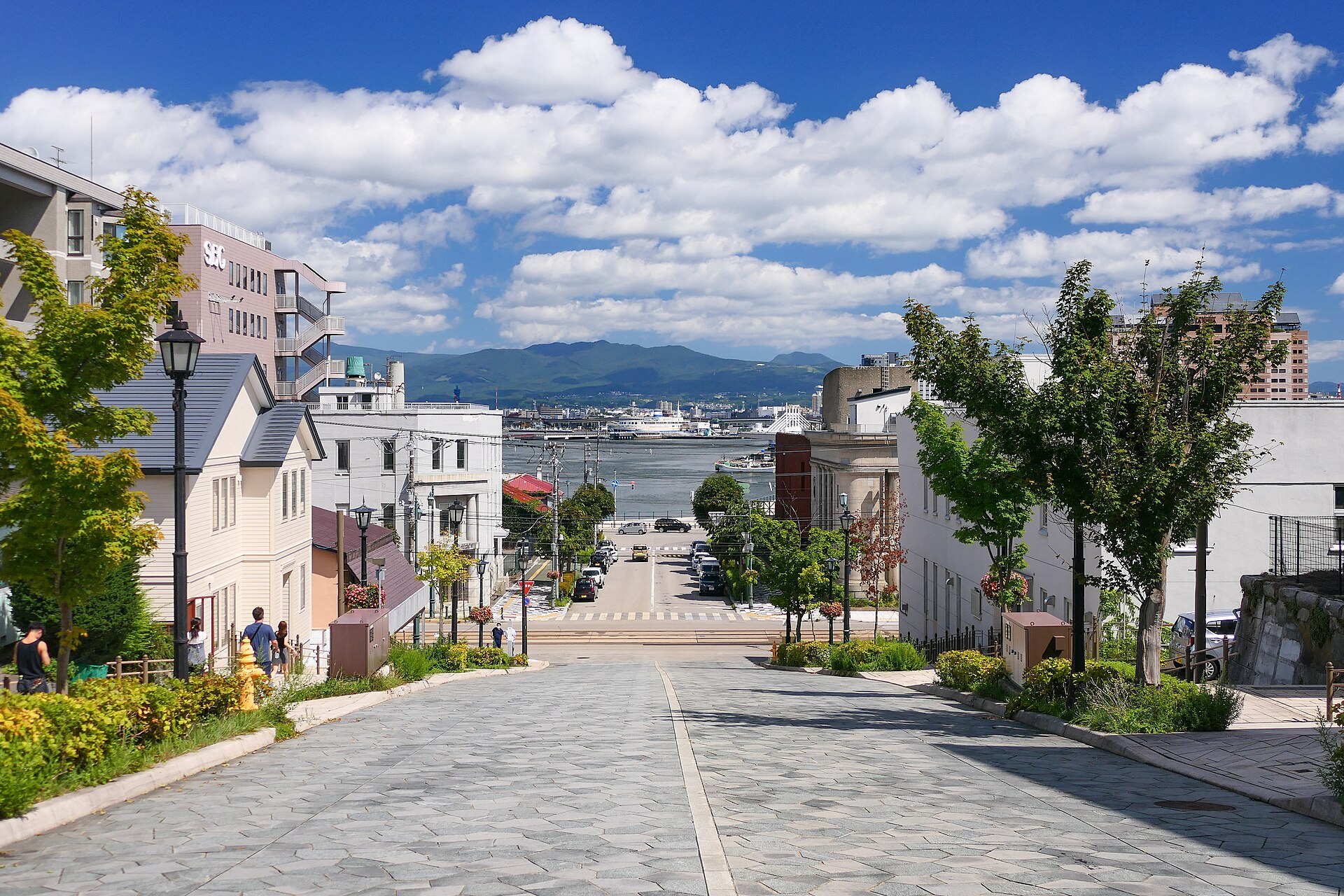
Choose the Hakodate Station area if your hardest constraint is a late rail arrival, an early train, or several days beginning at the JR/bus hub. Choose Motomachi when the western streets, bay and a slow evening are the point of the stay. Neither district guarantees a short walk, lower room rate or direct airport connection: judge a specific hotel address and your actual travel day.
| Decision point | Hakodate Station area | Motomachi area |
|---|---|---|
| Arrival | Start here for a late JR arrival, a rail-led next morning, or the simplest first step from the station. Airport arrivals still need a bus or taxi. | Start here when an evening in the historic streets is the fixed plan. From the station, budget a tram/taxi leg or a longer walk with bags. |
| Walkability | JR Inn Hakodate is a named station-side example with a route through the west-side passage. Check the exact entrance of any other hotel. | Villa Concordia lists Jujigai as its tram stop, followed by a short walk; other Motomachi addresses may be farther uphill. Check the actual hotel door and slope. |
| Local mobility | Easy for repeated rail departures and station-side buses. Motomachi and the Bay Area are reached by tram, bus, taxi or a longer walk. | Useful for repeated walks around the Bay Area and western streets. Rail-led days add the trip back to Hakodate Station. |
| Evening fit | Practical if dinner is near your hotel or an early start matters more than the old-town atmosphere. | Better if you want to wander the western streets and bay after check-in. Check how you will return after a late night view. |
| Stay length | A transit night or several days with frequent train/bus starts strengthen the station case. | A relaxed city stay with repeated old-town walks strengthens the Motomachi case. |
| Trade-off | Less luggage handling at the station, but extra local rides for western-side evenings. | More atmospheric walks, but uphill streets and a station transfer may matter with luggage or early trains. |
Use the official Hakodate accommodation directory to see how the city separates Station and Mt. Hakodate/Motomachi listings. Then compare the property’s own access map, the city transport guide and current tram service before booking. Check the official operator and hotel pages for your travel date before booking. The named properties here are location examples, not endorsements.
Rail arrival: test the complete station-to-room journey
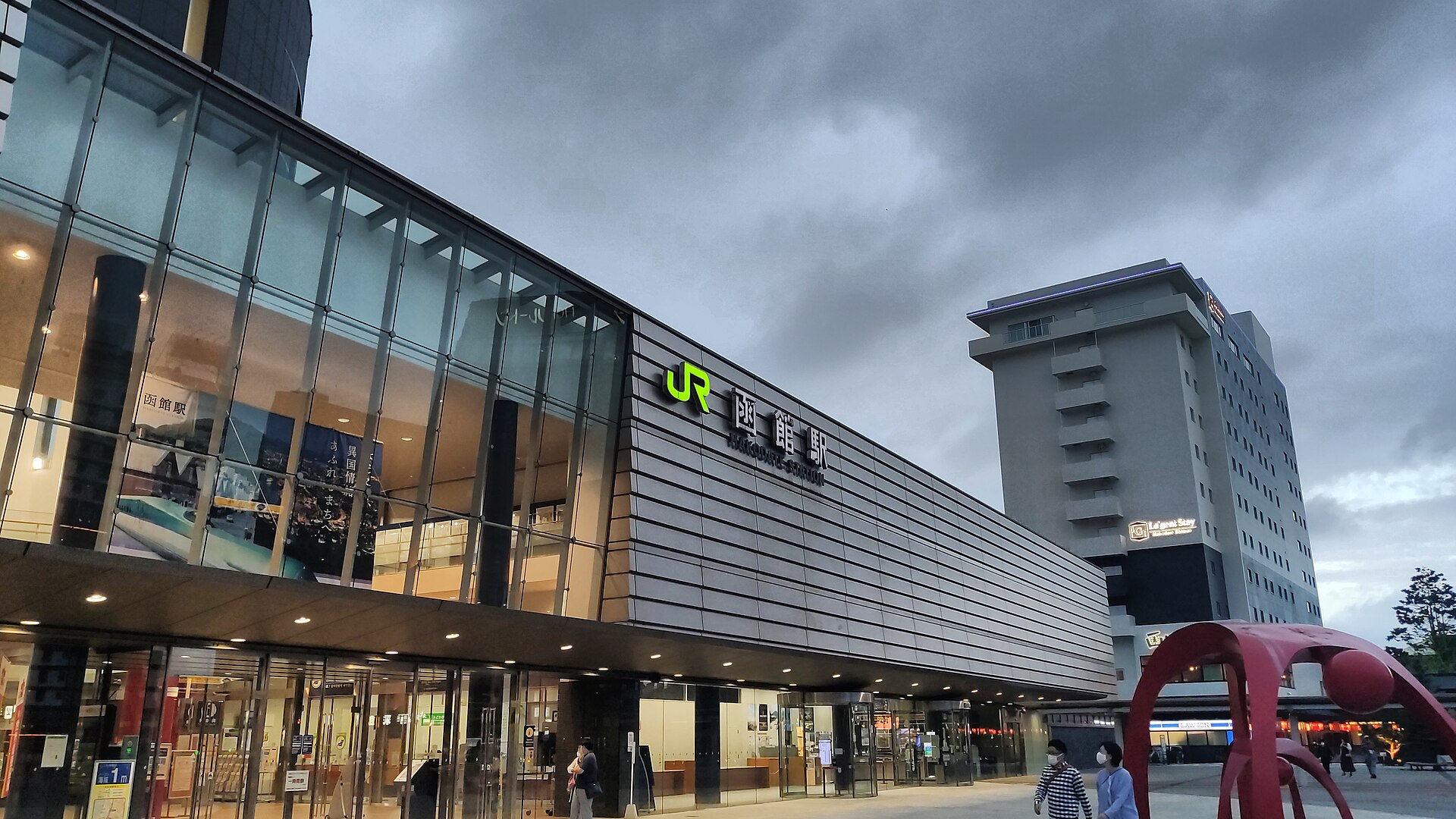
The simplest station-side case is an arrival followed soon by another rail leg. JR Inn Hakodate’s access guide gives a specific route from the JR station concourse via the west-side passage. That is evidence for this hotel, not for every listing labelled “station area.” A different hotel can require a street crossing, a longer block or a different exit. With a heavy case, count platform-to-door effort rather than relying on a map pin.
For a one-night transit stop, the convenience is immediate: you can drop your bags and avoid transferring to a tram before check-in. For several early rail departures, the saving repeats. If you will take only one train on the last day but spend most evenings near the bay, that one saved transfer may be less important than the transfers you add every night. The station-side district also gives you access to city buses, but check the actual stop and direction; a hotel near a station is not automatically on the best route to every sight.
Airport arrival is a separate decision
Hakodate Airport does not have a rail station. The official airport guide directs arrivals to buses, taxis and rental cars, with bus stops outside the domestic arrivals area. A station-side room may be easy after a station-bound bus; a western-side room may need a different bus stop or an additional tram/taxi leg. Match your flight, bus operator, stop and luggage to the precise hotel address. Do not book on the assumption that “airport bus” means every service reaches Motomachi or runs late.
If you arrive after the useful bus connection, a taxi changes the calculation. Compare the door-to-door fare and travel time for each candidate hotel on your actual arrival, rather than assuming the station option always wins. With children or mobility limits, eliminating a transfer can matter more than a nominally shorter straight-line distance. The travel-date timetable and accessibility details on official operator and property pages should settle this before payment.
Motomachi and the bay: account for the hill, not just the view
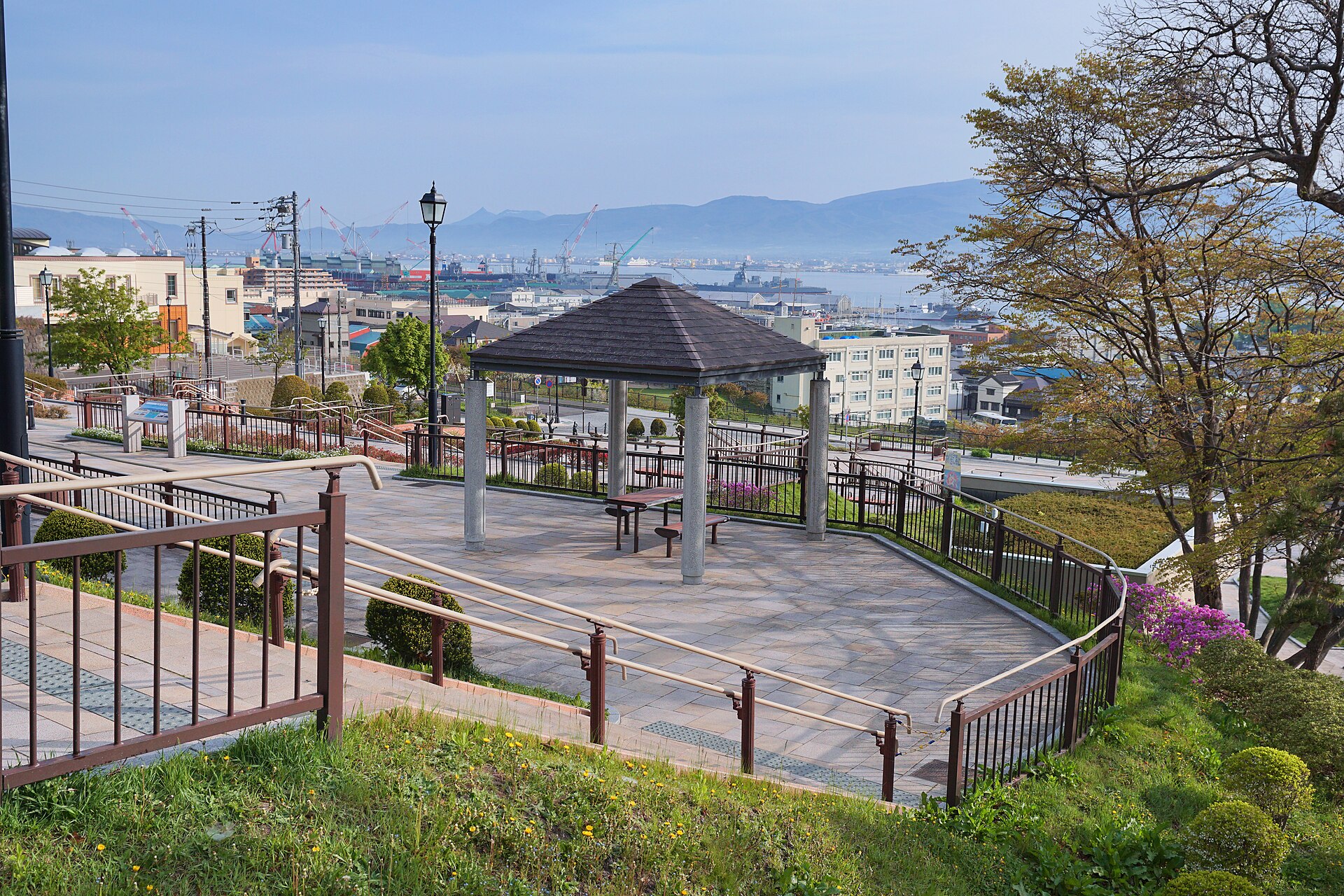
Motomachi’s streets climb between the bay and the foot of Mt. Hakodate. The city’s guide to the slopes identifies Hachimanzaka and the historical buildings around Motomachi Park. This is the appeal of a western-side stay: the walk you wanted to take can start at the hotel. It is also the catch if you have a suitcase, wet pavement or limited mobility. A room a few streets uphill is a different arrival from one at the foot of the slope.
Villa Concordia’s own access page gives a concrete Motomachi-side example: reach Jujigai by tram from Hakodate-ekimae, then walk about three minutes. Other properties may be higher on the slope or nearer a different stop. Even this one address shows why a district label cannot stand in for the actual final leg. Trace your chosen property from its nearest tram stop, checking direction, crossings and elevation.
A western-side base makes sense if you intend to return to the old streets or Bay Area on more than one evening. It is weaker if most days start on JR or an early intercity bus: each such day begins with a transfer back toward the station. The official transport overview confirms the tram serves Station, Motomachi and Bay areas, but services, fares and the last useful departure can change. For a night-view plan, make a return plan before you leave the hotel. Staying in Motomachi does not mean that every summit access point is at your door.
Compare rooms and transfers on the same terms
There is no reliable fixed rule that one district is cheaper. Open live quotes for the same night, guest count, bed arrangement and cancellation policy. Include tax, breakfast, luggage-storage needs and any parking charge. Then add only the tram, bus or taxi journeys you will actually make. A lower room rate can disappear after repeated transfers; a higher rate may be worth paying if it places your least flexible movement nearby. Conversely, the atmospheric location is poor value if you will be out on rail day trips until late.
- One night before an early JR departure: shortlist hotels with a verified station entrance route.
- Two or more rail-led days: count each station trip, not just the check-in transfer.
- Several western-side evenings: shortlist Motomachi/bay properties, then inspect their hill position and final walk.
- Airport arrival with bags: test the exact bus stop or taxi route first; neither area has an airport train.
- Mobility or weather concerns: put step-free access, slope and crossings ahead of a district name.
The choice rule is to place the least flexible repeated journey beside your hotel. Choose the Station area for rail-led movement; choose Motomachi for repeated western-side walks when you accept the station transfer and hillside. If both matter equally, compare two actual property addresses and their live total costs; the boundary between districts is less important than the final route. The Hokkaido guide can help place Hakodate in a wider trip, while Aomori and Iwate are relevant if you will continue through northern Honshu.
Image credits: Hachimanzaka by MaedaAkihiko (CC0); Hakodate Station by Drivephotographer (CC0); Motomachi Park by 掬茶 (CC BY-SA 4.0). Images resized for web display; no content edits.
Official sources: Hakodate accommodation, JR Inn Hakodate access, Villa Concordia access, Hakodate transport, Hakodate city tram, airport guide, and Motomachi slopes.