Visit Suizenji Jojuen for a compact garden walk; add a pond-side tea stop only if you want a slower visit. From central Kumamoto, the Suizenji Park tram stop gives the shortest final walk, while JR Shin-Suizenji can suit a rail-based itinerary. Check the garden’s own visitor page before setting out: its admission information is newer than some city tourism listings.
| Quick facts | Suizenji Jojuen |
|---|---|
| Admission | Adults ¥500; children ¥200 on the garden’s official page. Tea is an optional separate purchase; check its current offer on site. |
| Hours | 8:30 a.m.–5 p.m.; last admission 4:30 p.m. Event hours can differ. Check the visitor guide for your date. |
| Closed days | The garden states it opens daily year-round. Verify any exceptional notices before your visit. |
| Reservation | Ordinary garden entry is handled at the entrance; the optional guided tour asks visitors to contact the garden in advance and gives priority to reservations. |
| Access | About four minutes on foot from Suizenji Park tram stop, or about ten minutes from JR Shin-Suizenji, according to the garden. |
| Best for | A short garden circuit suits a busy city day; add tea or a guide when the garden itself is your focus. |
| Trade-off | Optional tea or a guide takes extra time and money; a late arrival risks missing last entry. |
Use these facts as a starting point. Confirm the linked official garden information for your travel date before booking, and check current tram or rail service.
Choose a garden visit that fits your day
| Plan | Best for | What changes | Trade-off |
|---|---|---|---|
| Garden circuit | First-time visitors fitting Suizenji between other city stops. | Follow the pond, miniature hill and shrine area without arranging an extra activity. | The garden says a circuit can take around 30–40 minutes; a rushed walk leaves little time to sit. |
| Garden plus tea pause | Visitors who value a quiet pond view more than a tight sightseeing list. | Check whether Kokindenju no Ma is serving when you arrive and allow a flexible pause. | Tea is an extra expense and service can vary; do not rely on a fixed menu or opening slot. |
| Garden plus guided explanation | Visitors who want historical context and can arrange the visit ahead. | Contact the garden about its optional Japanese/English guided service. | The guide has its own operating days and charge, and reservation priority means a walk-up is uncertain. |
Choice rule: keep the garden circuit as your default. Add tea when the open service and your remaining time make a slower stop attractive. Request a guide ahead only when understanding the garden’s history is central to the visit. None of those additions should make you miss the last garden entry.
What the garden ticket gives you
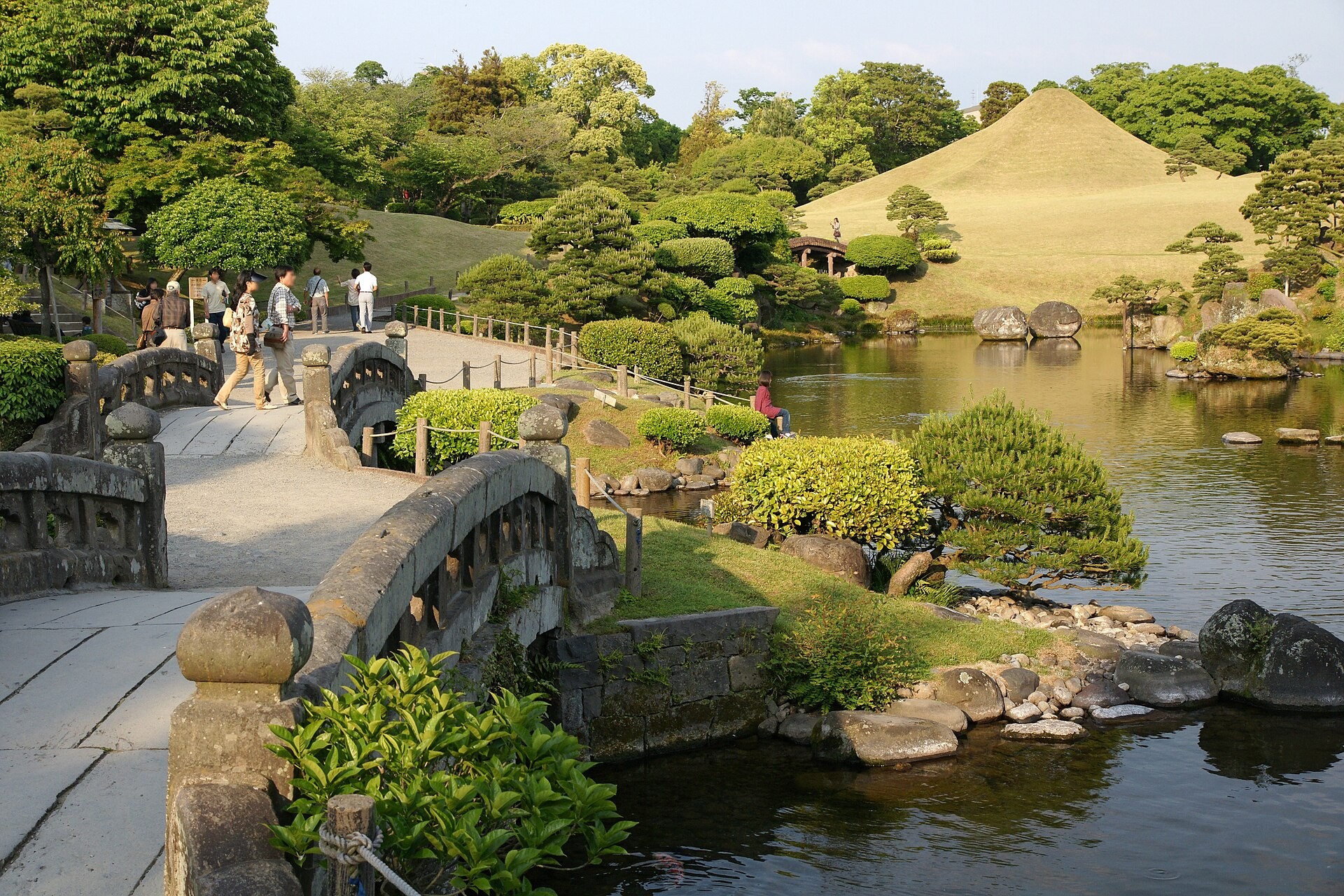
Suizenji Jojuen is a strolling garden around a spring-fed pond, with an artificial hill recalling Mount Fuji. Izumi Shrine also stands inside the grounds. This combination makes the entrance worthwhile even if you spend no additional money after admission: the landscape and a short shrine detour are the main experience. The garden’s visitor guide estimates roughly 30–40 minutes for a circuit, but give yourself more time if you want photographs, a quiet bench or tea.
Follow the normal public entrance rather than assuming every gate on a map is open. The garden says its east, south and Soseki gates are normally closed and directs visitors to the main or north gate. If you arrive late, check the last-admission time before making the trip. The official garden now lists ¥500 adult admission, while an older city tourism listing still shows ¥400; rely on the operator’s current ticket page and confirm again before travel.
When a pond-side tea stop earns the extra time
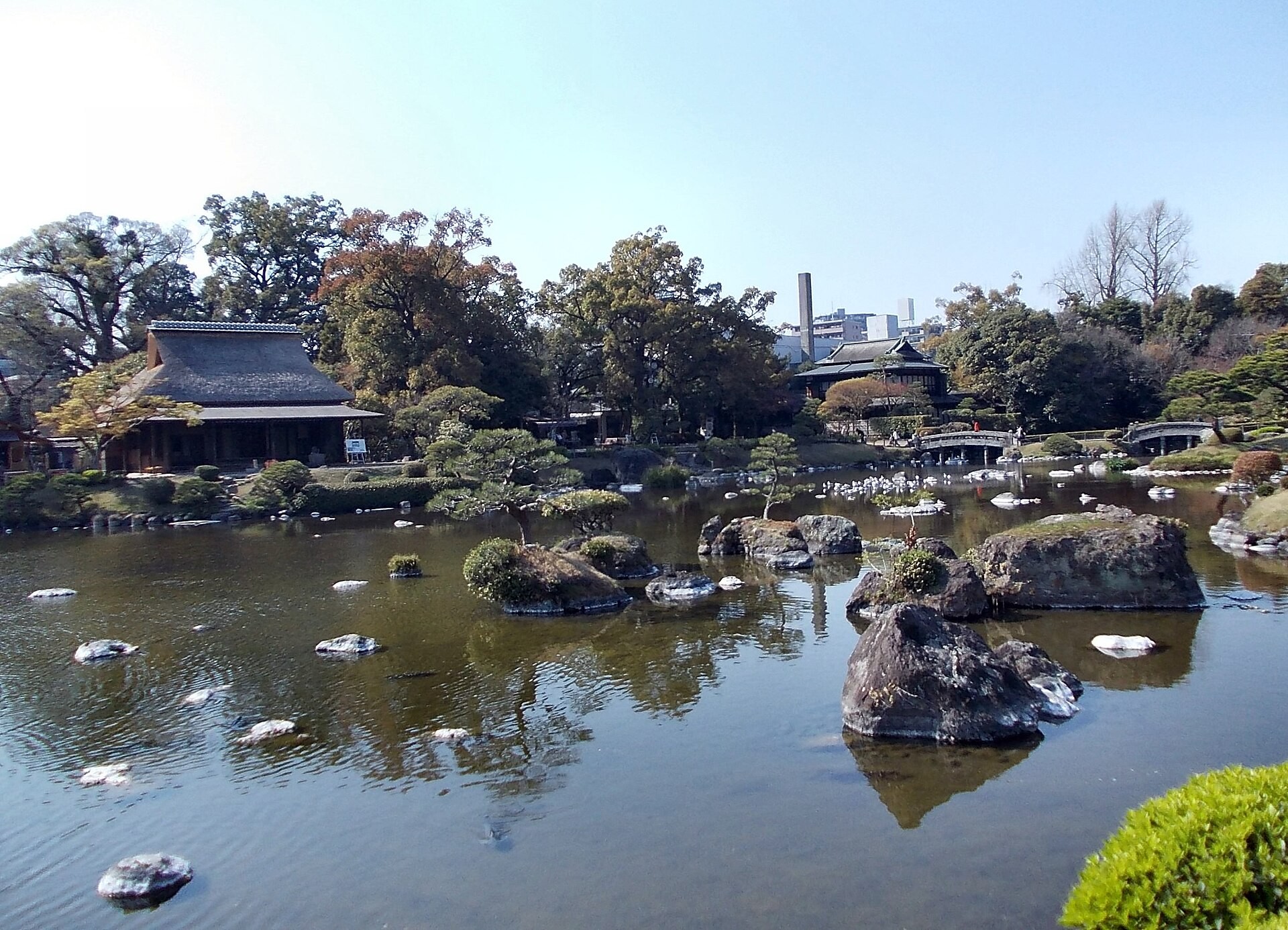
Kokindenju no Ma sits beside the pond and has a view back across the garden. The Kumamoto City guide describes the historic building and its relationship to the garden; the garden’s own map can help you locate it during the circuit. The appeal is the pause and setting, rather than a promise that a specific tea set will be available. Check service and the price on arrival before deciding whether to stop.
If you need to be at Kumamoto Station or an onward connection at a fixed time, complete the garden circuit first. Treat tea as optional. If the day is open-ended, a slower stop can make Suizenji feel different from a quick photo visit. An optional guided tour is another way to deepen the visit, but the garden lists reservation priority, operating days and a separate fee; contact it before building the day around that service.
Arrive by tram or JR without choosing the wrong stop
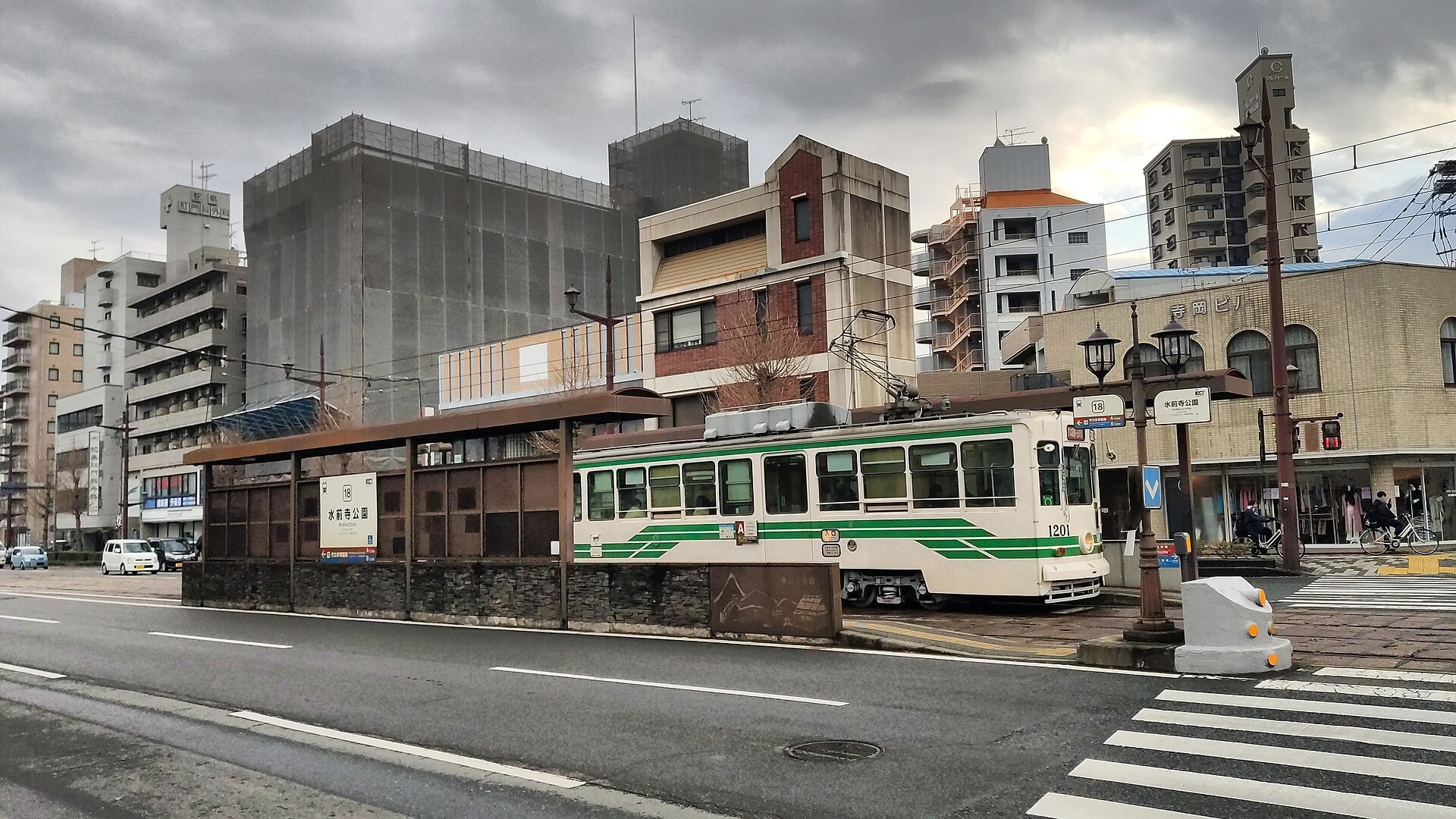
The stop called Suizenji Park belongs to the city tram and leaves the shorter final walk. From JR Kumamoto Station, the city’s access guide describes a tram toward Kenguncho taking about 34 minutes, followed by roughly four minutes on foot. The same guide describes a faster JR ride toward Higo Ozu to Shin-Suizenji, followed by about ten minutes on foot. These are different stations and different last-mile walks; choose the one that matches where you are starting and how much walking you want.
For a city-center sightseeing day, the tram can keep the route simple and stop near the entrance. For a rail arrival or departure at Kumamoto Station, JR may reduce vehicle time, but its longer walk can erase part of the advantage for a slow walker or someone carrying luggage. The garden access page also says there is no dedicated visitor car park, so driving requires a separate nearby paid parking decision. Check live service, fares and any disruption before leaving; the published ride times are planning estimates, not connection guarantees.
Fit Suizenji into a Kumamoto itinerary
Place the garden where it reduces backtracking rather than adding it solely because it is famous. A morning circuit before other city stops gives you room to add tea if the service is open; an end-of-day visit is vulnerable to last entry. If you are visiting the castle area too, compare their positions on your route and allow for the tram journey between them rather than counting only time inside each attraction. The Kumamoto travel guide helps with the rest of the city. The Fukuoka and Saga guides are useful only if your trip continues across northern Kyushu.
Before you pay or set a tight onward journey, open the garden’s current visitor information, its detailed guide and the city’s transport directions for your travel date. That small check protects the choice rule above if fees, event hours, services or transit change.
Official sources: garden visitor information, detailed visitor guide, garden access, Kokindenju no Ma, and city transport directions.