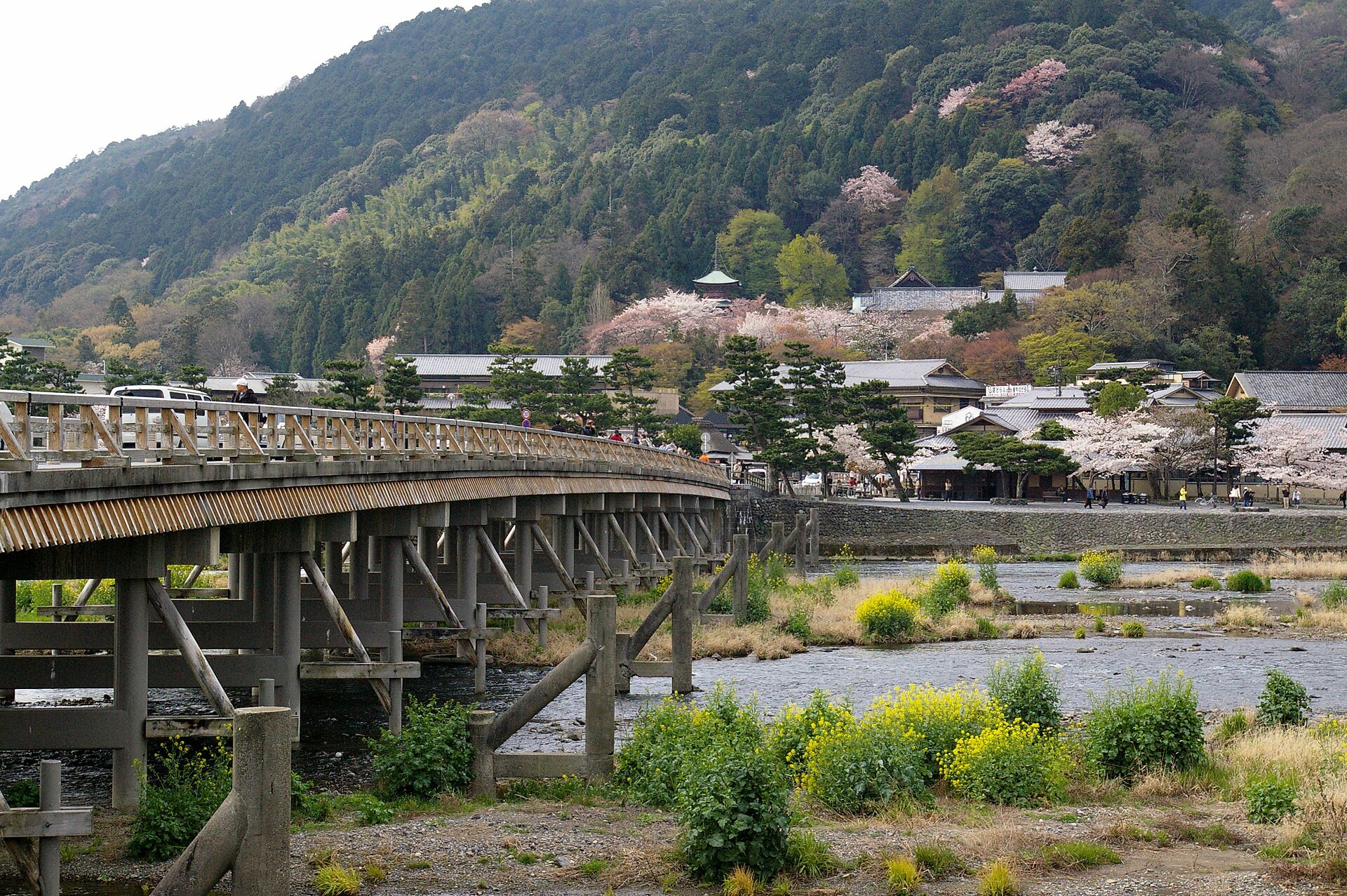
Start from Kyoto Station? Take the JR Sagano Line to Saga-Arashiyama. Start near Shijo-Kawaramachi? Change from Hankyu to its Arashiyama Line at Katsura. Near Shijo-Omiya, Randen gives a direct tram ride. Use City Bus 28 only when its stop or a no-transfer ride matters more than a predictable arrival time.
| Option | Fare | Journey time | Transfers | Booking | Arrival | Best for | Trade-off |
|---|---|---|---|---|---|---|---|
| JR Sagano Line | Check the JR fare for your exact origin. | About 11 minutes by rapid train from Kyoto Station to Saga-Arashiyama, then walk. | None from Kyoto Station. | Ordinary local train; check the current timetable before travel. | Saga-Arashiyama, east of the river; walk toward Togetsu-kyo or the grove. | Kyoto Station starts and time-sensitive return trips. | The Kyoto Station platform is distant and trains can be crowded. |
| Hankyu via Katsura | Check Hankyu fare for your boarding station. | Allow for a Katsura transfer and the walk from Hankyu Arashiyama. | One at Katsura from Kyoto-Kawaramachi. | Ordinary local service; check the current timetable. | Hankyu Arashiyama, south of Togetsu-kyo Bridge. | Shijo-Kawaramachi or an Osaka-side arrival. | The bridge and northern sights require an extra walk. |
| Randen from Shijo-Omiya | Check Keifuku’s current single-ride fare. | About 24 minutes on the tram from Shijo-Omiya, plus access to that stop. | None after boarding at Shijo-Omiya. | Pay on exit at Arashiyama station; check service before travel. | Randen Arashiyama, by the main visitor street. | Shijo-Omiya starts or travelers wanting a tram arrival. | First reaching Shijo-Omiya can add time from Kyoto Station. |
| City Bus 28 | Standard city-bus flat-zone adult fare is ¥230; confirm the applicable fare. | Plan for traffic; Kyoto’s visitor guide warns the bus can be slow. | None from Kyoto Station. | Check route 28 stops and live service; no fixed-seat booking. | Choose a stop by the bridge or Tenryu-ji area. | A stop near your exact destination or limited walking. | Congestion makes a tight onward connection risky. |
These are planning comparisons, not a promise of a particular departure or fare. Open the Kyoto City access guide and the relevant operator timetable for your travel date before buying a ticket or committing to a return connection.
Choose by where your Kyoto day starts
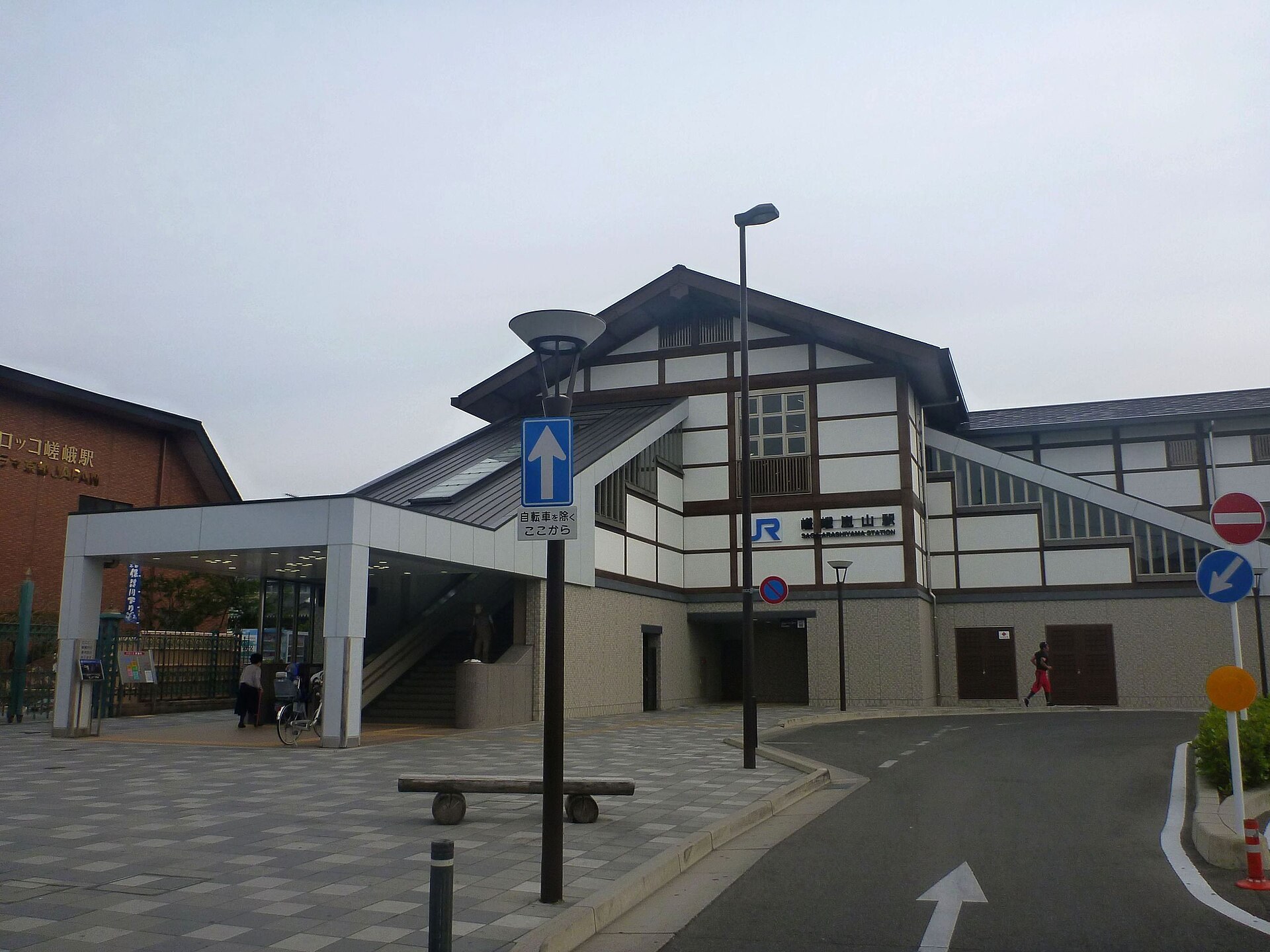
From Kyoto Station, the JR Sagano Line is the simplest default. Kyoto City’s official guide places Saga-Arashiyama about 11 minutes away by rapid service and warns that the Sagano platform sits farther from other Kyoto Station lines. Add the station walk and platform approach to your total time. A short rail ride does not mean an 11-minute door-to-door journey. If you are carrying luggage or need to meet a timed activity, leave room for the platform walk and a crowded train.
From Shijo-Kawaramachi, Hankyu changes the equation. Ride toward Katsura and transfer to the Arashiyama Line. Its station is on the south side of Togetsu-kyo, so the route makes sense when the riverfront is your first stop. If the bamboo grove or the northern temple lanes are the priority, count the crossing and onward walk before calling this the shortest option. The Hankyu station page has the current station and timetable links.
If your day already passes Shijo-Omiya, the Randen tram provides a direct ride to its Arashiyama terminus. Keifuku’s operator timetable lists roughly 24 minutes from Shijo-Omiya. Kyoto’s rail guide also identifies the Randen-Tenjingawa interchange from the Tozai subway line. That subway-plus-tram route is a useful fallback when the JR platform or bus feels uncomfortable, but its transfers mean it is not automatically faster from Kyoto Station.
Match the arrival station to your first sight
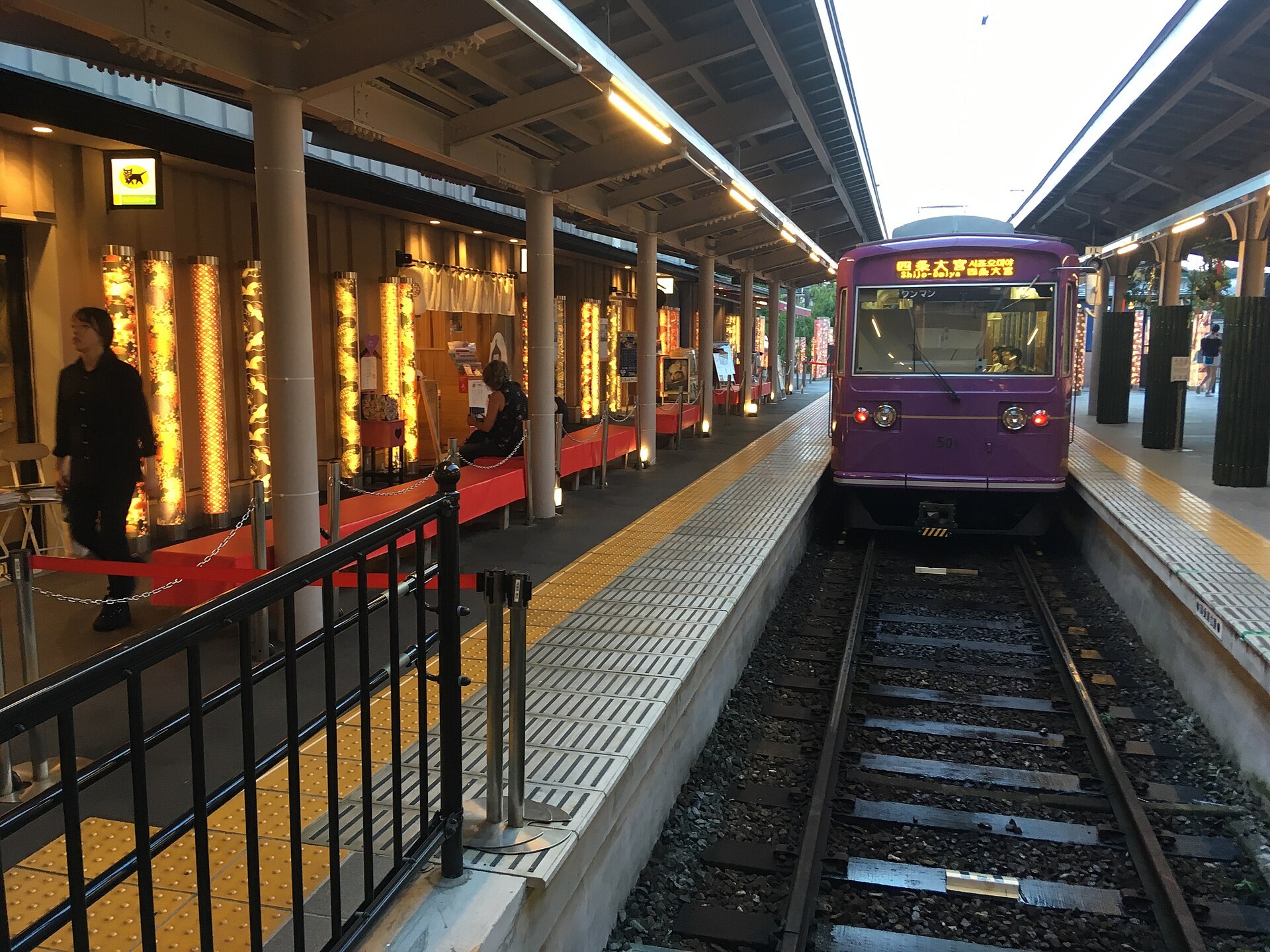
Arashiyama is an area, not one station. JR Saga-Arashiyama is useful for the bamboo grove and Saga-side sights; Randen Arashiyama opens onto the main visitor street; Hankyu Arashiyama approaches from south of the river. Kyoto City’s walking directions put Togetsu-kyo around eight minutes from JR Saga-Arashiyama and around four minutes from Randen Arashiyama. For the bamboo grove, use the JR-side approach and check the official JNTO destination page. Check a walking map for the particular entrance you want; a station name alone hides the final walk.
The first sight should shape the return too. If you walk from the grove down toward the bridge, you can leave by Randen or Hankyu without retracing every step to JR. If your evening train leaves Kyoto Station, returning to Saga-Arashiyama for JR may still be the cleaner connection. Set the return station before you enter a crowded shopping street, especially if your phone battery or mobile data is limited.
When the direct bus is the sensible choice
City Bus 28 links Kyoto Station and Arashiyama, and the official route list names the stops. The standard flat-zone fare is ¥230 for an adult; check the stop pair and current fare before boarding. A no-transfer ride is attractive when it brings you close to a specific stop or reduces walking. The trade-off is reliability: Kyoto City explicitly warns that buses from Kyoto Station to Arashiyama are crowded and time-consuming. Do not choose the bus for a tight timed entry or rail connection solely because a timetable shows a direct trip.
Bus routes and stop positions can change with local traffic management. If you decide to take a bus, open the live operator information shortly before departure and keep a rail fallback in mind. Randen and JR also have crowding or service changes, so check those operator pages before your travel date rather than trusting a fixed itinerary printed months earlier.
A practical outbound and return plan
For a Kyoto Station start focused on the bamboo grove, take JR to Saga-Arashiyama, walk through the Saga side, and continue toward the river. If you finish south of Togetsu-kyo, compare the Hankyu return with walking back to JR. From central Shijo, start with Hankyu via Katsura if the bridge is first; choose Randen if you are already near Shijo-Omiya or want to emerge on the visitor street. A city bus works as a flexible alternative when the exact stop is more important than an arrival deadline.
This route choice is about total walking and the place you finish, not just minutes spent on a vehicle. Pair this guide with the Kyoto travel guide. The Osaka and Nara guides help only if Arashiyama is part of a wider Kansai itinerary. Confirm the official rail and bus pages for your travel date before buying a ticket: fares, departure times, stop changes and disruption can change.
Official sources: Kyoto City Saga/Arashiyama access guide, Kyoto rail guide, Hankyu Arashiyama station, Randen timetable, Randen payment guide, Kyoto City Bus fare, route 28 stops, and JNTO bamboo grove.