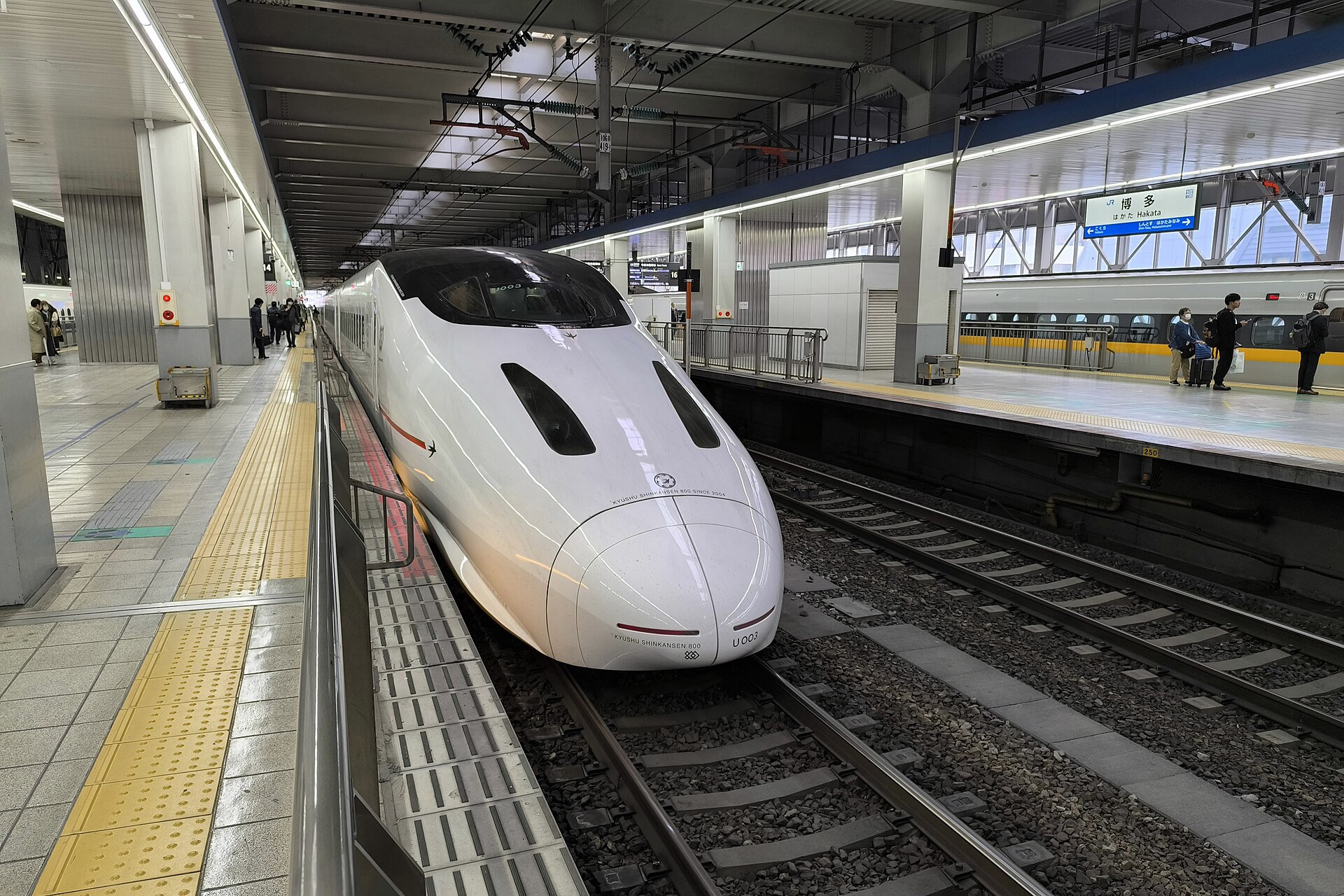
Take the Kyushu Shinkansen if you need the fastest Hakata-to-JR Kumamoto Station journey or a timed onward train. Take the Hinokuni highway bus if saving money matters more and its actual stop suits your hotel or first visit. The useful distinction is not only train versus bus: the bus can serve central Sakuramachi as well as JR Kumamoto Station on certain services, while the Shinkansen always finishes at the railway station. Check your exact bus departure and arrival stop before booking.
| Decision point | Kyushu Shinkansen | Hinokuni bus |
|---|---|---|
| Fare | JR advertises eligible online discounts from ¥3,900 on this corridor. This is not the standard walk-up fare; check the exact train, direction and ticket conditions. | Nishitetsu lists ¥2,500 adult one way from Hakata or Tenjin to Sakuramachi or JR Kumamoto Station on the named sections. |
| Journey time | Fastest station-to-station service: 32 minutes; allow extra time for the station approach and ticket collection. | Official planning figure: about 2 hours 10–20 minutes from Tenjin to Kumamoto. Hakata departures and individual stops differ; traffic may delay arrival. |
| Transfers | No change between Hakata and JR Kumamoto Station on a direct Kyushu Shinkansen. | No change on a direct Hinokuni departure; check that the chosen service reaches your intended Kumamoto stop. |
| Booking | Compare the live ordinary and eligible online fares; confirm seat rules and how to collect any online ticket. | Most main-route services are capacity-controlled rather than reserved; some specific departures require reservations. Check the operator listing. |
| Arrival | JR Kumamoto Station, useful for onward trains and a station-area hotel. | Sakuramachi Bus Terminal in the central-city area, or JR Kumamoto Station on services that continue there. |
| Best for | A fixed appointment, an onward JR train, or the shortest intercity leg. | A budget-led journey, a Tenjin start, or a Sakuramachi-centred stay. |
| Trade-off | A higher eligible fare than the listed bus fare and an extra local leg if your real destination is central Kumamoto. | Much longer on the road; the listed time is not a promise against traffic and the terminal matters more than the word “Kumamoto” on a timetable. |
Fares, stops, schedules and booking rules can change. Check the official JR Kyushu fare and booking page and official Hinokuni route page for your travel date before booking a connection or accommodation.
The fare gap is real, but compare the ticket you can actually buy
The bus has the simple headline fare: Nishitetsu lists ¥2,500 for an adult one-way journey on the main Hakata/Tenjin–Kumamoto sections. The Shinkansen’s lower headline is conditional. JR Kyushu promotes online offers from ¥3,900 on the Kumamoto–Hakata corridor, but an eligible discounted ticket is not the same as an unrestricted ticket bought at a station just before departure. Enter the direction and day you really intend to travel in JR’s booking search, and compare that returned price with the bus fare rather than subtracting two advertised “from” numbers.
At the advertised floors, the train costs at least ¥1,400 more than the listed bus fare, before any local transfer in Kumamoto. That difference can buy back well over an hour on the intercity leg. If you have only a short sightseeing day, the time may be worth more than the fare saving; on a relaxed overnight journey, the bus can keep the travel budget down without a change of vehicle. Do not buy a rail pass solely for this one corridor. If you already hold a valid pass, compare its coverage and reservation rules separately on JR Kyushu’s official train information.
Choose the Shinkansen for a station-based arrival
Hakata Station is the rail departure point, and the direct Kyushu Shinkansen arrives at JR Kumamoto Station. JR quotes a fastest 32-minute journey between the two cities, but that is train time, not door-to-door time. Add the walk through Hakata Station, any ticket collection, and your onward movement from Kumamoto Station. This remains the straightforward choice for a hotel near Kumamoto Station or an onward JR train because the arrival point is the next transport hub.
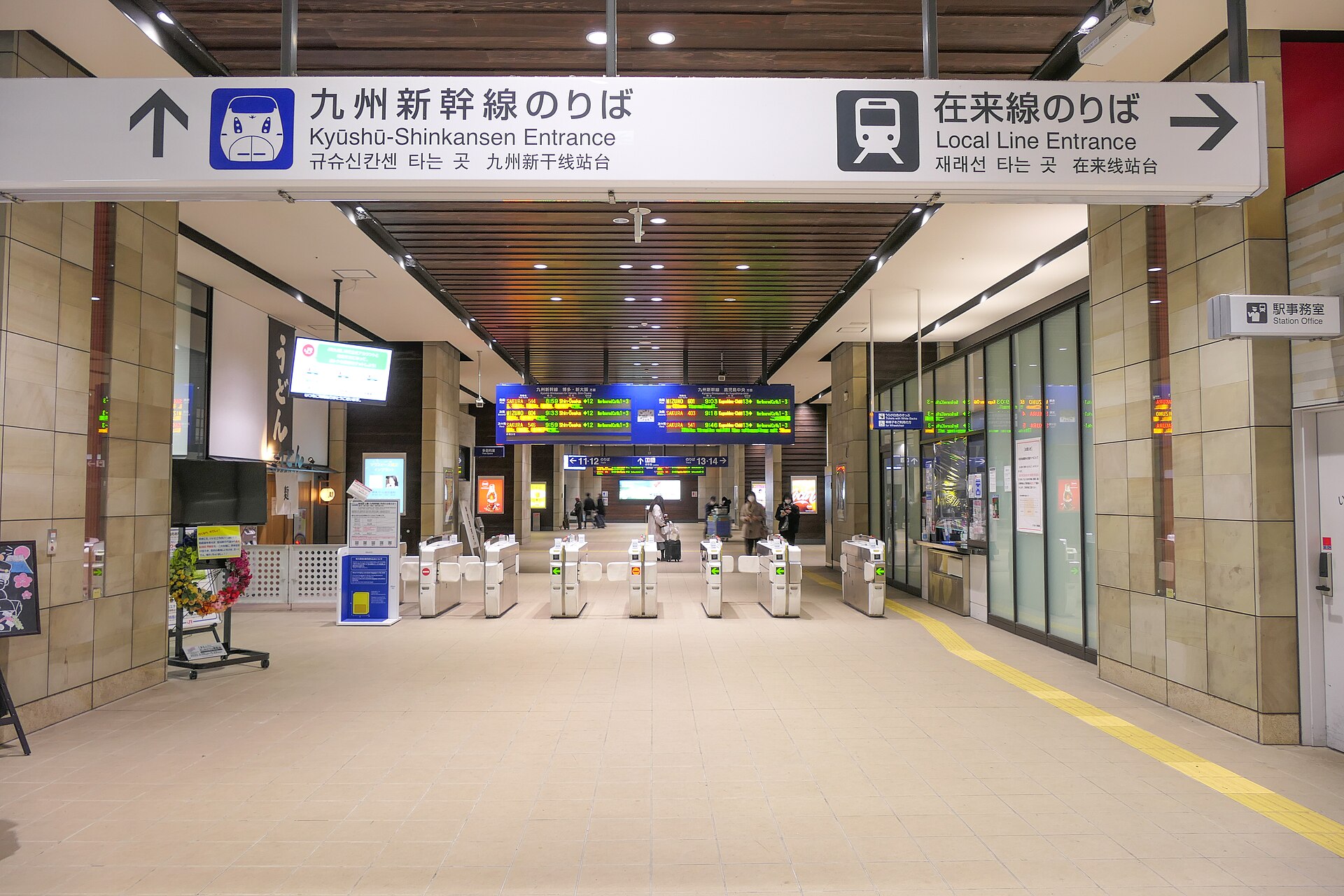
It is less automatic if your first stop is near Kumamoto Castle or the central shopping streets. A fast train may still require a tram, bus or taxi from the station. The saved intercity time can shrink once you include that last leg. Equally, a bus from Hakata Bus Terminal—not the rail platform—needs its own first-leg walk. Map the journey from your actual Fukuoka starting point to your actual Kumamoto destination; “32 minutes” alone does not answer that question.
Choose the bus when the central stop and budget line up
Hinokuni services start from places including Nishitetsu Tenjin Highway Bus Terminal and Hakata Bus Terminal. The operator lists Sakuramachi Bus Terminal, Torichosuji and JR Kumamoto Station among its Kumamoto stops across service patterns. That makes the bus especially attractive if you begin in Tenjin and are staying in central Kumamoto: the slower road journey may avoid a separate station-to-centre transfer. However, not every listed service uses every stop. Inspect the actual outbound timetable column before deciding that your chosen bus will reach JR Kumamoto Station.
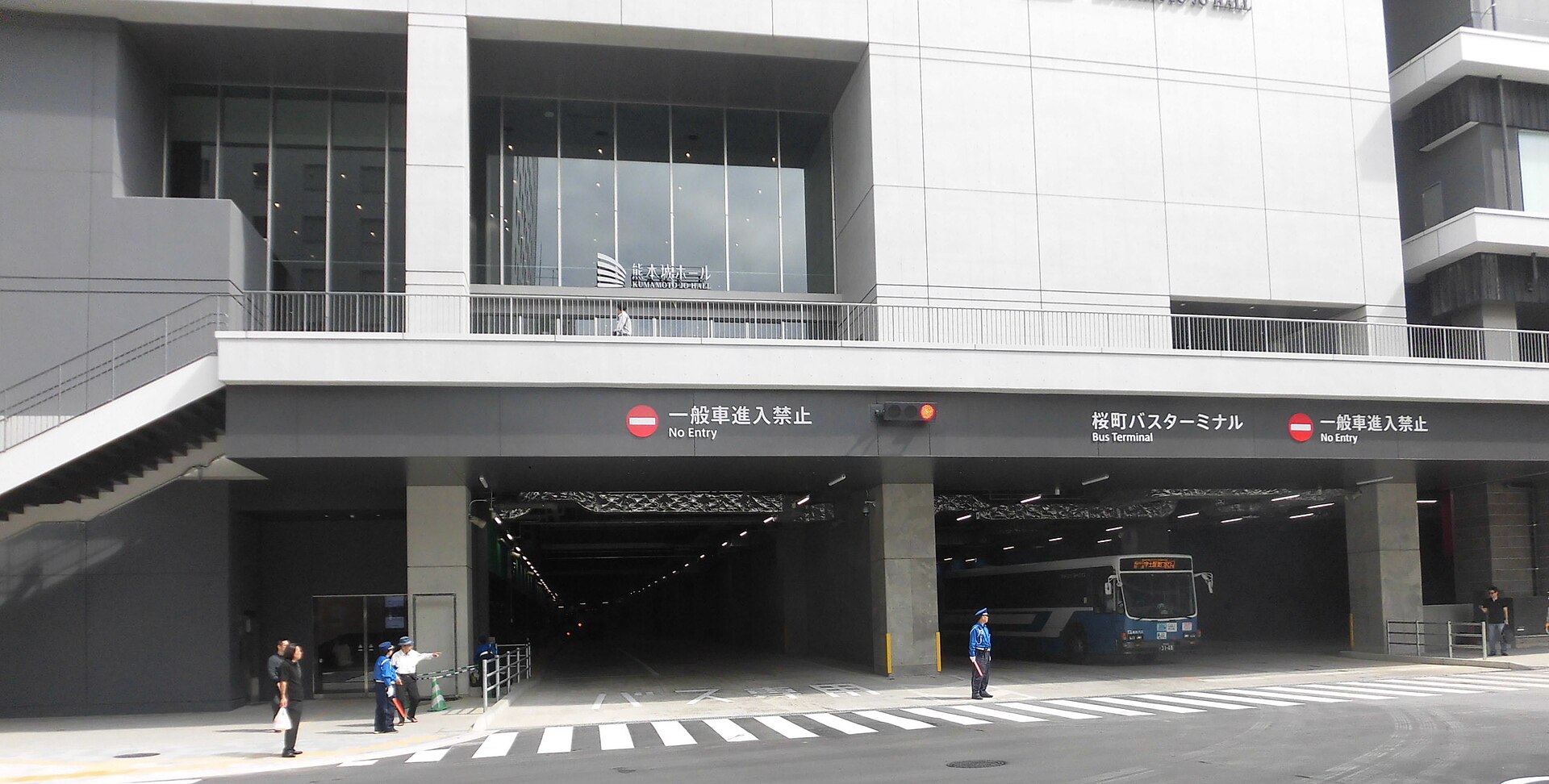
The official Tenjin–Kumamoto planning time is about 2 hours 10–20 minutes; road conditions can make it longer. Do not put a non-refundable tour immediately after the scheduled arrival. Most standard services are capacity-controlled rather than advance-reservation services, while identified departures require booking. Nishitetsu’s route listing marks those exceptions. Also check the operating company’s payment information: partner operator Sanko Bus describes its accepted ticket options, which should not be assumed identical to every Nishitetsu-operated bus.
Make the final choice from your first hour in Kumamoto
- Your hotel or onward train is at JR Kumamoto Station: start with the Shinkansen. If the bus fare is decisive, verify a bus service that actually stops at the station and allow the longer travel time.
- Your first stop is Sakuramachi, the castle area or the central streets: compare a bus that serves Sakuramachi against rail plus the local transfer. The central arrival can offset some of the bus’s time disadvantage.
- You begin near Tenjin rather than Hakata Station: include the transfer to Hakata in the rail calculation; the bus may offer a simpler door-to-door route.
- You have a fixed reservation or same-day connection: use the rail timetable as the starting point, then leave a buffer and check live operator service notices before leaving.
If you are still choosing a base, compare Kumamoto Station, Shimotori and Kamitori before committing to an arrival terminal. Continue with the Fukuoka guide and Kumamoto guide. For a different Kyushu leg, our Fukuoka–Nagasaki comparison covers the Takeo-Onsen transfer rather than duplicating this direct Kumamoto choice.
Official sources: JR Kyushu route and ticket offer, JR Kyushu trains and timetables, Nishitetsu Hinokuni bus, and Sanko Bus tickets.