

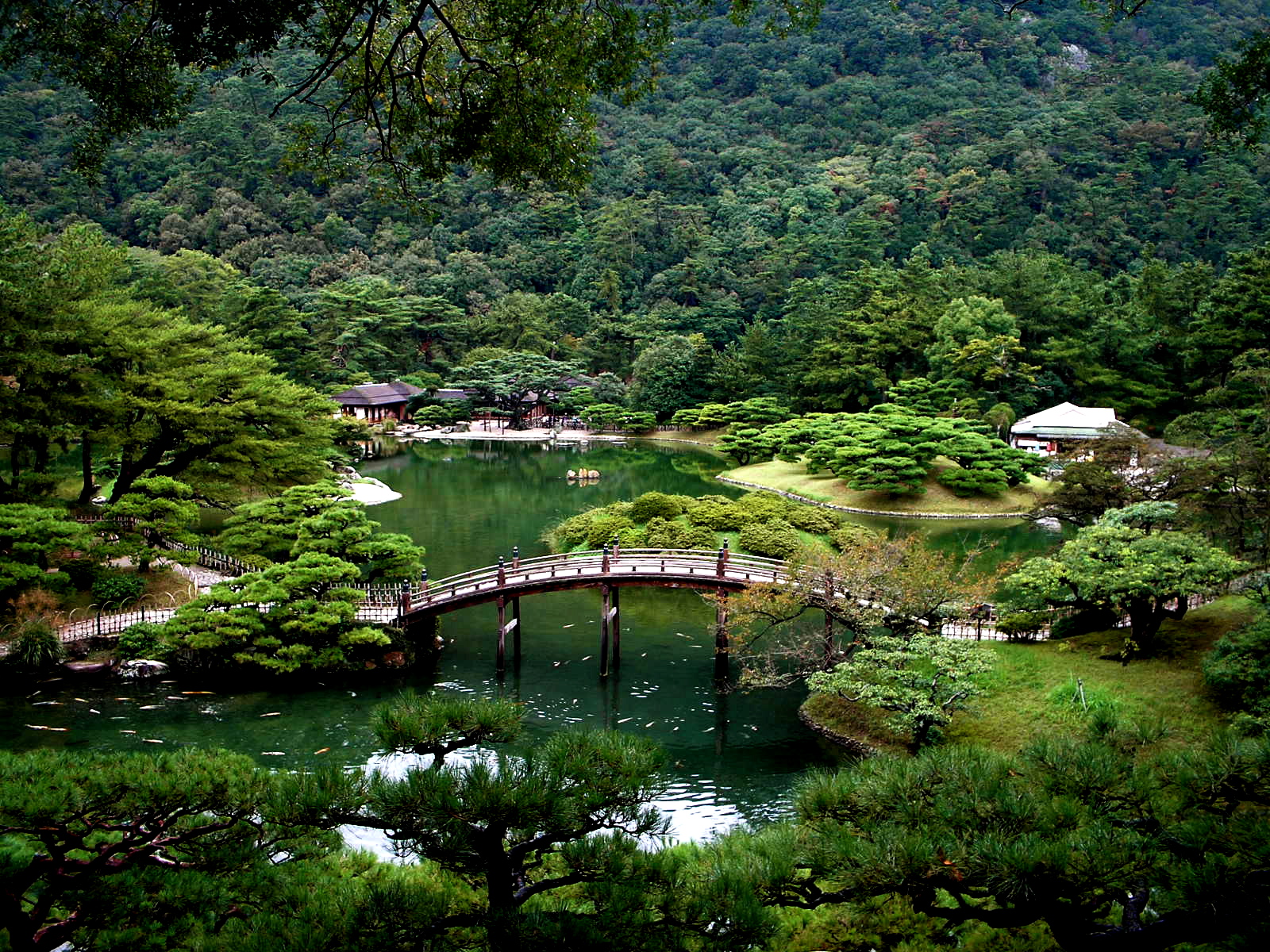
Kagawa Travel Guide
Kagawa is a strong Japan travel destination for udon culture, art islands, gardens, castles, and compact Setouchi travel.
Quick facts
- Best for: udon culture, art islands, gardens, castles
- Recommended stay: 1 to 3 days
- Best season: Spring, autumn, and key local festival seasons
- Main bases: Ritsurin Garden, Naoshima, Kotohira-gu, Takamatsu Castle
Why visit Kagawa
Kagawa is Japan’s smallest prefecture by area, which turns out to be an advantage: almost everything is within an hour of Takamatsu. Ritsurin Garden is designated a Special Place of Scenic Beauty and carries three stars in the Michelin Green Guide, and it is a genuine highlight rather than a filler stop. Offshore, the Seto Inland Sea holds the art islands — Naoshima with its museums and outdoor sculpture, and Teshima Art Museum, a single quiet concrete shell open to the weather. Shodoshima, the largest of the islands, is greener and slower. Kagawa is also the home of sanuki udon, eaten here at all hours.
Getting to Kagawa
Takamatsu is reached from Okayama across the Seto-Ohashi bridge, which puts it within reach of a Shinkansen connection and makes Kagawa the simplest entry point to Shikoku. The art islands are served by ferries from Takamatsu port, and those ferry timetables — not the museums — are what actually shape a day trip to Naoshima or Teshima, so build the day backwards from the last boat. Several island museums also close on Mondays and require advance booking, so check before you travel rather than on the morning.
Places to explore
Top Attractions in Kagawa
Ritsurin Garden
Ritsurin Garden is a Michelin three-star strolling garden in Takamatsu, built around six ponds and thirteen landscaped hills where the view changes with almost every step. It works well as a calm half-day stop before or after island-hopping in the Seto Inland Sea.
Time needed1 to 1.5 hours for a full loop; longer with a teahouse stop.
View practical details
- Price
- General admission is ¥500 for adults and ¥170 for elementary and junior high school students; preschool children are free. The South Pond boat is separate: ¥850 adult / ¥420 child.
- Best time
- Early morning for quiet paths, or autumn for foliage color.
- Good for
- Garden lovers, photographers, and a relaxed break between Takamatsu and the islands.
What to do
- Walk the strolling paths around the six ponds and thirteen landscaped hills, where the layout is designed so the scenery changes with each step.
- Climb Shiun-zan hill for an elevated view over the South Garden.
- Take a wasen boat ride on the South Pond, weather permitting and for an extra fee.
- Stop at Kikugetsu-tei teahouse for matcha and a wagashi sweet overlooking the water.
Tickets and fees
Buy admission at the garden gate: ¥500 adult, ¥170 elementary/junior-high student; preschoolers are free. The garden is open year-round, with monthly hours ranging from 5:30 a.m. to 7:00 p.m. in the longer-day months and 7:00 a.m. to 5:00 p.m. in winter. It closes temporarily if a severe wind or snowstorm warning is issued for Takamatsu. Admission is free on January 1 and March 16. The South Pond boat costs ¥850 adult / ¥420 child, requires a separate ticket, and lasts about 30 minutes.
Getting there
Ritsurin Garden is about a 15-minute walk from JR Takamatsu Station, or a short walk from JR Ritsurin-koen Kitaguchi Station. Kotoden's Ritsurin-koen Station sits right next to the East Gate entrance.
Nearby
For a full Kagawa itinerary, pair this with a ferry day trip to Shodoshima or an art-focused day at Naoshima Art Island.

Naoshima Art Island
Naoshima is a small island covered in contemporary art museums, outdoor installations, and art houses tucked into an old fishing town, and although it administratively belongs to Kagawa Prefecture, most visitors reach it by ferry from Uno Port in Okayama, which makes it a natural stop on an Okayama itinerary.
Time neededA full day for a first visit; two days if you want to see most museums and art houses without rushing.
View practical details
- Price
- Admission is charged by site. Chichu Art Museum costs ¥2,500 online / ¥2,800 on site on weekdays and ¥2,700 online / ¥3,000 on site on weekends and holidays; children 15 and under are free, but a reservation is still required. Benesse House Museum is ¥1,300 online / ¥1,500 on site. Other facilities have separate fees.
- Best time
- Weekdays outside spring (April-May) and autumn (October-November), when the island is at its busiest.
- Good for
- Art and architecture fans, photographers, and travelers wanting a slower, scenic day away from the cities.
What to do
- See the Chichu Art Museum, built mostly underground by Tadao Ando, with works by Monet, Walter De Maria, and James Turrell.
- Walk the Art House Project in Honmura, where several old houses have been converted into individual art installations.
- Visit Benesse House Museum, which combines a hotel, museum, and outdoor sculpture in one Ando-designed complex.
- Photograph Yayoi Kusama's yellow and red pumpkin sculptures near the waterfront, some of the island's most recognizable landmarks.
Tickets and fees
Some facilities require a date-and-time ticket, including Chichu Art Museum, Hiroshi Sugimoto Gallery: Time Corridors, and selected Art House Project sites. Chichu tickets can sell out; if online tickets are sold out, there is no same-day on-site sale. Children 15 and under are free at Chichu but still need a reservation. Check Benesse Art Site’s current ticket page and opening calendar before choosing ferry times; the Naoshima New Museum of Art has an exhibit-rotation closure scheduled November 24–December 12, 2026 (through noon on the last day), and Chichu has extended maintenance closure scheduled January 12–March 19, 2027.
Getting there
From Okayama Station, take the JR Uno Line to Uno Station (about 1 hour), then a ferry to Miyanoura Port on Naoshima (about 20 minutes). Once on the island, get around by the town shuttle bus, the free Benesse area shuttle, or a rental bicycle.
Nearby
Before or after your ferry, Okayama City's Okayama Castle and Korakuen Garden are both close to Okayama Station.

Teshima Art Museum
Teshima Art Museum is a single water-drop-shaped concrete building on Teshima Island, built around one quiet installation by artist Rei Naito. It is part of Benesse Art Site Naoshima and requires a ferry to reach, which makes it best combined with a Naoshima art day rather than visited alone.
Time needed45 minutes to 1 hour inside, plus a half day once ferry travel is included.
View practical details
- Price
- Admission is ¥1,800 online or ¥2,000 on site. Children 15 and under are free but still need a reservation. Advance booking for a specific date and time is required; if online tickets sell out, there is no same-day on-site sale.
- Best time
- Check the seasonal schedule before planning: March–November the museum is closed Tuesdays; December–February it is closed Tuesday through Thursday (holiday exceptions apply).
- Good for
- Art and architecture fans already visiting Naoshima who want to add one more island.
What to do
- Step inside the single water-drop-shaped concrete shell and spend time with Rei Naito's 'Matrix', the museum's sole permanent artwork.
- Sit or lie on the floor; the space is designed for slow, quiet viewing rather than a quick walkthrough.
- Browse the museum shop and cafe, both built with the same minimal design language as the main building.
- If time allows, combine the visit with other Teshima stops such as Teshima Yokoo House.
Tickets and fees
Admission is ¥1,800 online or ¥2,000 on site; children 15 and under are free. Advance reservation for a specific date and time is required, and no same-day on-site tickets are sold if online tickets have sold out. Hours are 10:00–17:00 (last admission 16:30) from March 1 to September 30, and 10:00–16:00 (last admission 15:30) from October 1 through the last day of February. It is closed Tuesdays from March through November and Tuesdays–Thursdays from December through February, with national-holiday exceptions; check the live calendar before booking ferries.
Getting there
Teshima Art Museum can only be reached by ferry. Boats run from Takamatsu Port and from Naoshima's Miyanoura Port to Teshima's Ieura Port, and a local shuttle bus or rental bicycle covers the final stretch to the museum. Ferry frequency drops on days the museum is closed, so build the visit around the boat timetable rather than the other way around.
Nearby
This pairs naturally with the rest of Naoshima Art Island on the same trip, or with a calmer garden stop at Ritsurin Garden back on the Takamatsu side.

Shodoshima
Shodoshima is Kagawa's largest island and the birthplace of olive farming in Japan, known for its olive groves, a dramatic gorge, and a tidal sandbar called Angel Road. It is an easy ferry day trip from Takamatsu, or a relaxed overnight if you want to cover both the coast and the mountain in less of a rush.
Time neededA full day for a first visit; two days if adding Kankakei Gorge and the soy sauce district at an unhurried pace.
View practical details
- Price
- Most outdoor sights are free. Ferry costs depend on the port and boat: Takamatsu–Tonosho is ¥700 one way by ferry or ¥1,400 by high-speed boat for an adult; cars and other routes have separate fares.
- Best time
- Spring for olive blossoms and mild hiking weather, or autumn for Kankakei Gorge foliage.
- Good for
- Day-trippers from Takamatsu, Ghibli fans, olive and soy sauce tasting, and scenic coastal drives.
What to do
- Visit Shodoshima Olive Park, the birthplace of olive cultivation in Japan, and take a free broomstick photo at the spot used in Kiki's Delivery Service.
- Ride the ropeway or hike up to Kankakei Gorge, ranked among Japan's three most scenic gorges.
- Cross Angel Road, a tidal sandbar that appears at low tide and connects a chain of small islets. Its walkable window changes each day, so check the official tide table before planning the visit.
- Sample soy sauce and somen noodles in the island's long-running soy sauce and noodle-making district.
Tickets and fees
For Tonosho, the regular ferry from Takamatsu takes about 60 minutes (adult ¥700, child ¥350 one way); the high-speed boat takes about 35 minutes (adult ¥1,400, child ¥700). The high-speed route was reduced to eight departures each way daily from May 16, 2026, until further notice. It does not take cars, has no reservations, and boards first-come, first-served. Walk-on ferry passengers also board first-come; vehicle reservations are handled separately. Jumbo Ferry is a different route from Takamatsu Higashi Port to Sakate Port, not Tonosho. Check each operator’s timetable and service notice for your date.
Getting there
Choose the port to match your first destination. The regular ferry and high-speed boat from Takamatsu Port arrive at Tonosho; the high-speed boat takes about 35 minutes, but now runs eight times daily each way and does not take vehicles. The regular ferry takes about 60 minutes and carries vehicles. Jumbo Ferry leaves from Takamatsu Higashi Port and arrives at Sakate, a different part of the island. Check the operator timetable before you book; once on Shodoshima, use local buses, a rental car or a scooter to reach sights spread across the island.
Nearby
Combine this with a calm stop at Ritsurin Garden in Takamatsu, or extend into an art-focused itinerary at Naoshima Art Island.
Official sources
- Jumbo Ferry official: Takamatsu - Shodoshima route
- VISIT KAGAWA official: Shodoshima Island
- Japan Guide: Shodoshima travel guide
- Shodoshima Ferry official: Takamatsu–Tonosho ferry schedule and fares
- Shodoshima Ferry official: Takamatsu–Tonosho high-speed schedule and fares
- Shodoshima Ferry official: high-speed service reduction notice
Explore Kagawa Guides
 Where to Stay in Takamatsu: Station or Ritsurin Garden?Stay by Takamatsu Station when a train arrival, luggage and a ferry morning set the shape of the…
 Naoshima Art Island: Which Port, Ferry and Museum Tickets Should You Plan First?Plan a Naoshima art-island day by choosing your arrival port, ferry and timed museum tickets in the order…
 Ritsurin Garden: Tickets, Hours and the Best Arrival StationUse the gate closest to your actual train or bus stop, check the seasonal opening time for your…
This page may contain affiliate links. We may earn a commission at no extra cost to you.
Where to stay
Where to Stay in Kagawa: Takamatsu, Kotohira and NaoshimaCompare areas for your itinerary and choose a hotel.Explore hotels →Sample itinerary
- Day 1: Start with the main city, food area, and easiest signature sights.
- Day 2: Visit the top nature, shrine, castle, or cultural area.
- Day 3: Add a day trip, onsen, coast, island, or rural stop if your schedule allows.
Food to try
- Sanuki udon
- Olive products
- Setouchi hamachi
- Wasanbon sugar sweets
Common questions
What decides the length of a day trip to Naoshima?
The ferry timetable, not the museums. Boats serve the art islands from Takamatsu port, so build the day backwards from the last boat.
Do the island museums open every day?
No. Several close on Mondays and require advance booking, so check before you travel rather than on the morning.
How do you get to Kagawa?
Takamatsu is reached from Okayama across the Seto-Ohashi bridge, which puts it within reach of a Shinkansen connection and makes Kagawa the simplest entry point to Shikoku.
Is Ritsurin Garden worth a stop?
Yes. It is designated a Special Place of Scenic Beauty and carries three stars in the Michelin Green Guide, so it is a genuine highlight rather than a filler stop.
Explore Nearby Japan
Continue planning your route with nearby prefectures and practical trip planning guides.
Nearby Prefectures
Plan by Topic
Recommended Planning Guides
Use these practical guides to plan where to stay, move between regions, and shape your itinerary before your Japan trip.
Plan Your Japan Trip
When to go, how long, where, money, and what to sort before you book.
Read planning guideJapan Transport Guide
IC cards, rail passes, the Shinkansen, and getting in from the airport.
Read transport guideHotels & Where to Stay
Compare stay areas and lodging ideas for first-time Japan visitors.
Find stay guides