


Ehime Travel Guide
Ehime is a strong Japan travel destination for castle towns, hot springs, islands, cycling, citrus, and relaxed Shikoku travel.
Quick facts
- Best for: castle towns, hot springs, islands, cycling
- Recommended stay: 1 to 3 days
- Best season: Spring, autumn, and key local festival seasons
- Main bases: Matsuyama Castle, Dogo Onsen, Shimanami Kaido, Uchiko
Why visit Ehime
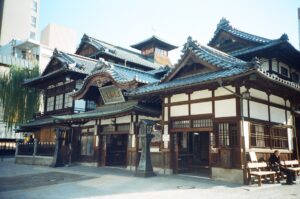
Ehime runs along Shikoku’s north-west coast and has the island’s most comfortable pairing of city and hot spring. Dogo Onsen is one of the oldest hot springs in the country and its wooden main building is a working public bathhouse rather than a hotel; it has been through a long preservation project, so check current hours and which baths are open before you go. Above the city, Matsuyama Castle keeps an original keep reached by ropeway or a climb. Uchiko preserves a street of merchant houses and a restored playhouse, and the Shimanami Kaido begins here at Imabari, crossing the islands to Onomichi.
Getting to Ehime
Matsuyama has an airport with flights from Tokyo and Osaka, and limited express trains run in from Okayama, which is the usual rail route onto Shikoku. The city itself is small enough to cover by tram. The Shimanami Kaido is the reason many people come: you can ride it in either direction, and starting at Imabari means finishing in Hiroshima prefecture — see our Hiroshima guide for the other end.
Top Attractions in Ehime

Dogo Onsen
Dogo Onsen Honkan is a landmark wooden public bathhouse in Matsuyama, designated a National Important Cultural Property in 1994. Its conservation work finished in December 2024, and visitors can now choose a short local-style bath, a rest-room course, or a guided Yushinden visit.
- Price
- Adults pay ¥700 for the Kami-no-Yu downstairs bath, ¥1,300 for Kami-no-Yu with second-floor seating, ¥2,000 for Tama-no-Yu with second-floor seating and Yushinden viewing, or ¥2,500 for a Tama-no-Yu third-floor private room.
- Time needed
- Plan 60 minutes for the standard bath or second-floor courses; the third-floor private-room course and Yushinden visit each allow 90 minutes.
View practical details
- Best time
- Kami-no-Yu is open 6:00–23:00 (ticket sales stop 22:30); upper-floor courses run 6:00–22:00 with earlier ticket cutoffs. Check the official site before visiting.
- Good for
- Onsen first-timers, history and architecture fans, and travelers choosing between a quick local-style soak and a slower rest-room visit.
What to do
- Choose the ¥700 Kami-no-Yu downstairs course for a 60-minute public-bath experience, or select an upper-floor course when you want a rest area after bathing.
- Use the Tama-no-Yu second-floor course if seeing the Yushinden imperial bathhouse matters; the official course includes its viewing with the bath and resting hall.
- Reserve a third-floor private room or a timed Yushinden guided visit in advance; these are limited to five groups per day and are not the same as walk-in bathing.
- Watch the Botchan Karakuri Clock beside Dogo Onsen Station: it performs hourly from 8:00 to 22:00 and every 30 minutes on weekends, holidays, and peak periods.
Tickets and fees
Checked in August 2026: Kami-no-Yu downstairs is ¥700 for adults and ¥350 for children (ages 2–11), with ticket sales until 22:30 for its 6:00–23:00 opening. Kami-no-Yu second-floor seats cost ¥1,300/¥650 and Tama-no-Yu second-floor seats cost ¥2,000/¥1,000; both close at 22:00 and stop selling tickets at 21:00. Walk-in bathers buy at the outside ticket window, but a busy day can use numbered tickets and run out. Advance reservations are for private rooms and Yushinden, not the standard bathing courses.
Getting there
From JR Matsuyama Station, take the Iyotetsu tram to Dogo Onsen Station (about 25 minutes), then walk about 3 minutes to the Honkan. From Matsuyama Airport, the limousine bus takes about 40 minutes to Dogo Onsen Station. Arrive at the station first if you want to catch the Botchan Karakuri Clock before your bath.
Nearby
Matsuyama Castle sits about 20 minutes away by tram and pairs well as a same-day stop; see the Matsuyama Castle guide. For a slower-paced day, the preserved merchant streets of Uchiko Town make a good half-day trip from Matsuyama.
1.JPG)
Matsuyama Castle
Matsuyama Castle is a hilltop castle whose main keep is one of only twelve original castle keeps surviving from Japan's feudal era, reached by ropeway or chairlift and offering views over Matsuyama city and, on clear days, the Seto Inland Sea.
- Price
- Paid for the keep and the ropeway/chairlift. Checked in July 2026: castle keep admission is around yen 520 for adults, and the ropeway or chairlift round trip is around yen 520 for adults. Combination tickets are available. Prices vary by date.
- Time needed
- 1.5 to 2.5 hours including the ropeway ride and a walk around the castle grounds.
View practical details
- Best time
- Clear days for the widest views over the city and the Seto Inland Sea; cherry blossom season (late March to early April) is popular but busy.
- Good for
- History and castle fans, photographers, hikers who want to walk up instead of ride, and anyone wanting skyline views over Matsuyama.
What to do
- Ride the ropeway or single-seat chairlift from Shinonome-guchi Station up to Chojaganaru Station near the castle.
- Enter the original main keep, one of only twelve castle keeps in Japan that survive from the Edo period, and climb through its wooden interior.
- Walk the castle grounds and stone walls for views over central Matsuyama and, on clear days, the Seto Inland Sea.
- Skip the ropeway and hike up one of the walking trails if you prefer exercise over convenience.
Tickets and fees
Checked in July 2026: buy the ropeway or chairlift ticket at the base station and the castle keep ticket separately at the top, or look for combination tickets that bundle both. Advance booking generally isn't needed for a normal visit.
Getting there
From JR Matsuyama Station or Matsuyama City Station, take a tram to Okaido or Minami-Horibata stop, then walk a few minutes to the Shinonome-guchi ropeway station.
Nearby
Dogo Onsen is a short tram ride away and pairs well with a castle visit; see the Dogo Onsen guide. Travelers continuing north can connect toward the Shimanami Kaido cycling route from Imabari.

Shimanami Kaido
The Shimanami Kaido is a roughly 70-kilometer expressway and cycling route that links Onomichi in Hiroshima Prefecture to Imabari in Ehime Prefecture across six islands of the Seto Inland Sea, and it is best known internationally as one of the world's most scenic long-distance cycling routes, with a dedicated bike path across every bridge.
- Price
- The dedicated cycling path itself has no toll for bicycles under a promotional exemption that has been extended in recent years. Bicycle rental runs roughly yen 2,000 per day for a standard hybrid bike, more for e-bikes.
- Time needed
- A full day for strong riders to complete Onomichi to Imabari in one direction; many travelers spread it over two days, or ride a shorter section as an out-and-back.
View practical details
- Best time
- Spring and autumn for comfortable riding temperatures; avoid midsummer midday heat and check for typhoon season disruptions.
- Good for
- Cyclists of a wide range of levels, travelers combining Hiroshima and Ehime prefectures, and anyone who wants Seto Inland Sea views from bridge level.
What to do
- Ride the full route from Onomichi (Hiroshima) to Imabari (Ehime), crossing six islands: Mukaishima, Innoshima, Ikuchijima, Omishima, Hakatajima, and Oshima.
- Cross the Kurushima-Kaikyo Bridge near Imabari, one of the longest suspension bridge systems in the world, on its separated cycling deck.
- Stop on Ikuchijima to see the Kosanji Temple complex and the Hirayama Ikuo Museum of Art.
- Use one of the public rental terminals along the route if you want a one-way ride, since bikes can be picked up in Onomichi and dropped off near Imabari.
Tickets and fees
Checked in July 2026: no toll applies to cyclists on the dedicated bike route as of this writing, but the exemption is a time-limited government measure, so confirm current status before you go. Bicycle rental is paid directly at rental terminals near Onomichi Station or at other terminals along the route; a small local ferry crossing to Mukaishima at the Onomichi end also charges a separate low fare.
Getting there
Start from JR Onomichi Station in Hiroshima Prefecture (bike rental terminals nearby) and finish near JR Imabari Station in Ehime Prefecture, or ride the route in the opposite direction. Rental terminals allow one-way drop-off along the way if you do not want to ride the return leg.
Nearby
The route begins in Onomichi, which is worth a half day of its own for its temple walk and old town before or after riding.

Uchiko Town
Uchiko Town is a former merchant town in central Ehime that grew wealthy from wax and washi paper production, and its preserved Yokaichi-Gokoku district still lines about 600 meters of street with white-walled, lattice-windowed houses from the late Edo to Meiji periods.
- Price
- Free to walk the historic street. Paid for individual sites: Checked in July 2026, entry to the Kamihaga Residence wax museum and other house-museums runs roughly yen 500 per site, with combination tickets available for multiple buildings.
- Time needed
- Half a day, roughly 2 to 4 hours, to walk the preserved street and visit a couple of museum houses.
View practical details
- Best time
- Weekday mornings for a quiet walk; autumn for foliage along the approach roads.
- Good for
- History and architecture fans, photographers, and travelers wanting a slower-paced day trip away from Matsuyama's city center.
What to do
- Walk the roughly 600-meter Yokaichi-Gokoku preserved street lined with white-walled merchant houses and lattice windows.
- Visit the Kamihaga Residence to see how the town's wax (mokuro) merchants lived and worked.
- Look for the Uchiko-za theater building; check locally first, since it has been closed for renovation since 2024.
- Rent a bicycle near Uchiko Station to cover the town and nearby countryside at an easy pace.
Tickets and fees
Checked in July 2026: walking the historic street itself is free; individual museum houses charge separate small entry fees, and some sell combination tickets covering two or three buildings. Confirm which houses are open before visiting, since the Uchiko-za theater has been closed for multi-year earthquake-resistance construction since September 2024.
Getting there
From Matsuyama Station, take the JR Yosan Line limited express to JR Uchiko Station, about 25 to 40 minutes depending on train type. The preserved district is about a 15-minute walk from the station, or a short taxi or bicycle ride.
Nearby
Uchiko is an easy day trip from Matsuyama; combine it with Matsuyama Castle or Dogo Onsen if you have more time in Ehime.
Latest Articles
This page may contain affiliate links. We may earn a commission at no extra cost to you.
Read next
Where to stay
- Use Matsuyama, Imabari, Dogo Onsen as practical bases depending on your route.
- Stay near the main station for transport-heavy trips.
- Choose an onsen, coastal, or historic area for a slower overnight stay.
Sample itinerary
- Day 1: Start with the main city, food area, and easiest signature sights.
- Day 2: Visit the top nature, shrine, castle, or cultural area.
- Day 3: Add a day trip, onsen, coast, island, or rural stop if your schedule allows.
Food to try
- Tai meshi
- Mikan citrus
- Jakoten
- Uwajima seafood
Common questions
Can you bathe at Dogo Onsen?
The wooden main building is a working public bathhouse rather than a hotel, but it has been through a long preservation project, so check current hours and which baths are open before you go.
Which end of the Shimanami Kaido should you start from?
Starting at Imabari in Ehime means finishing in Hiroshima prefecture at Onomichi. It can be ridden in either direction.
How do you get to Ehime?
Matsuyama has an airport with flights from Tokyo and Osaka, and limited express trains run in from Okayama.
Is Matsuyama easy to get around?
Yes, the city is small enough to cover by tram.
Explore Nearby Japan
Continue planning your route with nearby prefectures, regional guides, and useful trip planning links.
Nearby Prefectures
Same Region Guides
Useful Planning Links
Recommended Planning Guides
Use these practical guides to plan where to stay, move between regions, and shape your itinerary before your Japan trip.
Plan Your Japan Trip
When to go, how long, where, money, and what to sort before you book.
Read planning guideJapan Transport Guide
IC cards, rail passes, the Shinkansen, and getting in from the airport.
Read transport guideHotels & Where to Stay
Compare stay areas and lodging ideas for first-time Japan visitors.
Find stay guides