


Ibaraki Travel Guide
Ibaraki is a strong Japan travel destination for gardens, coastal scenery, science museums, flowers, and easy Tokyo day trips.
Quick facts
- Best for: gardens, coastal scenery, science museums, flowers
- Recommended stay: 1 to 3 days
- Best season: Spring, autumn, and key local festival seasons
- Main bases: Hitachi Seaside Park, Kairakuen, Oarai, Tsukuba
Why visit Ibaraki
Ibaraki is close enough to Tokyo to be overlooked, which is why its best sights stay uncrowded on weekdays. Kairakuen in Mito is counted among Japan’s Three Great Gardens and was laid out around plum trees, so it peaks in late winter when most gardens are bare. Hitachi Seaside Park is built around seasonal planting on a coastal hillside — nemophila turning the slope blue in spring, kochia turning it red in autumn. Inland, the Ushiku Daibutsu is a standing bronze Buddha visible from far across the flat farmland, and Fukuroda Falls drops in four tiers that change completely between summer and a frozen winter.
Getting to Ibaraki
Ibaraki is an easy day trip from Tokyo: limited express trains run to Mito in around an hour and a half, and Hitachi Seaside Park is a bus from Katsuta on the same line. The catch is that Ibaraki’s sights are seasonal rather than year-round — Kairakuen in plum season, the park in nemophila or kochia weeks — so the timing matters more here than the logistics. Ushiku and Fukuroda sit in different directions again, which makes a car useful if you want more than one in a day.
Top Attractions in Ibaraki
Kairakuen Garden
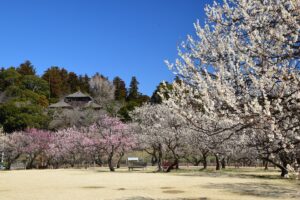
Kairakuen Garden in Mito is one of Japan's Three Great Gardens, best known for roughly 3,000 plum trees that draw crowds during the Mito Plum Blossom Festival, with quieter cedar and bamboo groves to explore the rest of the year.
- Price
- Paid for most of the year. Adult admission is around yen 320; during the Mito Plum Blossom Festival (mid-February to late March) the usual free-admission exemption does not apply, so entry is required every day of that period.
- Time needed
- 1 to 2 hours.
View practical details
- Best time
- Mid-February to late March for plum blossoms; early morning for a quieter walk any time of year.
- Good for
- Garden lovers, photographers, and visitors interested in traditional Japanese landscaping.
What to do
- Walk among roughly 3,000 plum trees of about 100 varieties during the Mito Plum Blossom Festival.
- Visit Kobuntei, the wooden villa built by the garden's founder, for views over the plum grove.
- Explore the bamboo and cedar groves that lead into the more open garden areas.
- Continue to Senba Lake next to the garden for a lakeside walk.
Tickets and fees
Checked in July 2026: regular admission is inexpensive, but the plum festival period suspends the usual free-admission days, so budget a small entry fee for any visit in that window. Confirm current prices and festival dates on the official site before you go.
Getting there
From Mito Station (JR Joban Line), the garden is a short bus ride or about a 30-minute walk. During the plum festival, a temporary JR station called Kairakuen Station opens for a few weeks near the garden entrance.
Nearby
Kairakuen pairs well with a wider Ibaraki itinerary that includes Hitachi Seaside Park along the coast and Fukuroda Falls inland.
_01.jpg)
Hitachi Seaside Park
Hitachi Seaside Park is a large coastal park in Hitachinaka, Ibaraki, best known for the nemophila (baby blue eyes) that turn Miharashi Hill into a sea of blue each spring, plus other seasonal flower fields, cycling trails, and a small amusement area year-round.
- Price
- Paid. Adult admission is around yen 450 (seniors around yen 210, under 15 free); during the nemophila season, roughly early April to early May, a seasonal surcharge of about yen 350 is added on top of standard admission.
- Time needed
- Half a day (3 to 4 hours) to see the flower fields and walk part of the park; a full day if you add cycling or the amusement rides.
View practical details
- Best time
- Late April to early May for peak nemophila bloom. The bloom window shifts slightly each year with the weather, and the park also has other flowers such as tulips, poppies, kochia, and cosmos at different times of year.
- Good for
- Flower and nature lovers, photographers, families, and cyclists.
What to do
- Walk up Miharashi Hill to see the nemophila field, usually at its best from late April to early May.
- Check the current seasonal flower schedule, since kochia, cosmos, tulips, and other blooms take over at different times of year.
- Rent a bicycle to cover more of the park's large grounds, which span roughly 350 hectares.
- Add the Pleasure Garden amusement area and its Ferris wheel if traveling with kids.
Tickets and fees
Checked in July 2026: base admission and the nemophila-season surcharge can change by year, and peak bloom dates move with the weather, so confirm current prices and bloom forecasts on the official site close to your visit date.
Getting there
From Tokyo, take the JR Joban Line limited express to Katsuta Station, then a bus of about 15 to 20 minutes to the park entrance. By car, the park has its own parking areas near the coast.
Nearby
Combine with a wider Ibaraki trip that includes Kairakuen Garden in Mito, roughly a 30 to 40 minute drive away.

Ushiku Daibutsu
Ushiku Daibutsu is a 120-meter bronze statue of Amitabha Buddha in Ushiku, Ibaraki, one of the tallest statues in the world, with an elevator inside that takes visitors up to an observation level and gardens at its base.
- Price
- Paid. Garden-only admission is around yen 500; garden plus entry inside the statue is about yen 800 for adults and yen 400 for children, with slightly lower prices in the winter months.
- Time needed
- 1.5 to 2 hours.
View practical details
- Best time
- Any season. Clear days give the best long-distance views from the observation level inside the statue.
- Good for
- First-time visitors curious about one of the world's tallest statues, families, and photographers.
What to do
- Take the elevator inside the statue up to the observation floor for views over the surrounding countryside.
- See the hall of thousands of small golden Buddha images on one of the interior floors.
- Walk the gardens at the statue's base, which include seasonal flower beds and a small animal enclosure.
- Photograph the statue from a distance across the surrounding lawns, since its full height is hard to capture up close.
Tickets and fees
Checked in July 2026: ticket prices are modest but vary by whether you add entry inside the statue and by season, so check current prices before you go, especially if visiting as a family.
Getting there
From Ushiku Station on the JR Joban Line, about an hour from central Tokyo, take a local bus or taxi to the site; there is no easy walking route from the station.
Nearby
This pairs well with a wider Ibaraki day trip; consider adding Kairakuen Garden in Mito if you have more time.

Fukuroda Falls
Fukuroda Falls in Daigo, Ibaraki, is a 120-metre-high, 73-metre-wide cascade on the Taki River. The paid tunnel gives access to two viewing decks with close and panoramic perspectives of its four-tiered flow.
- Price
- Viewing-tunnel admission (one day): adults JPY 500; elementary and junior-high students JPY 300. Groups of 20 or more pay JPY 400 and JPY 200 respectively.
- Time needed
- Allow 60-90 minutes for the tunnel, both viewing decks, and the suspension bridge; add time if you continue on the riverside trail.
View practical details
- Best time
- The falls change through all four seasons. Winter freezing and special illuminations depend on conditions and event schedules, so check the official site before visiting.
- Good for
- Nature lovers, photographers, and travelers planning a scenic rural detour in northern Ibaraki.
What to do
- Use the paid viewing tunnel to reach the First Viewing Deck, about 10 metres from the basin, for the closest look at the spray and sound.
- Take the elevator up about 50 metres to the Second Viewing Deck; its three decks look across the full four-tiered waterfall.
- Walk toward the suspension bridge for a more distant view across the Taki River, then continue onto the riverside hiking route if time allows.
- Plan around the seasonal closing time and confirm winter conditions or illumination dates directly with the official site before travelling.
Tickets and fees
Checked 2026-08-03: the viewing facility is open daily. Hours are 08:00-18:00 from May-October, 08:00-17:00 in November, and 09:00-17:00 from December-April. Confirm current conditions and event hours before travel.
Getting there
From JR Fukuroda Station, take the bus to Takimoto (about 10 minutes), then walk about 10 minutes; services are limited, so check the timetable. A taxi from the station takes about 10 minutes. By car, Naka IC on the Joban Expressway is about 60 minutes away; town-run free parking is about 1.2-1.4 km from the falls.
Nearby
If you have a full day, combine this with Kairakuen Garden in Mito or Hitachi Seaside Park on the coast, though both require additional driving time.
Latest Articles
This page may contain affiliate links. We may earn a commission at no extra cost to you.
Where to stay
- Use Mito, Tsukuba, Oarai as practical bases depending on your route.
- Stay near the main station for transport-heavy trips.
- Choose an onsen, coastal, or historic area for a slower overnight stay.
Sample itinerary
- Day 1: Start with the main city, food area, and easiest signature sights.
- Day 2: Visit the top nature, shrine, castle, or cultural area.
- Day 3: Add a day trip, onsen, coast, island, or rural stop if your schedule allows.
Food to try
- Natto
- Anko nabe monkfish hotpot
- Melon
- Local ramen
Common questions
When should you visit Kairakuen?
Late winter. It is one of Japan's Three Great Gardens and was laid out around plum trees, so it peaks when most gardens are still bare.
When are the nemophila and kochia at Hitachi Seaside Park?
Nemophila turns the slope blue in spring and kochia turns it red in autumn. The park is built around seasonal planting, so timing matters more than logistics.
Is Ibaraki a day trip from Tokyo?
Yes. Limited express trains reach Mito in around an hour and a half, and Hitachi Seaside Park is a bus from Katsuta on the same line.
Do you need a car in Ibaraki?
It helps if you want more than one sight in a day, since Ushiku and Fukuroda sit in different directions from Mito.
Explore Nearby Japan
Continue planning your route with nearby prefectures, regional guides, and useful trip planning links.
Nearby Prefectures
Same Region Guides
Useful Planning Links
Recommended Planning Guides
Use these practical guides to plan where to stay, move between regions, and shape your itinerary before your Japan trip.
Plan Your Japan Trip
When to go, how long, where, money, and what to sort before you book.
Read planning guideJapan Transport Guide
IC cards, rail passes, the Shinkansen, and getting in from the airport.
Read transport guideHotels & Where to Stay
Compare stay areas and lodging ideas for first-time Japan visitors.
Find stay guides