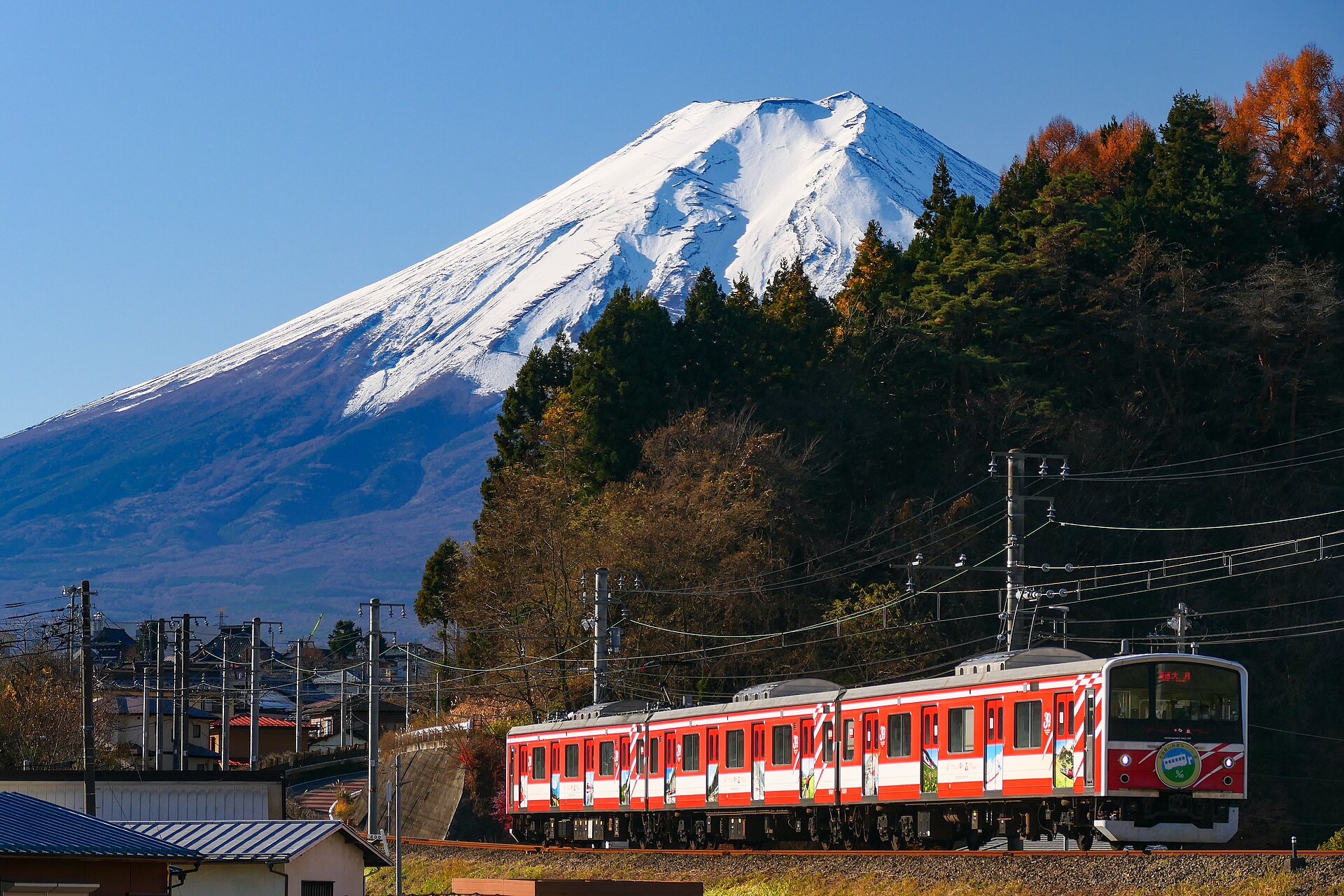
The best Tokyo-to-Kawaguchiko route depends less on a generic fastest-time claim than on which risk you want to remove. Take the direct highway bus when staying on one vehicle, arriving at Kawaguchiko Station and avoiding a rail change matters most. Choose the Fuji Excursion train when you can reserve the departure that fits your day and value a rail timetable over road conditions. Both can work well; the wrong choice is assuming that either one is equally flexible on a busy Mount Fuji date.
As of 2026-08-20, Fujikyu lists four regular Fuji Excursion round trips between Shinjuku and Kawaguchiko, with a published minimum journey of 1 hour 54 minutes. The highway-bus operator lists Busta Shinjuku and Kawaguchiko Station on its Fuji Five Lakes route, but also warns that traffic, accidents, abnormal weather and congestion can delay arrival. Check the official timetable, fare and reservation page again for your travel date before buying anything.
| Your priority | Start with | Why it fits | Plan for |
|---|---|---|---|
| One direct ride from Shinjuku with luggage | Highway bus from Busta Shinjuku | It arrives at Kawaguchiko Station without an Otsuki rail change. | Road congestion and weather can change the arrival time. |
| A reserved, timetable-led departure | Fuji Excursion train | It runs directly from Shinjuku to Kawaguchiko on a defined rail schedule. | Limited seats, advance purchase and the applicable basic/JR fare as well as the Fujikyu supplement. |
| The through train is full | JR train to Otsuki plus Fujikyu connection | JR East publishes transfer alternatives instead of leaving the whole day dependent on one train. | A real connection buffer and separate ticket requirements. |
| A timed activity shortly after arrival | Whichever official option leaves the larger buffer | A little extra time protects the first Kawaguchiko transfer, luggage and hotel check-in. | Not treating a scheduled bus arrival as traffic-proof or a sold-out train as the end of rail options. |
Take the highway bus when a direct ride is the real priority
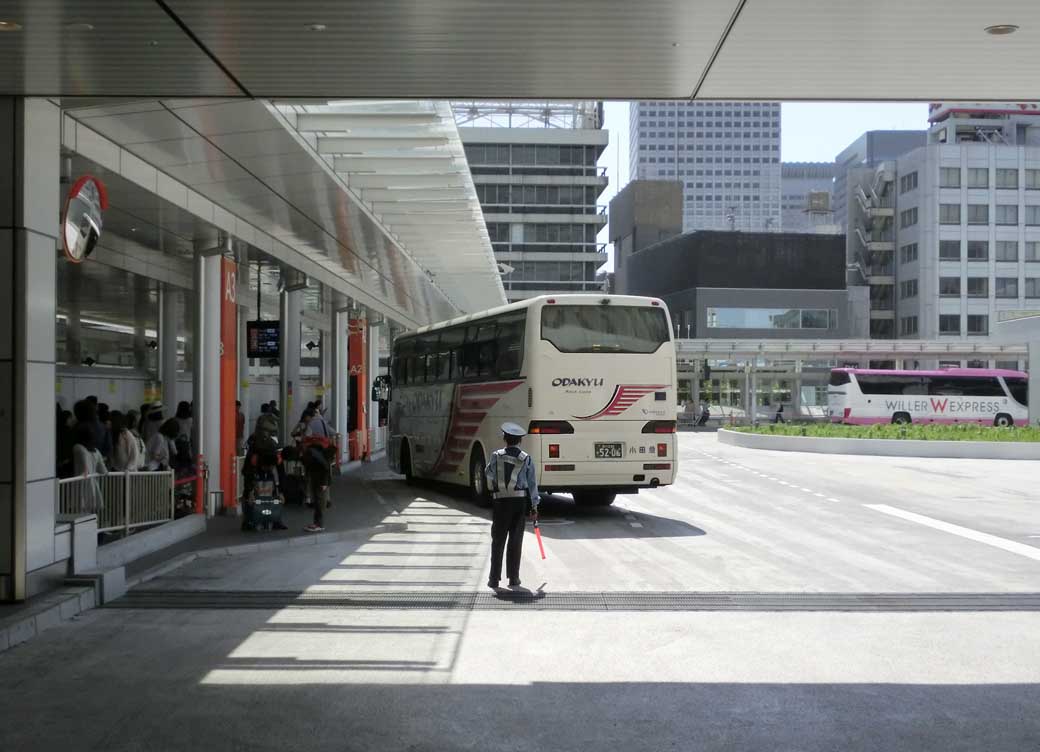
The Busta Shinjuku highway bus is the practical first option when you want to load luggage once and arrive at Kawaguchiko Station without working through a rail transfer at Otsuki. That is especially useful for a short stay, a group carrying several cases, or an itinerary that begins from Shinjuku rather than a rail-friendly hotel near another station. Fujikyu Bus publishes the current route and fare table for the Fuji Five Lakes–Shinjuku service, so use that page rather than an old price graphic when comparing departures.
The trade-off is not comfort; it is arrival certainty. The operator explicitly notes that accidents, road congestion and abnormal weather can delay buses, with no fare refund for a late arrival. That makes the bus a weaker choice when you have a non-refundable timed entry, a last check-in, or a tightly timed local connection immediately after Kawaguchiko. Build a buffer at the end of the bus journey, particularly on weekends, holidays and clear-weather Mount Fuji days when demand can be high.
Choose Fuji Excursion when the reserved train fits your day
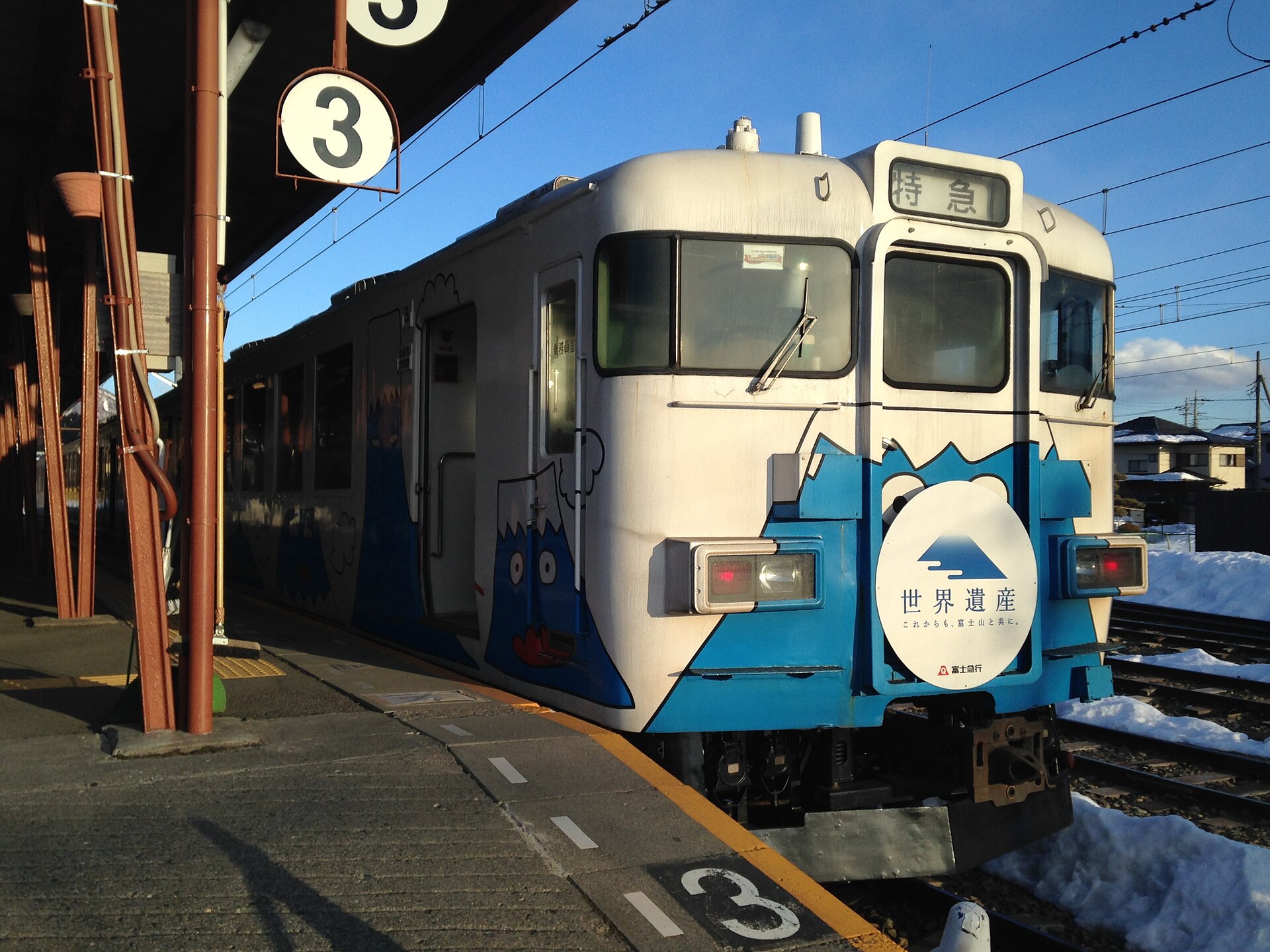
Fuji Excursion is the cleanest rail choice when one of its departures matches your plan. Fujikyu’s official page lists four regular round trips between Shinjuku and Kawaguchiko, with a published minimum run of 1 hour 54 minutes. It is a through service: you stay on the train rather than changing at Otsuki. JR East’s current Kawaguchiko timetable describes the service as reserved-seat only, so check availability before structuring the morning around it.
Read the fare as a set of components, not as one universal headline number. Fujikyu lists a ¥600 limited-express supplement for the Otsuki–Kawaguchiko section, while the applicable basic fare and JR portion are additional. That is why the current booking screen for your date matters more than a total copied from an old itinerary. Tickets are sold from one month before travel on the operator information page; reserve first when a particular train is essential, then make the rest of the day fit that confirmed departure.
Keep the Otsuki transfer route as a real backup
A full Fuji Excursion does not mean rail is unavailable. JR East’s March 14, 2026 timetable includes train combinations that change at Otsuki, and it specifically tells travellers to allow extra time because ticket counters and disruptions can make a connection harder than it appears on a route-search result. Treat that warning as part of the route choice: a backup only works when you leave enough time to use it.
The connection route is best for travellers who prefer rails to a road-exposed arrival, can manage one transfer, and are willing to accept a longer or less simple journey than a through train. It is not the emergency plan for a ten-minute gap before a booked activity. Check both the JR leg and the Fujikyu leg before leaving Tokyo, make sure the ticket arrangement covers both operators, and keep a later local plan in mind if the transfer becomes crowded.
Make the Kawaguchiko arrival part of the choice
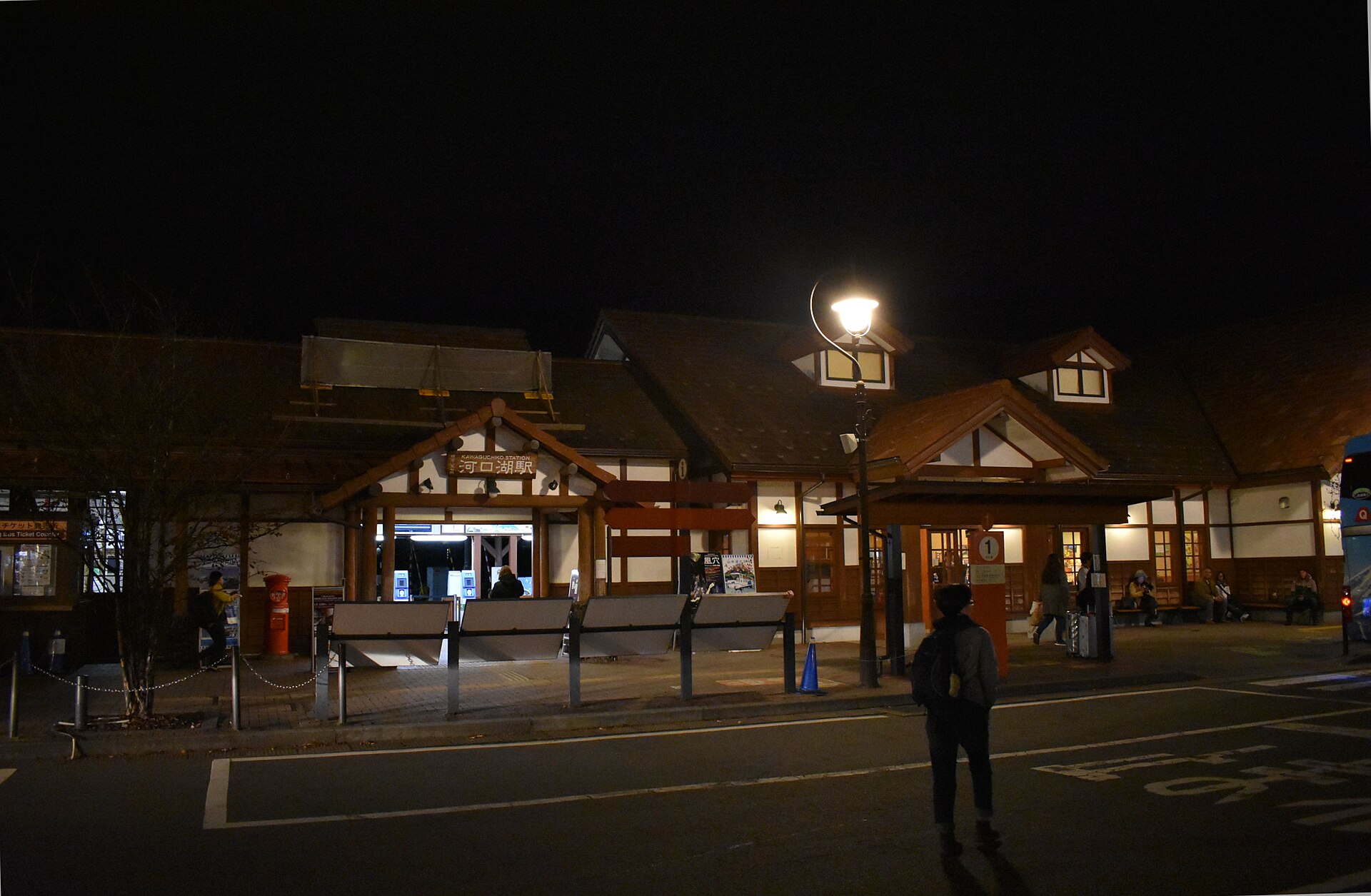
Both route families can bring you to Kawaguchiko Station, but the useful next step depends on what comes after it. Fujikyu identifies the station as the terminal of its line and the starting point for lake-area buses, sightseeing boats, the ropeway area and western-lake shuttles. If your hotel is by the station, the direct bus is particularly simple. If you are continuing to a lake-side property or a different Fuji Five Lakes stop, protect time for the local bus, taxi, luggage and weather situation instead of treating the station arrival as the end of the journey.
This distinction matters most on a one-night trip. A route that is nominally quicker but lands you with no time to find the correct local bus can be less useful than a slightly earlier, calmer arrival. For a place-to-stay decision once you arrive, see the Kawaguchiko base guide; for the wider destination, start with the Yamanashi travel guide.
A simple booking order
- Name the first fixed commitment in Kawaguchiko: hotel, local bus, tour or timed activity.
- Check the official Fuji Excursion timetable and reserved seats: book it first only when its departure genuinely fits.
- Compare the official Busta Shinjuku bus schedule and fare: choose it when one direct ride is more valuable than road-arrival certainty.
- Keep the Otsuki transfer option visible: it is the rail fallback when the through train is unavailable, not an afterthought at the station.
- Leave a local-arrival buffer: Kawaguchiko Station is a transport hub, not necessarily the doorstep of the hotel or lake view.
In short: take the bus for the simplest direct Shinjuku-to-station journey when your arrival can absorb road variation; take Fuji Excursion when a reserved through train fits your schedule; and use an Otsuki connection only with a proper buffer. Continue with the Tokyo travel guide for the departure side, the Shizuoka travel guide for another Mount Fuji approach, and the Kanagawa travel guide for a wider route from Tokyo.
Sources checked: Fujikyu Railway’s FUJI EXCURSION timetable, Fujikyu Bus’s Fuji Five Lakes–Shinjuku route, Kawaguchiko Station information, and JR East’s Kawaguchiko timetable. Checked 2026-08-20.