
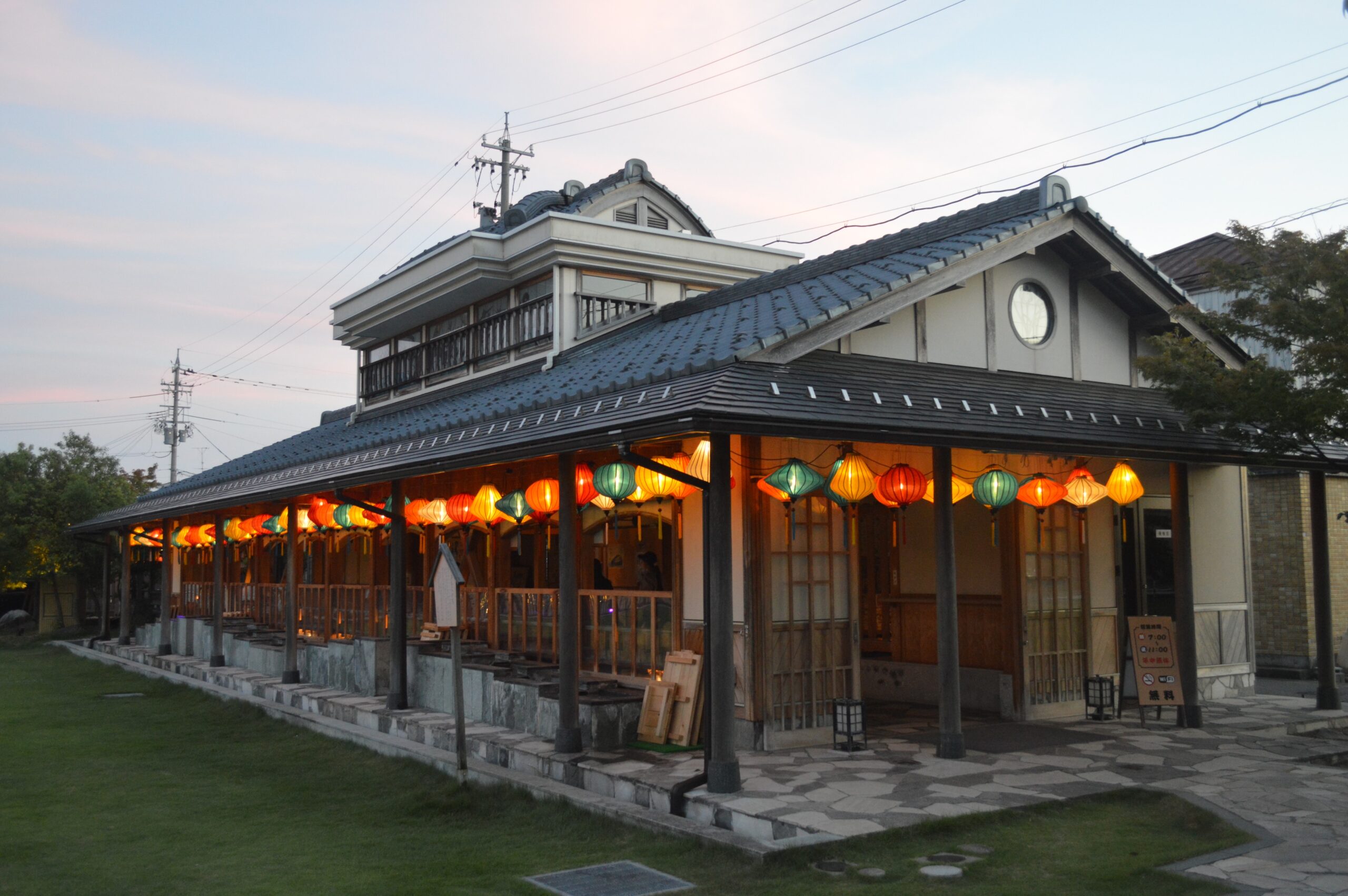
Choose Fukui Station if your stay is mainly a base for rail travel, you arrive late, or you need an early departure. Choose Awara Onsen if the bathing-and-dinner evening is part of the trip itself—and you can reach your inn before its meal deadline. The important difference is not simply “city or countryside”: it is how much freedom you need after arrival.
| Decision point | Fukui Station | Awara Onsen |
|---|---|---|
| Arrival | Rail-led stay; choose a hotel with a short station walk. | Allow the final transfer from Awaraonsen Station, or arrive by local rail at Awara-Yunomachi. |
| Walkability | Check the hotel’s exit and actual walking route. | Some inns are walkable from Awara-Yunomachi; others need a taxi or shuttle. |
| Local transport | Avoid an Awara commute on a Fukui-city day. | Fukui–Awara-Yunomachi: ¥730 and about 42 minutes each way by local train. |
| Evening fit | Eat independently; check restaurant closing times. | A meal-inclusive inn stay suits an early, unhurried arrival. |
| Stay length | One night before a train; several nights if city-based days dominate. | One dedicated onsen night can be enough; add nights only if you want more inn time. |
| Trade-off | Convenience does not guarantee a hot-spring experience. | More bathing time, but dinner and reserved transport can limit flexibility. |
Confirm current official fares, timetables and hotel conditions for your travel date before booking: use the Echizen Railway fare and timetable, Awara tourism access guide and your hotel’s own booking page. Journey figures below are planning inputs, not door-to-door guarantees.
Do not confuse Awaraonsen with Awara-Yunomachi
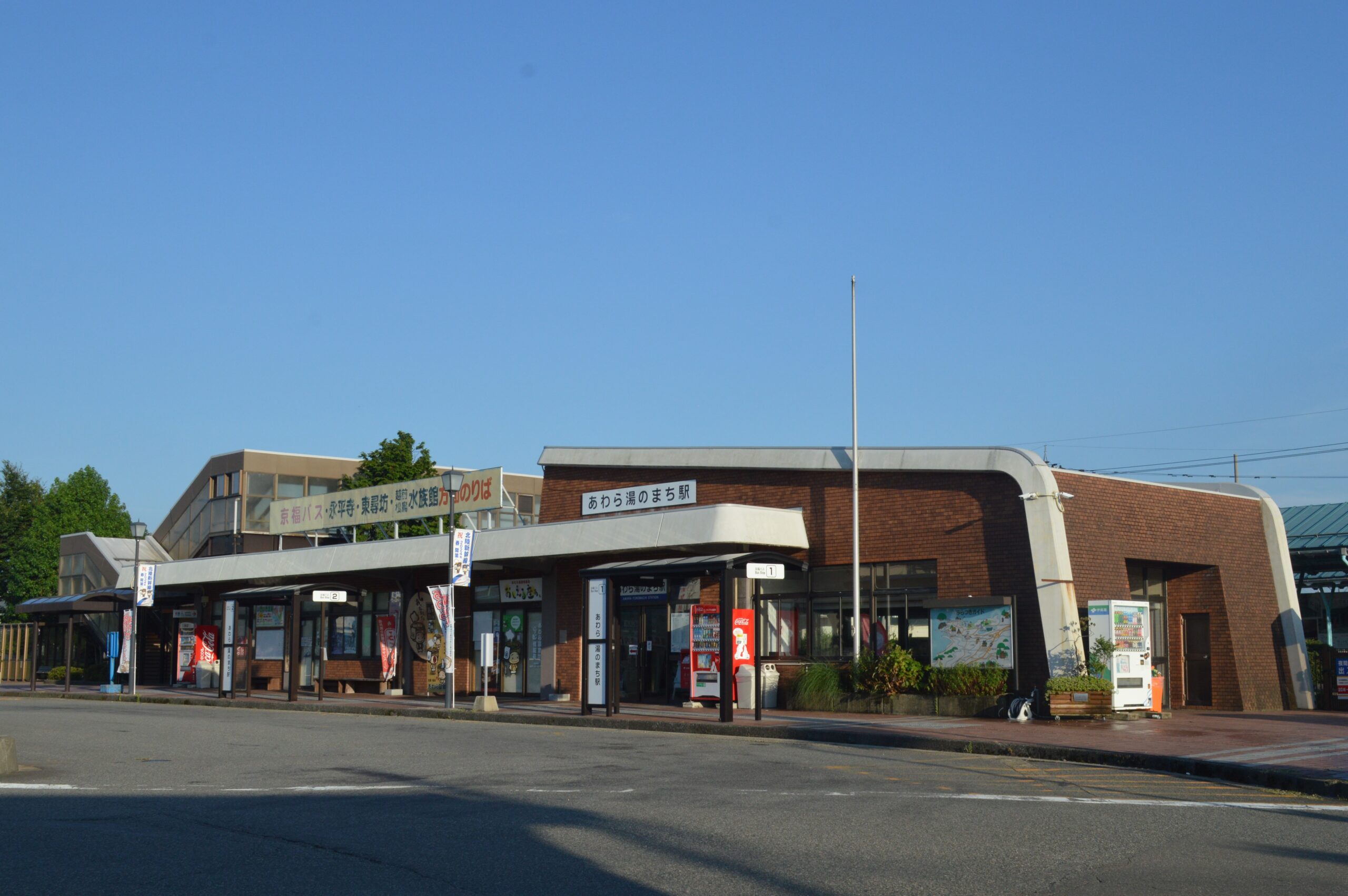
| Arrival point | What it means for your hotel |
|---|---|
| Awaraonsen Station | The Shinkansen station. Awara tourism gives roughly 10 minutes by bus or taxi to the hot-spring town; the exact hotel and traffic affect the journey. |
| Awara-Yunomachi Station | The Echizen Railway stop in the hot-spring town. Depending on the inn, continue on foot or by a short taxi ride. |
| Fukui Station | The city base. Echizen Railway connects it with Awara-Yunomachi; this is not a Shinkansen ride to Awaraonsen. |
When comparing a room, open its exact address and access instructions rather than relying on “Awara” in the name. A hotel near the Shinkansen station and an inn in the hot-spring town create different arrival plans. Ask the inn which station it collects guests from and where to meet the driver. With large bags, a confirmed pickup can matter more than a room’s apparently convenient location on a regional map.
What the local train adds to an Awara base
Echizen Railway lists the ordinary adult one-way fare between Fukui and Awara-Yunomachi as ¥730, with a 42-minute daytime journey. Using two ordinary single fares, a return trip is ¥1,460 and about 84 minutes on trains alone. Waiting, walking and reaching your inn are additional; check the actual service before planning a timed connection.
That is a useful test if you intend to spend each day in Fukui city but sleep in Awara. For two adults, one such return outing adds ¥2,920 in ordinary rail fares. A single outing may be a fair trade for an onsen evening; repeating it daily uses money and sightseeing time. These totals are arithmetic from single fares, not a claim that a return ticket or discount pass costs the same.
For a late arrival or an early onward train, work backwards from the actual departure rather than assuming local transport fits automatically. If you mainly want a convenient stop between rail journeys, a hotel near Fukui Station avoids adding the hot-spring-town transfer. If the inn is the main experience, the same transfer can be worthwhile because you will spend the evening there instead of commuting back.
Fukui Station: choose flexibility, not just proximity
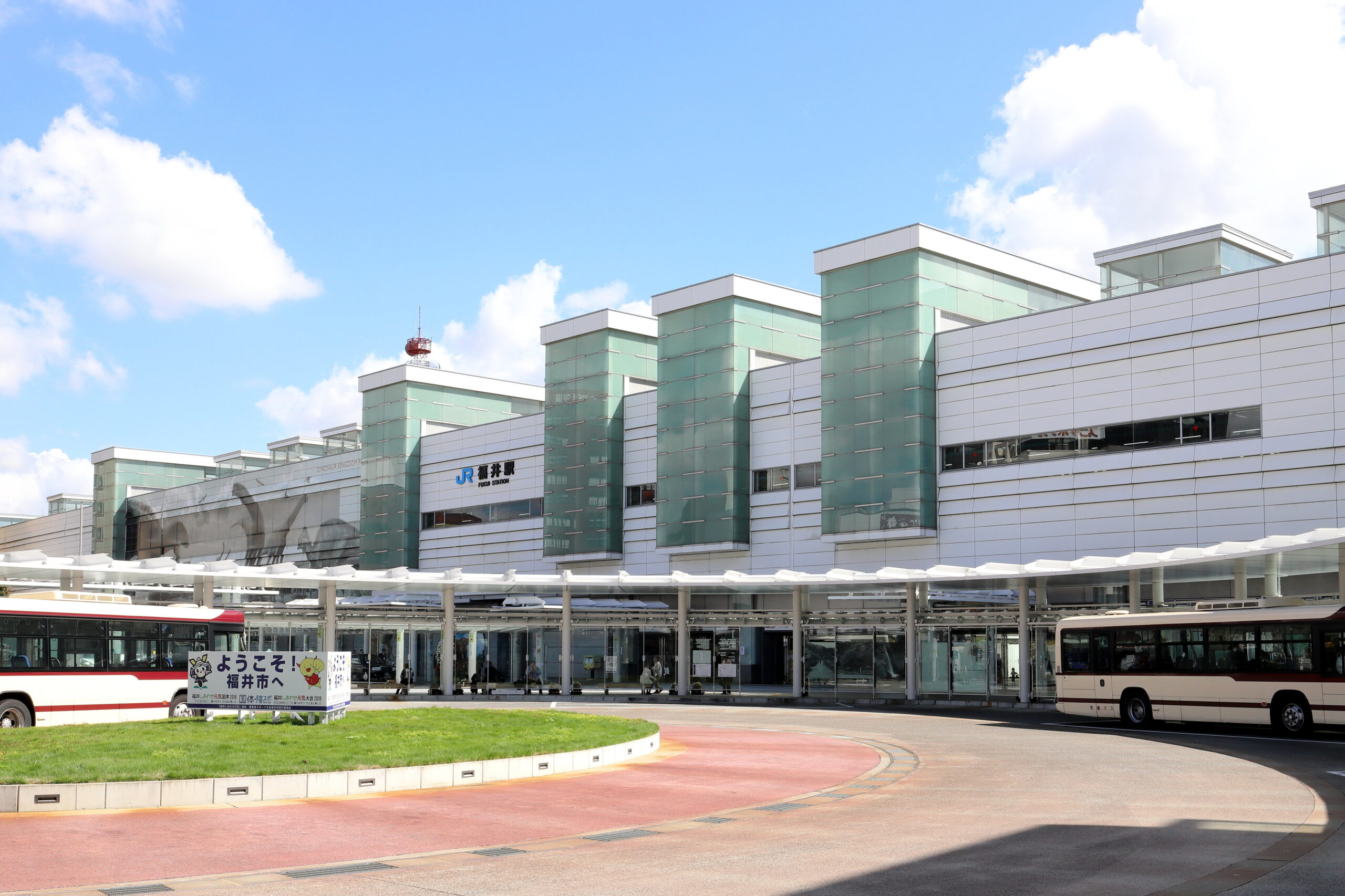
The station base works best when you want to leave your luggage, eat separately and adjust the evening without a dinner-package deadline. Before reserving, check the station exit, walking route and hotel check-in limit. “Near Fukui Station” is not a promise that every property is equally easy with bags, nor that check-in is available all night.
For a concrete dining reference, Curu-F Fukui Station lists general restaurant hours of 11:00–21:00, with individual shop variations and a separate notice for current hours. That supports a station-area dinner plan, but not a midnight one. If your train arrives close to closing, identify an open option or eat before travelling rather than counting on the whole station complex.
Use the station location to simplify the start and end of the day. It does not make every attraction in Fukui Prefecture walkable. Check the route to your main sightseeing target before deciding that a central-city hotel solves the entire itinerary; the useful comparison is your actual daily route against the extra Awara transfer.
Awara Onsen: book the evening, not only the room
An inn can be the reason to stay rather than somewhere to sleep after sightseeing. If you book dinner, protect the arrival window instead of adding one more stop en route. Room-only, breakfast-only and dinner-inclusive plans at the same property may produce very different evenings. Read the selected plan, not only the hotel’s headline amenities.
| Official example | Booking implication |
|---|---|
| Grandia Housen: dinner-inclusive package | Its English guest page lists check-in 15:00–19:00 and asks guests arriving after 18:00 to contact it in advance. Times can vary by package. |
| Seifuso: complimentary station shuttle | Its access page lists pickups at 14:30, 15:00, 16:00 and 17:00 from Awaraonsen Station’s west-exit bus rotary. Reservation is required; unreserved runs do not operate. |
These are two named-property examples, not town-wide rules or a hotel ranking. Recheck Grandia Housen’s guest conditions and Seifuso’s shuttle instructions before booking. Seifuso requests reservations or changes at least one hour before the service; arranging it when you reserve the room is more reliable than treating it as a turn-up-and-go bus. Another inn may have different stations, pickup hours and meal limits.
If your train reaches Awaraonsen after the listed shuttle window, ask about another approved transfer and whether dinner still works. A taxi may solve the last mile without solving a missed meal. Similarly, confirm bath arrangements that matter to you—private-bath booking, accessibility or tattoo policy—with the property; an “onsen” label does not establish those conditions.
Compare the whole stay price and choose your nights
Compare live quotes for the same dates, number of guests, room type, meals and cancellation terms. A room-only Fukui hotel and a two-meal Awara package are not like-for-like prices. For the city option, add the meals you would otherwise buy and any Awara outing; for the inn, add any paid last-mile transfer and city commuting. Do not pay for included dinner you cannot reach in time.
For one transit night, choose Fukui Station unless bathing is the evening’s priority and your arrival fits. For one dedicated onsen night, choose Awara and leave room for the inn rather than packing the afternoon with distant stops. On a longer trip, splitting a city-based night and an onsen night can avoid repeated commuting, but only if moving bags and checking in twice is worth the change. These are planning choices, not a minimum-stay rule.
Before paying, answer three questions: which station will you actually reach, what time must you be inside the hotel for your package, and where do you need to be the next morning? Fukui Station wins when flexibility and rail connections dominate. Awara Onsen wins when you can give the inn an unhurried evening. For wider booking considerations, see our first-time Japan accommodation guide.
Image credits: Ashiyu, Asturio Cantabrio and Awara-Yunomachi Station, Asturio Cantabrio (CC BY-SA 4.0); Fukui Station, Yoshihide Fujitani (CC BY-SA 4.0). Images resized for web display; no content edits.
Official sources: Awara tourism access, Echizen Railway station, fares and timetable, Grandia Housen guest information, Seifuso access and shuttle, Curu-F station services.
.jpg)
.jpg)
