For a flexible festival visit, watch from the public parade route; apply for a city-reserved chair only if a defined place near the finish is worth the fee, lottery and payment steps. The 123rd Ako Gishi Festival is planned for Monday, December 14, 2026 in Ako City, Hyogo. This is the Ako City procession, not the separate Gishi-sai observance at Sengakuji Temple in Tokyo.
| Decision axis | Public route | Reserved seat |
|---|---|---|
| Venue | Choose a permitted public position on the city procession route around Ako Castle ruins, Oshiro-dori and Ikitsugi Square; the exact 2026 passage point and sightline are not guaranteed. | A chair at Ikitsugi Square, near the parade finish; chair location is defined by the city seat plan. |
| Ticket and cost | No city reserved-chair ticket for public-route viewing. The view and standing space are not reserved. | ¥2,000 per chair; 130 chairs offered. A wheelchair user’s companion also needs a ticket. |
| Booking | No chair application; select your position on the day under the city’s current route and safety guidance. | Apply October 1–30, 2026; lottery decides winners and seats. Winners must pay and exchange their notice by November 27. |
| Time of day | Festival approximately 10:00–16:00; parade approximately 10:00–15:00, both planned, not an exact passing time. | Ticketed chair use begins 10:40. Chairs are open free on a first-come basis only until 10:30; that early window does not reserve a later seat. |
| Access | Arrive by rail at JR Banshu-Ako, then check the city’s current route information before choosing a street position. | Plan onward access from JR Banshu-Ako to Ikitsugi Square, not merely the first point on the procession route. |
| Congestion | More freedom to move, but a useful sightline is uncertain in a busy festival street. | A designated chair reduces the need to hold a standing spot, but the city warns that some seats may have obstructed stage views. |
| Cancellation and weather | Keep a flexible fallback if the procession changes or weather disrupts your chosen position. | Bring a poncho: umbrellas are not allowed in the chair area. The city refunds only if the entire parade is cancelled by severe weather or similar conditions. |
| Trade-off | Flexible and no paid-chair process, but no guaranteed chair or view. | A known chair location, but ¥2,000, a lottery, deadline and limited refund protection. |
Check the official Ako City festival page and seat rules again for your travel date and before booking. The city describes the hours as planned, and route, access or weather notices may change. Do not use an older festival map as the confirmed 2026 procession schedule.
What is happening, and where?
On December 14, the city marks the story of the Forty-seven Ronin with a series of processions, a local-products market and other activities. The 2026 city programme names Ako Castle ruins, Oshiro-dori and the Ikitsugi Square area as main sites. It gives a broad festival window of about 10:00–16:00 and a parade window of about 10:00–15:00. Those windows do not mean the main procession will pass every point at 10:00, or that every activity is available all day. Wait for the city’s detailed route and traffic notices before fixing an exact viewing corner.
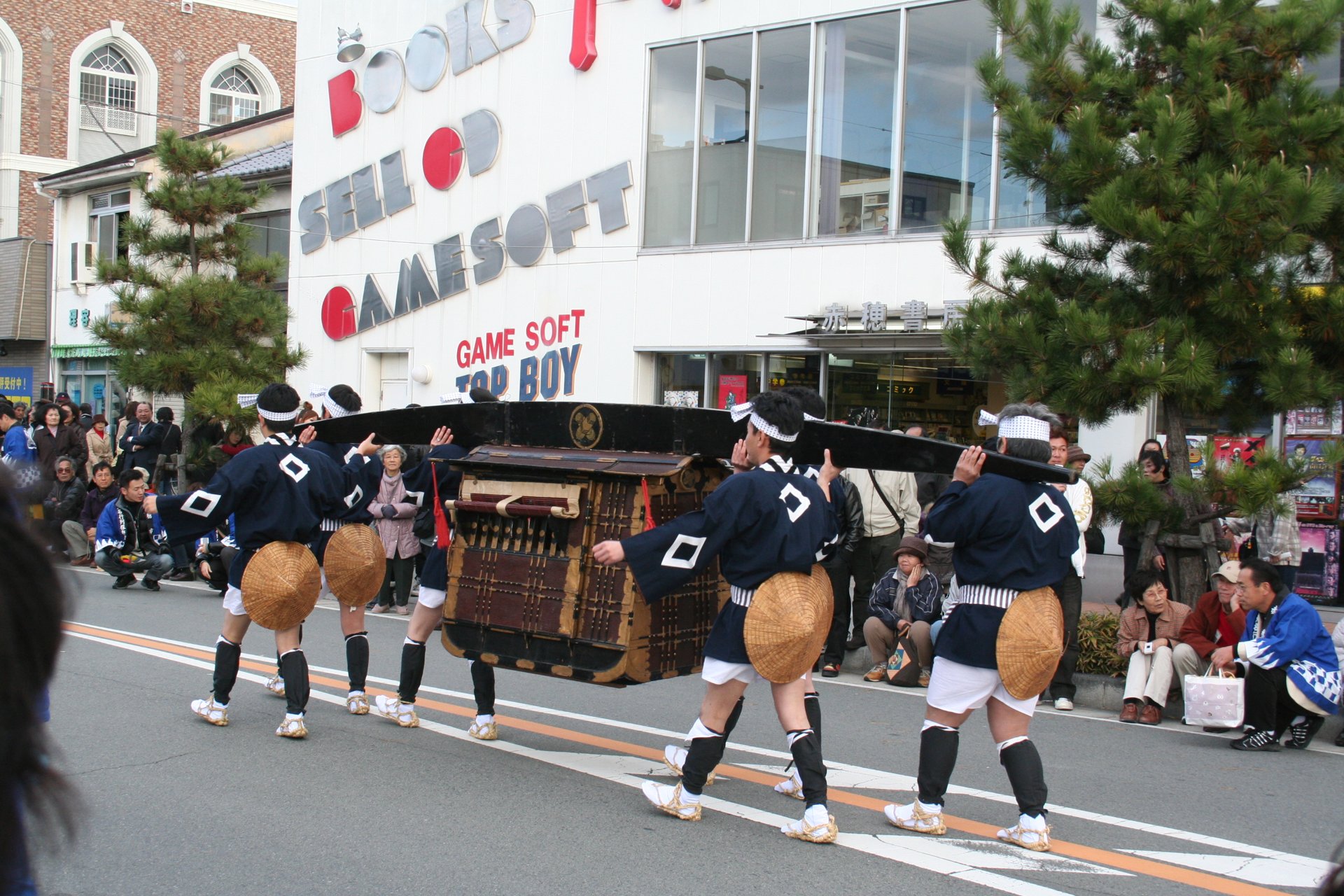
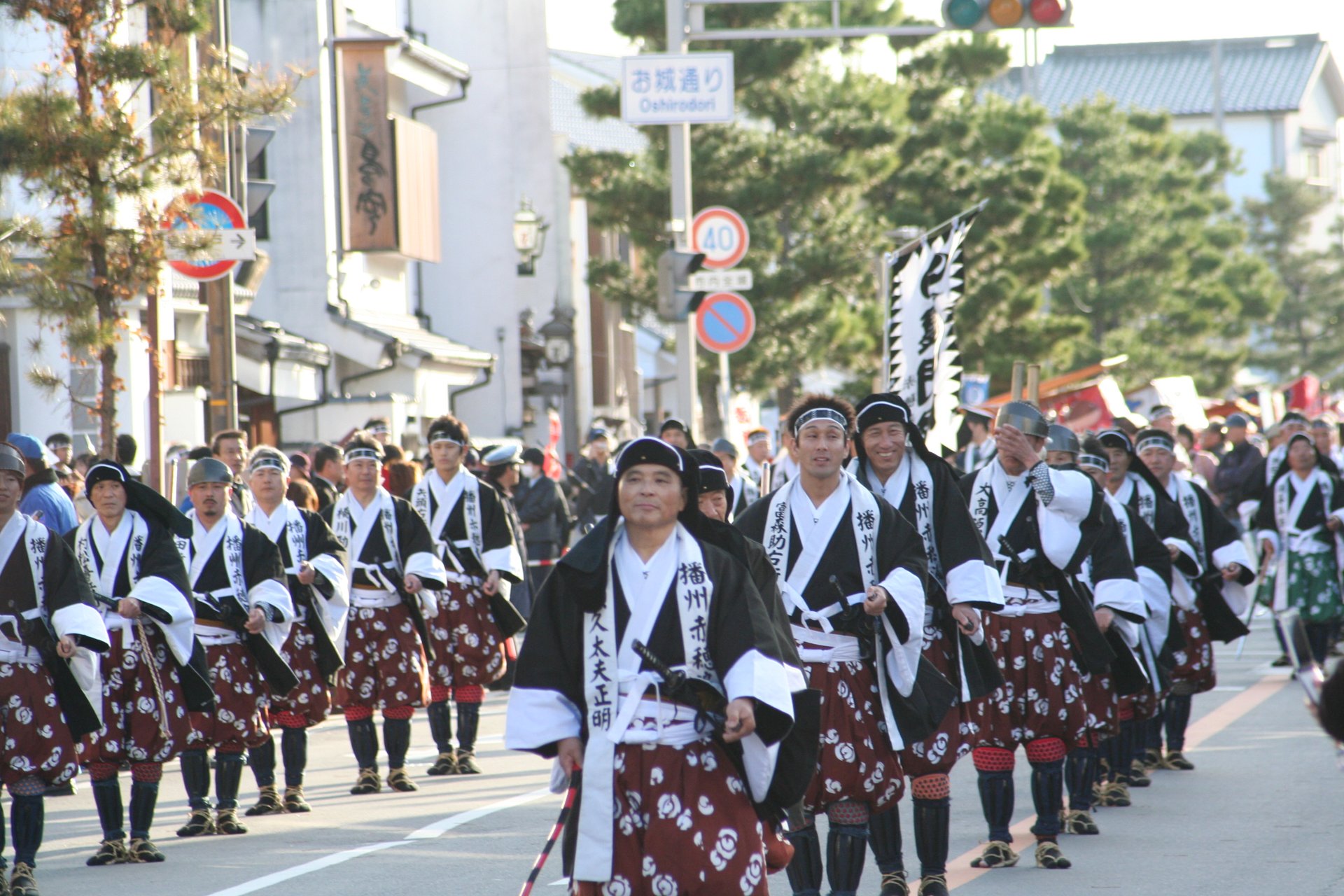
A public-route position is the simpler choice if you can stand, move with the crowd and treat the parade as part of a wider Ako day. A street view is not a city-assigned seat: visibility depends on the final route, barriers, other viewers and how early you arrive. The photograph above shows an earlier Ako City parade, not a promise about the 2026 line of travel or where standing will be allowed. If seeing a particular participant or stage segment is critical, use the city’s final programme rather than guessing from old imagery.
When the reserved chairs are worth applying for
The city’s 2026 seat plan puts 130 chairs at Ikitsugi Square near the parade finish, at ¥2,000 each. They are not a general admission ticket to the festival and do not guarantee a perfect stage view: the city explicitly warns that a few seats can have a limited line of sight. They are most useful if having somewhere to sit and a defined viewing area outweighs flexibility and price. Wheelchair users may use the chairs, but a companion requires a separate ticket. The city is not installing stepped seating this year.
Applications run from October 1 through October 30, 2026 via the official web form linked on the seat page. One person/email address may enter once for up to two chairs. Winners and seat placement are determined by lottery, and two requested chairs may not be next to each other. If selected, the winner must pay and exchange the notice by November 27. Do not travel expecting walk-up chair sales: the city says there is no ordinary same-day sale unless it later announces one. The application form is in Japanese, so allow time to understand the address, name, phone and email fields before entering.
The 10:30 and 10:40 times are easy to misread. Until 10:30 the chair area is open free on a first-come basis; ticketed chair use begins at 10:40. Sitting there early is not a substitute for winning a later reserved seat. If you do not win, the practical fallback is a permitted public-route position, subject to the latest crowd and traffic directions. If a chair matters so much that standing is not workable for your party, do not treat the lottery as certain.
Rain and cancellation: a different risk for each choice
The paid-chair rules ask visitors not to use umbrellas or drink alcohol in the seating area; bring a raincoat or poncho. The city says it will not refund the chair fee unless the entire parade is cancelled because of severe weather or similar circumstances. A shortened parade, rain, or a weaker-than-expected view is not stated as an automatic refund trigger. Public-route viewers have no chair fee at risk, but may need to change position or abandon the parade plan if conditions worsen. Recheck the city notice on the morning of your visit, and leave a flexible indoor or town-centre alternative in the day rather than building every transfer around one parade pass.
Arriving in Ako without confusing the stations or locations
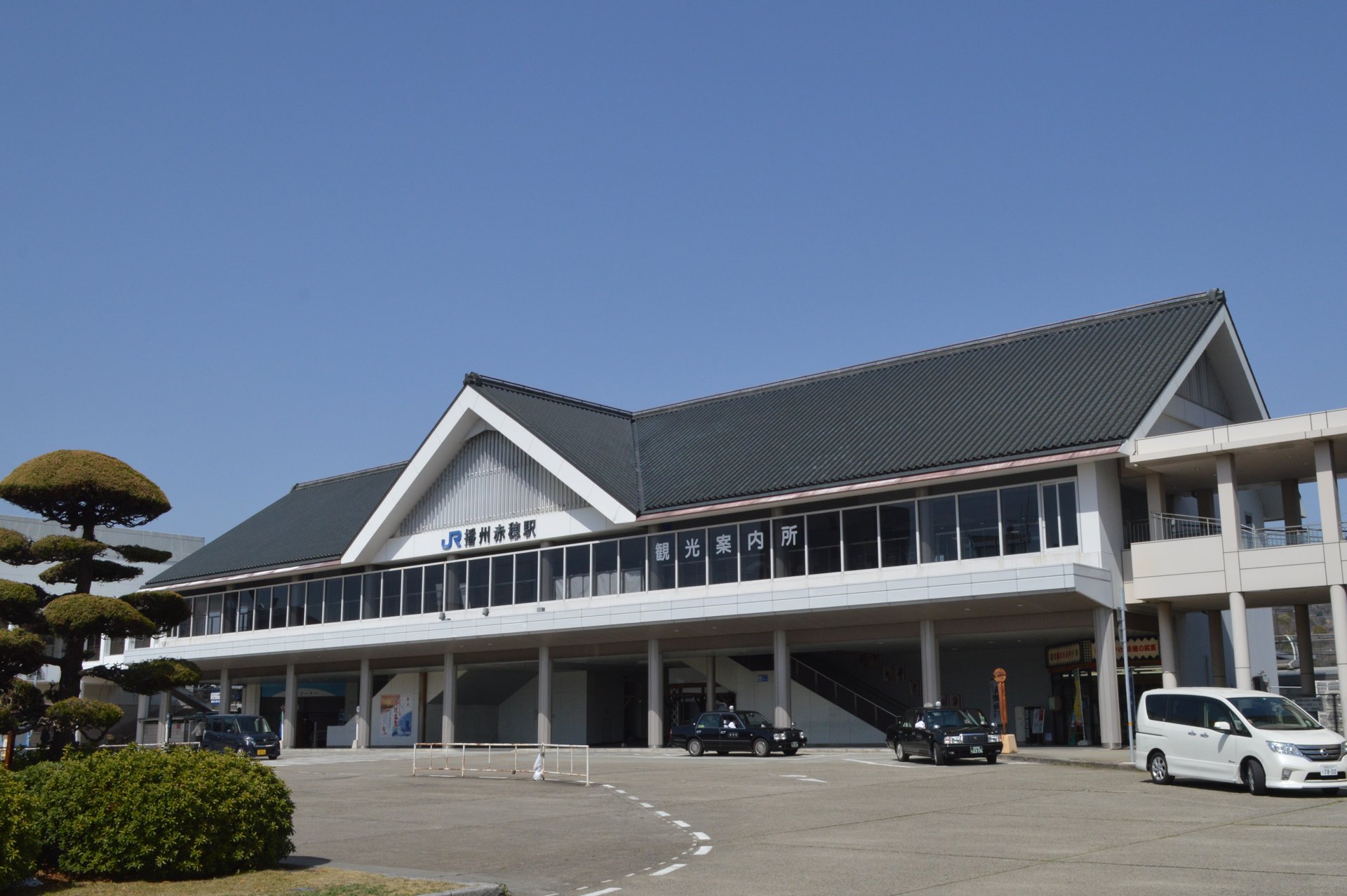
Use JR Banshu-Ako as the rail gateway to Ako City. The Ako Tourism Association access guide gives approximate rail journeys of about two hours from Osaka or one hour from Okayama, but those are orientation figures, not an event-day timetable. Check the actual train and onward walking route for your departure point and travel date. The festival has several named sites; Ikitsugi Square is the paid-chair destination, not a label for every place along the parade. Allow time for station exit, pedestrian crowds and any city traffic control before deciding where to watch.
If you are building a wider western Hyogo trip, the Hyogo travel guide places Ako alongside other prefecture stops, and the Things to Do guides help weigh a festival day against another activity. The simple decision is this: public-route viewing rewards flexibility; the chair lottery is worthwhile only if its seat location, cost and restrictions fit your party. Confirm the city’s final programme before committing to either plan.
Image credits: festival procession and route spectators by Corpse Reviver (CC BY-SA 3.0); Banshu-Ako Station by Asturio Cantabrio (CC BY-SA 4.0). Historical festival photographs are illustrative. Images resized for display; no content edits.
Official sources: Ako City festival programme, Ako City reserved-seat rules, and Ako Tourism Association access guide.