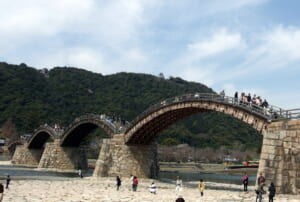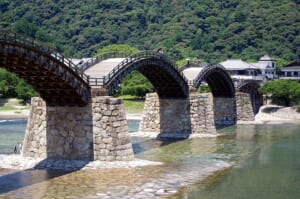
Buy only the bridge ticket if the wooden arches are your main goal; choose the three-part set when you also want the ropeway and Iwakuni Castle on an operating day. The combination is not automatically the better buy: it saves money against three separate adult admissions, but adds a hillside walk and depends on shorter ropeway and castle hours.
| Quick facts | Kintaikyo Bridge area |
|---|---|
| Admission | Adult bridge round trip ¥500; adult bridge, return ropeway and castle set ¥1,550. |
| Hours | Bridge toll booth normally 08:00–17:00, with seasonal extensions; ropeway normally 09:00–17:00; castle normally 09:00–16:45. |
| Closed days | Check weather-related bridge restrictions and the ropeway operating calendar; the ropeway and castle may suspend for maintenance. |
| Reservation | Ordinary individual and set tickets are purchased for the visit; no standard advance slot is needed for the bridge crossing. |
| Access | Take a bus from JR Iwakuni or Shin-Iwakuni toward Kintaikyo; the bridge is close to the bus stop. The ropeway is farther on foot across the bridge. |
| Trade-off | Bridge-only keeps the visit shorter; the set saves ¥200 only for all three adult admissions and adds walking and operating-window risk. |
Fares, closing times, service and access can change. Check the official visitor information for your travel date before buying: bridge information, ropeway information, castle information and the operating calendar. When the toll booth is unstaffed, the bridge may still be crossed using its fare box; it is not free merely because the booth is closed.
Bridge only or the combination?
| Choice | Adult outlay and coverage | Best for | Trade-off |
|---|---|---|---|
| Bridge only | ¥500 round trip across Kintaikyo; ropeway and castle are not included. | A short stop, a later arrival, a bridge-focused photo visit, or a day when the hillside attractions are closed. | You miss the castle and hilltop views; buying every component separately later costs more than the set. |
| Bridge + ropeway + castle set | ¥1,550 for the bridge, return ropeway and castle. All three separate adult tickets total ¥1,750. | Visitors who intend to use all three and can reach the castle within its operating hours. | The ¥200 saving is useful only if you actually complete the ropeway and castle; allow extra walking and a weather or maintenance fallback. |
The arithmetic is simple: the city lists ¥500 for the bridge, while the return ropeway costs ¥900 and castle admission costs ¥350 for an adult. That makes ¥1,750 separately versus the city’s ¥1,550 combined ticket, a ¥200 saving. The set does not create extra time or erase the walks. If the castle is not part of your plan, compare the components you would actually use rather than treating the full-route saving as a discount on a bridge-only visit.
What the full route adds
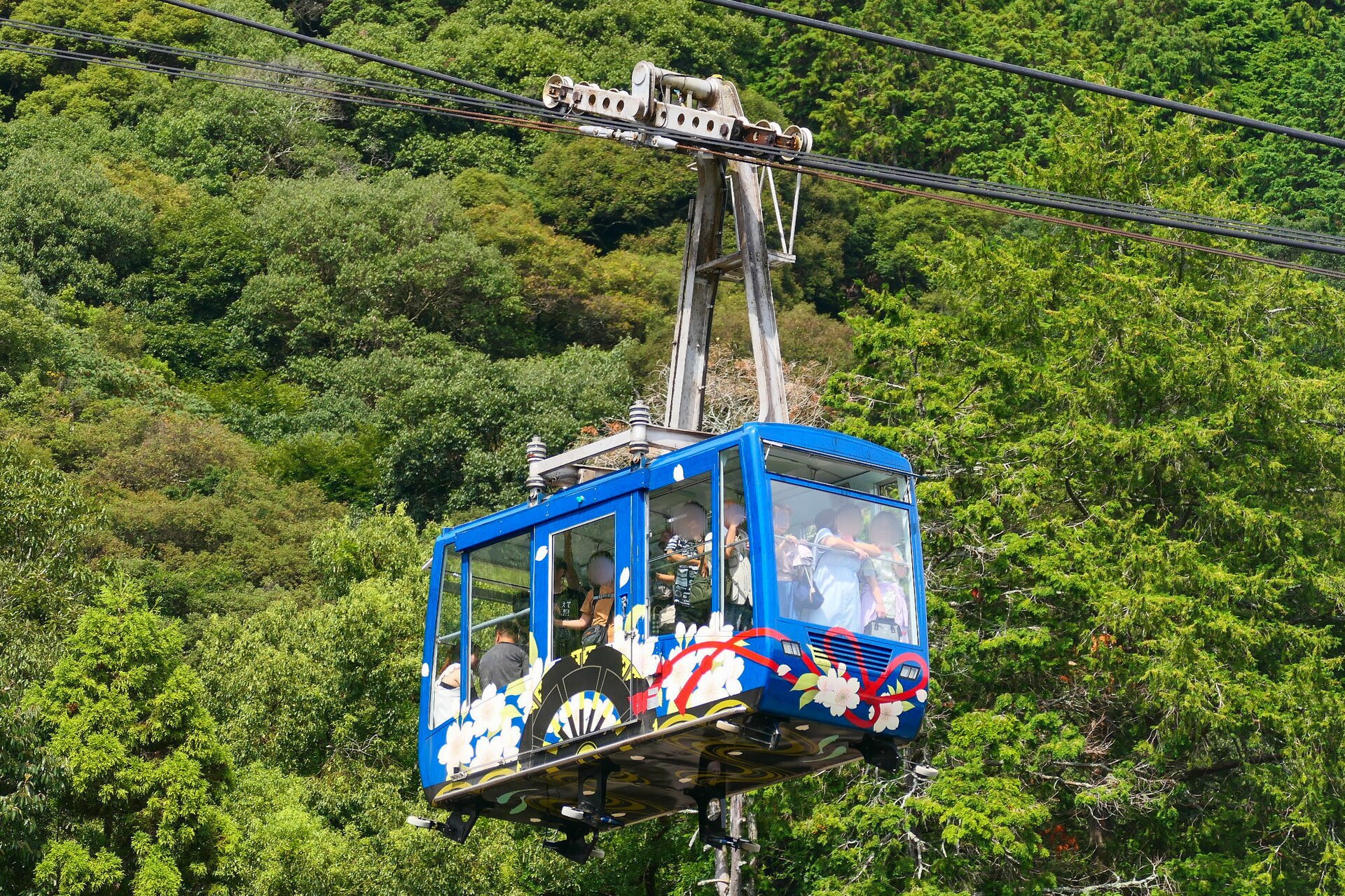
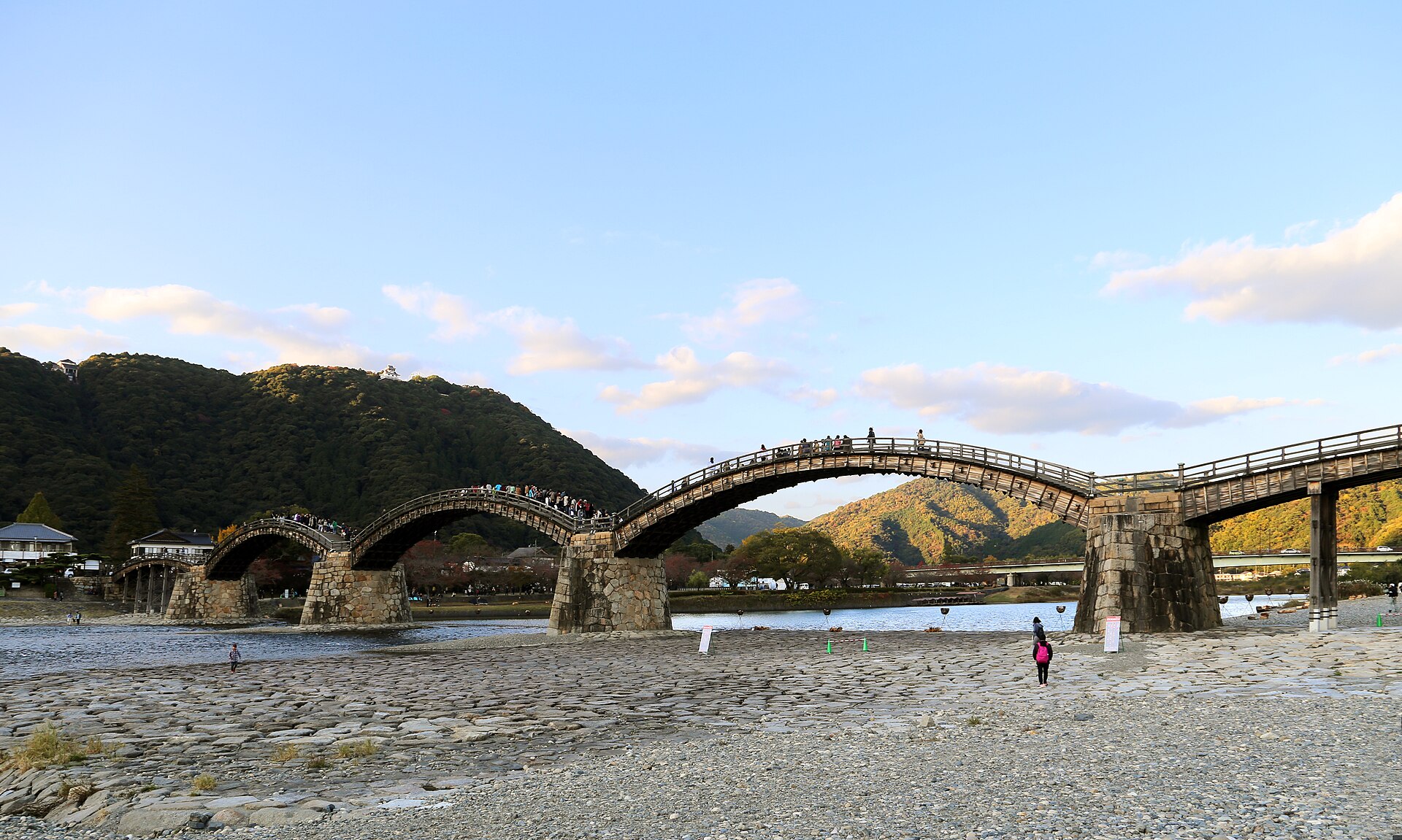
The bridge crossing is the centrepiece, with five wooden arches over the Nishiki River. The castle-side visit continues beyond it: walk toward the ropeway base, ride up the hill, then walk again from the summit station to Iwakuni Castle. The tourism office describes roughly ten minutes on foot between the summit ropeway station and the castle. This is a real extra leg, not a door-to-door cable-car transfer. Leave margin for ticketing, photographs and the return crossing instead of treating the ride time alone as the duration of the visit.
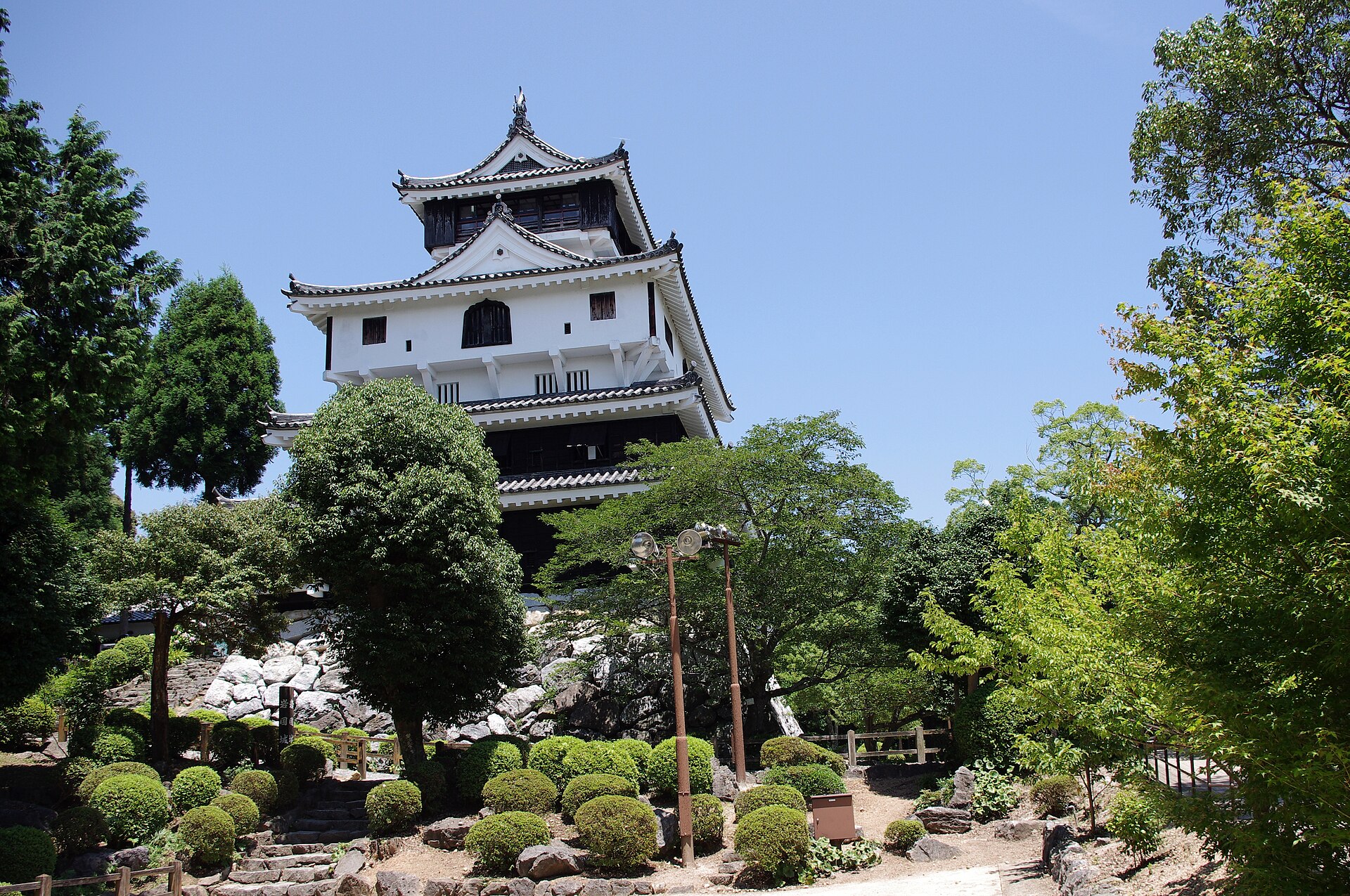
The castle is a reconstructed landmark and hilltop viewpoint, so the extra distance makes sense when you want that perspective as well as the arches. It makes less sense if the bridge is your only priority, mobility is limited, or you would be rushing to catch the last ropeway. The bridge’s stepped surface itself deserves care, especially in wet conditions. Check the official conditions for your own party rather than assuming either ticket is a step-free route.
Operating windows and the safer fallback
The bridge can be accessible outside staffed toll-booth hours, but that does not extend the ropeway or castle day. The castle’s normal closing time is earlier than the ropeway’s, so a late arrival can make a set-ticket itinerary impractical even if the bridge is still open. Weather and river conditions can also restrict the bridge, while ropeway maintenance can interrupt the uphill leg. Check the current ropeway operating notice and the bridge’s current visitor rules before leaving, especially when the castle is your reason to come.
If the ropeway is suspended or your arrival slips late, reset the plan to a bridge-focused stop instead of trying to justify a combination ticket you cannot use. If the bridge is restricted by weather, do not assume an alternative crossing gives you the same sightseeing experience. Keep an onward plan that does not depend on a particular ropeway departure.
Getting to the bridge area
For travelers arriving by rail, JNTO describes access from JR Iwakuni and Shin-Iwakuni toward the bridge area. They are different stations, so confirm the bus boarding point, current timetable and fare for the station you will actually use. The bridge is close to the Kintaikyo bus stop; the ropeway base is a separate walk across the bridge and through the nearby park area. Do not count the bus ride as the whole door-to-castle transfer.
The Yamaguchi travel guide places Iwakuni in a wider prefecture itinerary. If your day includes other paid attractions, the Things to Do guides can help compare what deserves a longer stop. For this visit, make the ticket choice from your actual arrival time and the operating calendar: bridge-only is a good complete outing, while the set rewards a deliberate castle-side excursion.
Image credits: Kintaikyo Bridge by Sailko (CC BY 3.0); ropeway gondola by MaedaAkihiko (CC0); Iwakuni Castle by Jakub Hałun (CC BY-SA 4.0). Images resized for display; no content edits.
Official sources: Kintaikyo Bridge visitor information, Iwakuni Castle, Iwakuni Castle Ropeway, ropeway operating calendar, and JNTO access guide.