
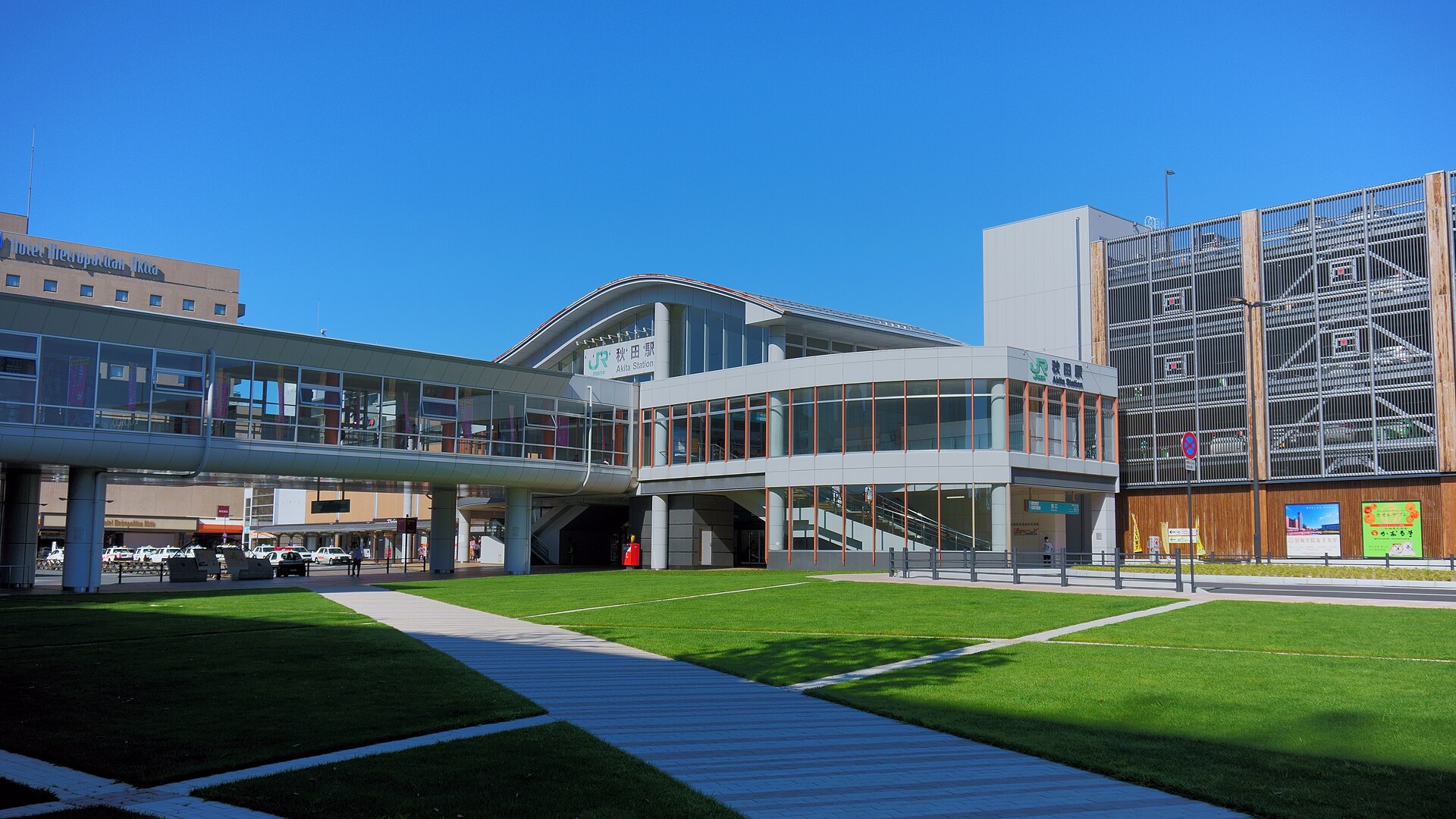
Choose the Akita Station area if a Shinkansen arrival, early train, luggage or repeated trips outside the city determine your day. Choose Kawabata/Omachi when you want Akita’s restaurant district near your room on more than one evening and can accept the extra station journey. The airport bus serves both areas, so it does not automatically settle the choice. Compare actual hotel doors, not just neighbourhood names.
| Decision point | Akita Station area | Kawabata / Omachi area |
|---|---|---|
| Arrival | Best for JR and Shinkansen arrivals, especially with bags or a departure soon after check-out. The airport limousine serves Akita Station West Exit. | The airport limousine also serves Kawabata Entrance. A rail arrival still needs a walk, local bus or taxi to the exact hotel. |
| Walkability | Hotel Metropolitan Akita is a real station-connected example; its indoor route changes after the shopping-building connection closes. Other hotels vary by exit and block. | Kawabata is about a 15-minute walk from the station, but Hotel Pearl City Akita Kawabata lists another walk from Kawabata Entrance. Trace your own door-to-stop route. |
| Local mobility | Convenient for repeated train and station-bus starts. Add a walk or ride for a Kawabata dinner. | Convenient for repeated restaurant evenings. Add a return to the station for each rail-led day; check the useful last bus or allow for a taxi. |
| Evening fit | Not food-free: the station has dining options and the nearby Citizen’s Market. Good when a simple return and early start matter most. | Choose for restaurants and bars along the Asahikawa-side district. A specific hotel may sit on a quieter neighbouring street. |
| Stay length | A one-night transit stop or several early train days strengthens the station case. | Several city evenings strengthen Kawabata; one dinner alone may not justify moving the hotel base. |
| Trade-off | Simpler luggage and onward rail, but you may repeat the cross-centre trip for nights out. | Less travel after dinner, but more effort for JR departures and potentially a final walk with luggage. |
The Akita City accommodation directory separates Station West/East listings from Omachi/Kawabata listings; it does not prove that one district is always cheaper. Check the airport’s current stops and fare, the city bus-stop guide and your hotel’s official access map for your travel date before booking. Rates, schedules and access arrangements can change.
Start with the journey you will repeat
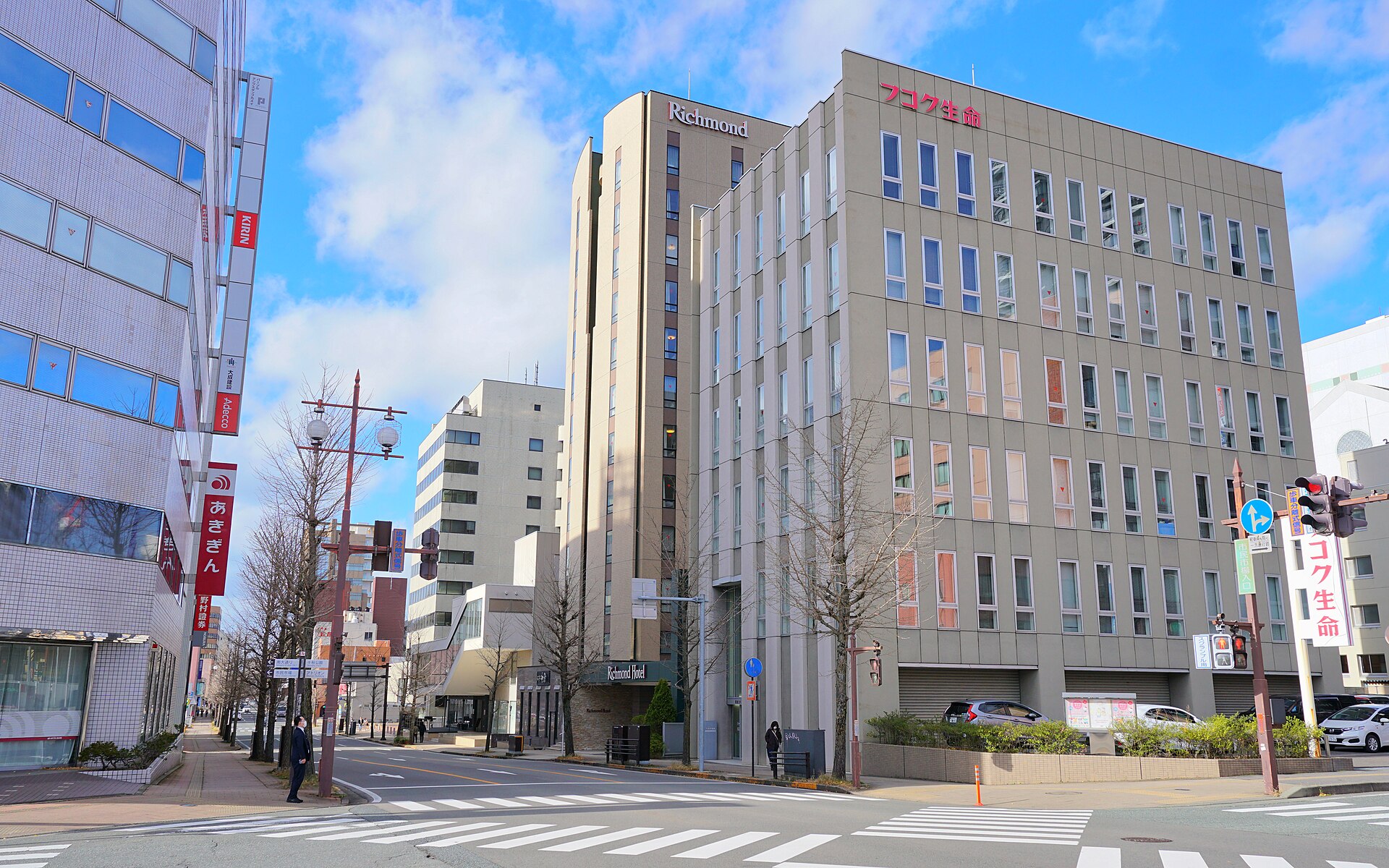
An Akita Station hotel is most useful when it removes a difficult first or last leg. If you arrive by Komachi with a large case and leave on an early regional train, avoiding a cross-city hotel transfer protects both ends of the stay. One concrete example is Hotel Metropolitan Akita’s official access route: it describes the link through the station shopping buildings and a different exterior approach after that passage closes. Those directions describe that hotel, not every property advertised as ‘near Akita Station.’ Map your actual platform-to-exit-to-room path, including a late arrival.
Station-side does not mean choosing transport over food. The city guide places Akita Citizen’s Market around five minutes on foot from the station, with shops and places to eat. There are also station-building restaurants. If you want one local dinner rather than a whole evening around Kawabata, walking over once may be simpler than changing hotels. The trade-off changes when you intend to return to the restaurant district repeatedly.
Kawabata makes the evening the easy part
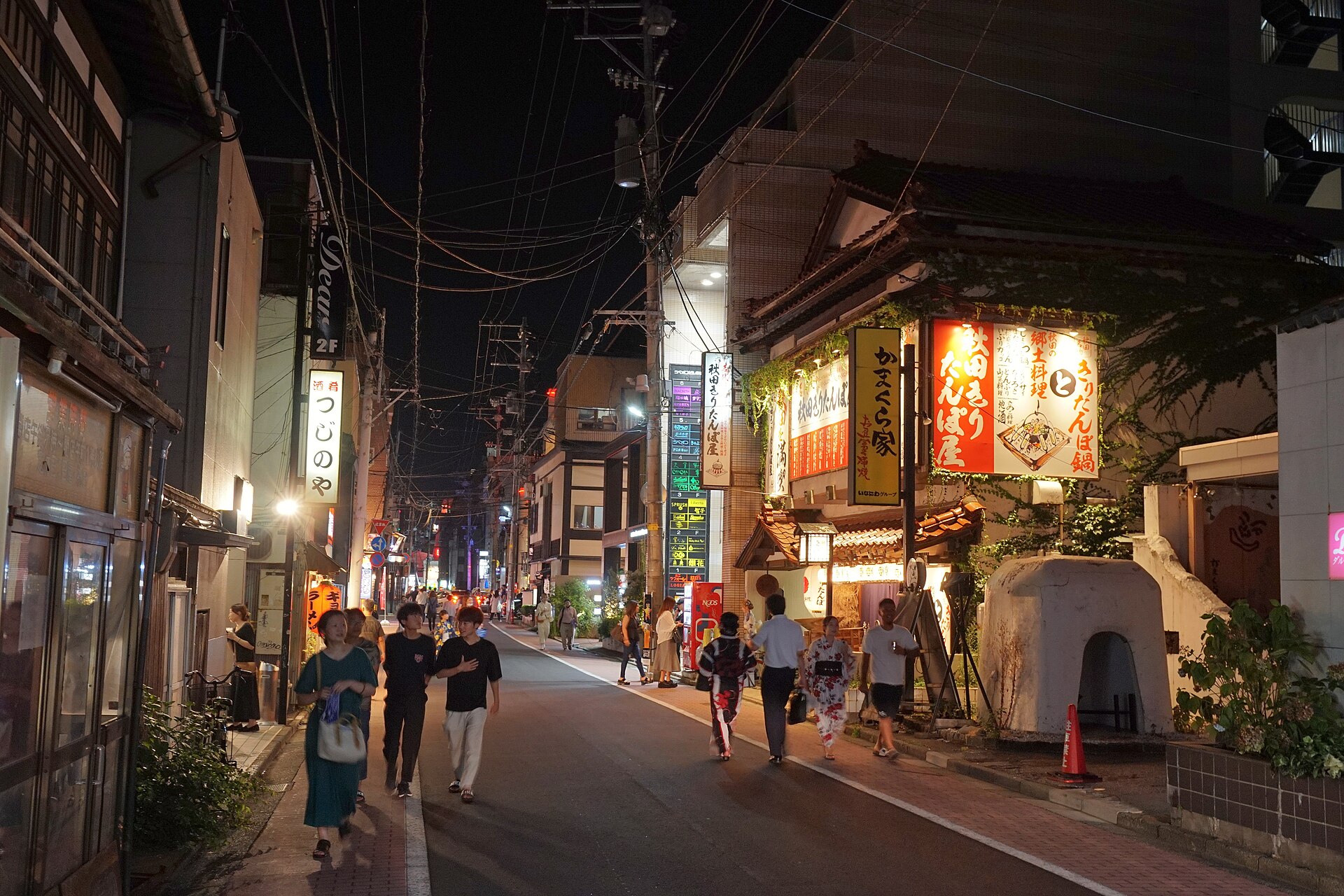
Akita City describes Kawabata as a restaurant district along the Asahikawa, roughly a 15-minute walk from Akita Station. Staying nearby turns an after-dinner journey into a short local walk, but ‘Kawabata’ is not a promise that every room is directly on the dining street. Streets across Omachi differ in noise and in distance from the river, a bus stop and the station. For a quieter room, the closest hotel to the busiest block may not be the best fit.
Hotel Pearl City Akita Kawabata’s access page gives a useful example of the missing last mile: from Akita Station, it lists a bus toward Kawabata Entrance followed by a walk; the airport limousine can use the same stop. That does not mean the bus deposits you at every Kawabata hotel door. Check your chosen property’s street, the stop in the correct direction and the walk with your luggage. If you plan an early JR departure, decide whether to walk, use a scheduled bus or budget for a taxi before choosing this base.
Airport bus: two central stops, two last-mile tests
The Akita Airport access page lists both Akita Station West Exit and Kawabata Entrance on its limousine route. Its published adult fare is the same for those two stops, so the decisive question is not a supposed airport-bus price saving: it is the last walk and the service that meets your flight. The airport lists a station-bound journey of about 40 minutes, but traffic and your actual stop can change door-to-door time. The city transport page says the limousine is non-reserved and links onward to the current timetable. Confirm the operator’s stop order, departure, fare and final hotel walk for your travel date before booking.
Arriving after the last useful bus, carrying heavy cases or travelling with limited mobility can make a taxi the better final leg from either stop. Avoid the false shortcut ‘station hotel for all airport arrivals’: a Kawabata hotel near the correct bus stop may be easier than a station hotel several blocks from the west exit. Conversely, an early train the next day still rewards a station hotel even when the flight arrival is equally easy.
Compare the real cost of two rooms, not district labels
The city accommodation directory prints example single-room prices, but they are not live, same-date offers for equivalent rooms. Do not infer that Kawabata is cheaper from one listed rate. Open two or three actual properties in each area for the same dates and guest count, then compare the payable total with taxes, breakfast, cancellation conditions, bed arrangement and luggage storage on equal terms. Check the properties’ official booking pages for the current quote before paying.
- Count station trips: include the arrival, departure and every rail-led day, not just the first hotel transfer.
- Count evening returns: include the Kawabata dinners you will really make and the walk or late taxi back to a station-side room.
- Check the final walk: the airport or city bus stop is not a hotel entrance; inspect crossings and luggage distance on the exact property map.
- Price the same conditions: compare refundable with refundable, breakfast with breakfast and the same room occupancy before declaring a bargain.
For one night before a train, choose a verified station-side room unless an unusually strong Kawabata plan changes the balance. For several restaurant-led evenings and few JR departures, choose Kawabata if your chosen hotel’s last-mile route works. For a mixed stay, compare two real addresses and their total room-plus-local-transport cost: the better base is the one that reduces the movement you cannot reschedule. The Akita guide helps place the city in a longer itinerary; the Hotels guides cover other bases. Aomori and Iwate are sensible onward-planning guides, not places this Akita article claims to cover.
After choosing your base, compare current rooms in Akita for your dates. Check the total price, cancellation terms and the exact station-to-property route before booking.
This page may contain affiliate links. If you book through these links, Japan Travel Hub may earn a commission at no extra cost to you.
For hotel options in this prefecture, see our Akita hotel guide.
Image credits: Akita Station West Exit, Kawabata Street, and Citizen’s Market entrance intersection by 掬茶 (CC BY-SA 4.0). Images resized for web display; no content edits.
Official sources: Akita accommodations, Kawabata district, airport access, city transport, Metropolitan access, Pearl City access, and Citizen’s Market.