
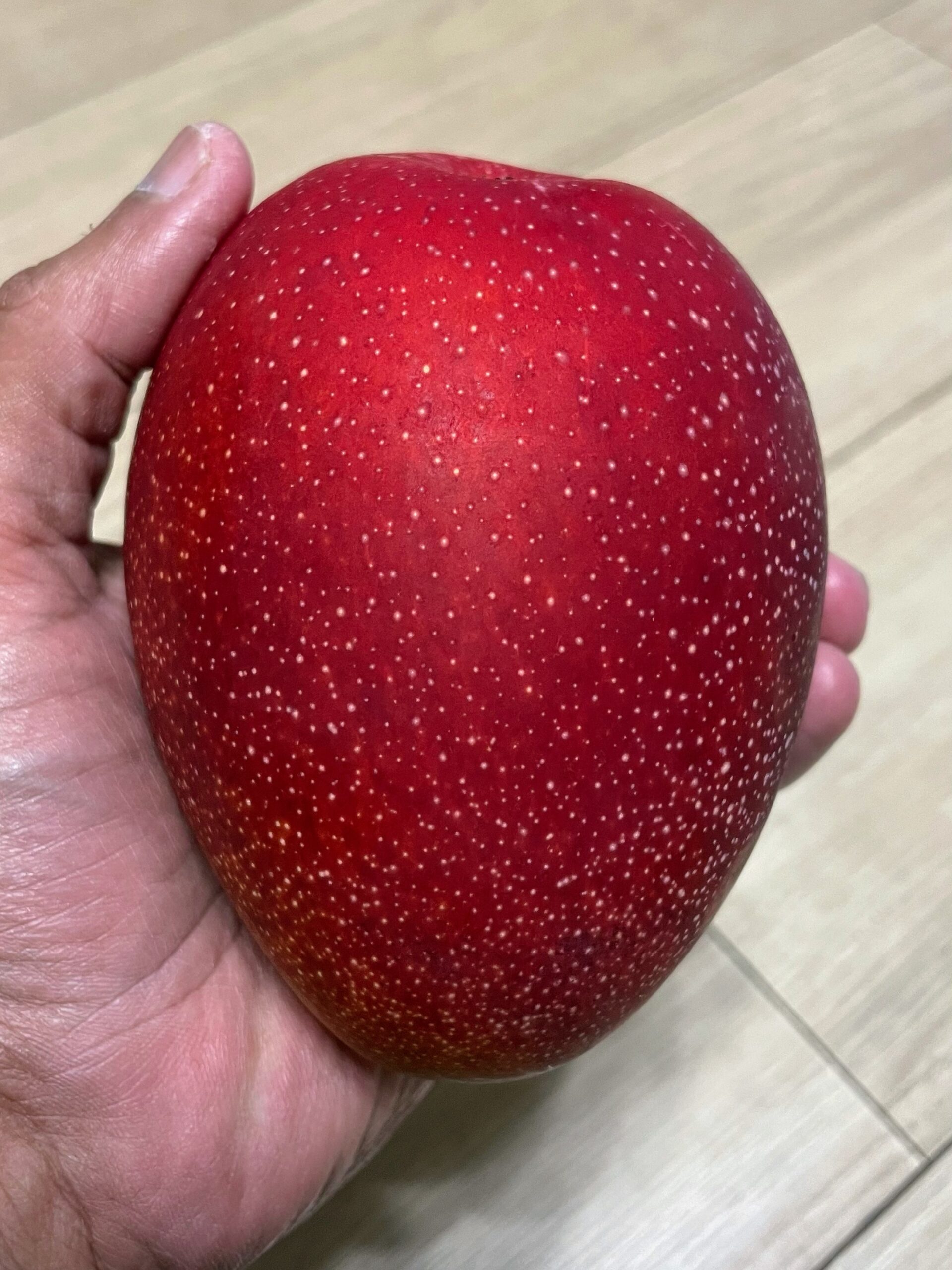
Miyazaki is Japan’s best-known mango region, and its premium brand — Taiyo no Tamago, “Egg of the Sun” — is one of the few Japanese fruits with a published, enforced quality standard. If you are timing a trip around it, the season is short and the grading rules explain why the best fruit costs what it does.
When Miyazaki mangoes are actually available
Miyazaki Prefecture lists the shipping season for Taiyo no Tamago as April to July (checked 2026-07-19). That is the window when you will find it in local markets, department-store fruit counters and roadside stations across the prefecture. Outside it, you will still see mango-flavoured sweets and soft serve year-round, but not the fresh graded fruit.
What makes it “Taiyo no Tamago”
The name is not marketing shorthand — it is a certification. To be sold as Taiyo no Tamago, fruit must meet a prefecture-wide standard covering three things:
- Appearance grade of seishu or above, including red colouring over more than half the skin.
- Size class of 2L or above — roughly 350g per fruit and up.
- Sugar content of at least 15 degrees Brix.
Fruit that misses any of these is still Miyazaki mango, just sold without the brand — and often at a far friendlier price, which is what most visitors should actually buy. Some cooperatives grade further within the brand; JA Miyazaki Chuo separates a top AA tier that is only a small fraction of the crop.
Why the growing method matters
Miyazaki’s reputation rests on letting the fruit ripen fully on the tree rather than picking it early. Growers hang nets beneath the branches so that when a mango finally releases itself, it is caught rather than bruised on the ground. That fully-tree-ripened approach is the reason the fruit tastes the way it does, and the reason it does not travel or store like a supermarket mango.
Where to try it as a visitor
- Roadside stations and farm direct-sales counters around the prefecture are the most reliable places to buy in season, often including ungraded fruit at sensible prices.
- Department store fruit counters in Miyazaki City carry the graded brand, boxed for gifts.
- Cafes and sweet shops serve parfaits, soft serve and shaved ice using local mango — the easiest option if you do not want to buy a whole fruit.
- Seasonal farm experiences (picking or tasting) are run by individual growers and vary year to year. Availability, booking and language support change each season, so check the current listings with Miyazaki tourism information or the farm directly rather than assuming a tour runs.
Prices for the graded brand are high by any standard, and gift-boxed fruit is priced as a gift. If you simply want to taste it, a parfait or a single ungraded mango does the job.
Building a Miyazaki trip around the season
April to July overlaps with good weather for the coast, so the mango season pairs naturally with the rest of the prefecture: Aoshima Shrine on its island of rock formations, Udo Shrine in a seaside cave, the moai replicas at Sun Messe Nichinan, and inland Takachiho Gorge for the rowboat through the cliffs. Our Miyazaki travel guide sets out how to combine them, and the Japan transport guide covers getting there.
Sources checked: Miyazaki Prefecture on Taiyo no Tamago shipping season and Miyazaki Brand: fully-ripened mango standards. Checked 2026-07-19. Seasons shift with the weather and farm experiences change each year — confirm current availability before you travel.